Contents:
General blood test results provide important information about the condition of the body and help detect possible disorders in a timely manner. One of the indicators that is taken into account when evaluating the test is hematocrit.
Its value may change under the influence of various factors — from lifestyle characteristics to certain diseases. That is why it is important to understand what this indicator means, which values are considered normal, and when abnormalities require additional examination.
In this article, we will look at what hematocrit is, what it depends on, and what may affect its increase or decrease.
What Is Hematocrit
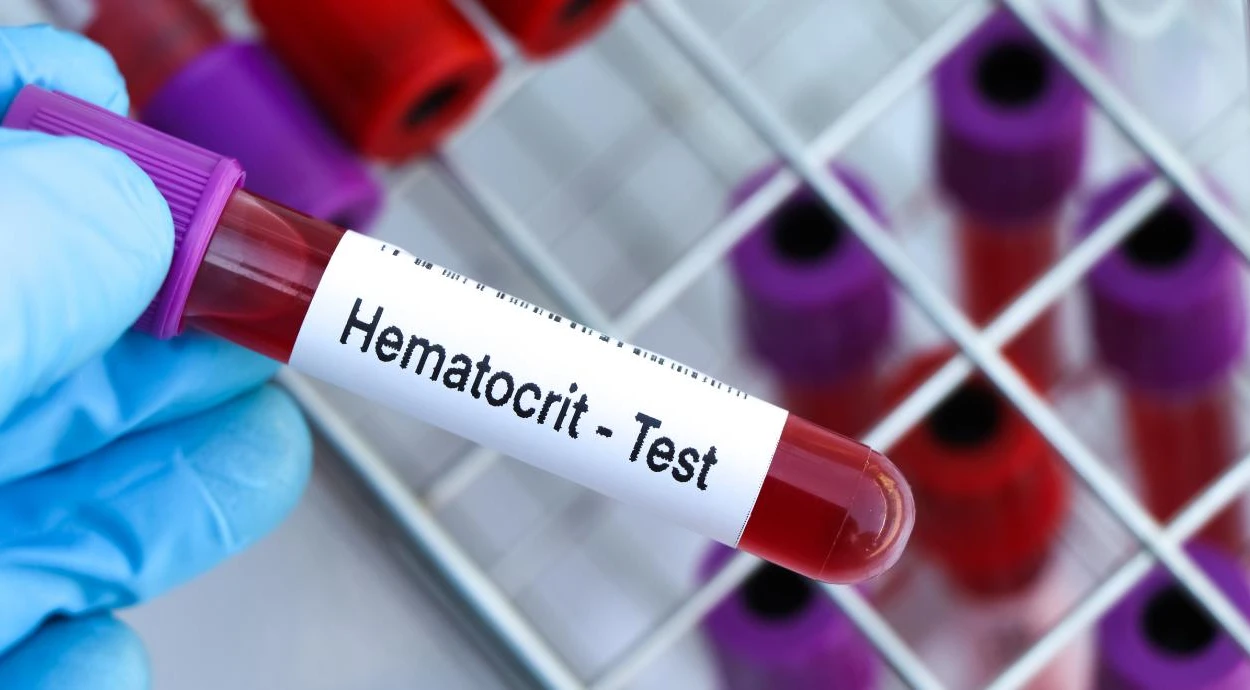
Hematocrit is a laboratory indicator that reflects the proportion of the formed elements of blood (mainly red blood cells) in the total blood volume. It is usually determined as a percentage or as a fraction of one.
In other words, hematocrit shows what part of the blood is occupied by cells and what part by plasma. It is thanks to this parameter that the doctor can assess blood thickness and the ratio of its main components.
On the test form, this indicator is often обозначается as HCT. It is included in the standard complete blood count and is evaluated together with other parameters — hemoglobin level, red blood cell count, and blood indices.
Doctors at “Oxford Medical” note: it is important to take into account that the hematocrit value is not an independent diagnostic criterion. It is always analyzed in combination with other indicators and clinical data in order to understand the cause of the changes and determine further management.
What Hematocrit Shows
.jpg)
The hematocrit indicator helps assess how the composition of the blood changes under various conditions of the body and how effectively it performs its functions.
First of all, it reflects the balance between the cellular part of the blood and plasma, which is important for oxygen transport, tissue nutrition, and maintaining normal circulation.
Changes in this indicator may indicate:
- disturbances in water balance (dehydration or excess fluid);
- changes in the functioning of the hematopoietic system;
- the body’s response to chronic diseases or hypoxia;
- possible conditions associated with a decrease or increase in the number of red blood cells.
When evaluating hematocrit, the doctor always takes into account other blood test indicators, as well as the patient’s symptoms and general condition. This makes it possible to identify the true cause of the indicator’s deviation from the norm.
Normal Hematocrit Range
The hematocrit level depends on age, sex, physiological condition, and even lifestyle. Small fluctuations are possible and do not always indicate pathology. That is why the result should be evaluated taking into account individual characteristics and accompanying blood test indicators.
In general, normal values look like this:
| Group | Normal Hematocrit Range (%) |
| Men | 40–50 |
| Women | 36–46 |
| Children | 33–44 (depending on age) |
| Newborns | 44–62 |
It is important to take into account that temporary changes are possible in case of dehydration, intense physical exertion, or during the body’s adaptation to new conditions (for example, in the mountains).
If the indicator consistently goes beyond the normal range, it is worth having a blood test again and evaluating the indicators over time.
Hematocrit: Normal Range in Women
In women, the hematocrit level is usually lower than in men. This is associated with hormonal characteristics and regular blood loss during menstruation.
| Age | Normal Range (%) |
| 18–45 years | 36–46 |
| After 45 years | 36–46 |
A decrease in the indicator in women is often associated with iron deficiency and may indicate this condition or be one of the manifestations of a disease such as anemia.
If reduced hematocrit is detected in women, the doctor may recommend additional tests for ferritin, iron, vitamin B12, and other indicators.
Hematocrit in Pregnant Women
During pregnancy, blood indicators change — this is a normal physiological process. Due to the increase in plasma volume, hematocrit may decrease.
| Trimester | Normal Range (%) |
| I | 33–40 |
| II | 30–38 |
| III | 28–36 |
Specialists at “Oxford Medical” explain that a moderate decrease is expected and does not require treatment. But a significant deviation may indicate iron deficiency or other disorders. In such cases, it is important to receive the doctor’s recommendations in a timely manner in order to avoid complications for the mother and child.
Hematocrit: Normal Range in Men
Men are characterized by higher hematocrit values, which is associated with a greater number of red blood cells and the influence of testosterone.
| Age | Normal Range (%) |
| 18–45 years | 40–50 |
| After 45 years | 40–50 |
The normal hematocrit range in men may change with intense physical exertion, smoking, or living at altitude.
If the indicator differs significantly from the norm, it is important not to ignore it and to make an appointment for a hematologist consultation for a detailed assessment of the condition.
Hematocrit in Children: Which Indicator Is Considered Normal
In children, the hematocrit value changes with age, since the hematopoietic system is still forming.
| Child’s Age | Normal Range (%) |
| Newborns | 44–62 |
| 1–3 months | 32–44 |
| 3 months – 1 year | 32–40 |
| 1–6 years | 33–41 |
| 6–12 years | 34–43 |
If reduced hematocrit is detected in a child, it may be associated with iron deficiency, rapid growth, or an unbalanced diet. In such a situation, it is important not to self-medicate, but to make an appointment with a pediatrician, who will evaluate the test results and, if necessary, prescribe additional examinations. Regular monitoring of blood indicators in children makes it possible to detect changes in time and prevent the development of possible complications.
High Hematocrit
An increase in hematocrit means that the proportion of cells in the blood increases relative to plasma. As a result, the blood becomes thicker, which may affect the speed of blood flow and increase the load on the cardiovascular system.
Doctors at “Oxford Medical” explain: if hematocrit is elevated, this is not a diagnosis, but a signal that requires clarification of the cause. In some cases, this is a temporary condition, and in others, it is a sign of disorders that require treatment.
What Elevated or Increased Hematocrit Means
Elevated hematocrit may develop by two main mechanisms, and further management depends on this:
- A decrease in plasma volume — the blood “thickens” due to fluid loss. This occurs with dehydration, high temperature, intense sweating, or insufficient drinking regimen.
- An increase in the number of red blood cells — the body produces more blood cells. This may be either adaptation (for example, in case of oxygen deficiency) or a pathological process.
The higher the hematocrit, the thicker the blood. This may lead to:
- slower blood circulation;
- an increased risk of blood clot formation;
- deterioration of oxygen supply to the tissues.
Possible symptoms to pay attention to:
- frequent headaches;
- dizziness or a feeling of “fog” in the head;
- facial redness;
- increased blood pressure;
- rapid fatigue.
At the same time, in many people this condition may have no pronounced symptoms and is detected only during examination.
Main Causes of Elevated Hematocrit
The causes of elevated hematocrit should be divided into temporary (relative) and those associated with diseases.
The most common physiological causes:
- insufficient water intake;
- fluid loss (vomiting, diarrhea, increased sweating);
- staying in high-altitude conditions;
- smoking;
- intense physical exertion.
In these cases, the indicator may return to normal after the cause is eliminated.
Possible pathological causes:
- chronic lung diseases (when the body lacks oxygen);
- cardiovascular disorders;
- kidney diseases (due to increased production of erythropoietin);
- disorders of hematopoiesis, in particular polycythemia.
Separately, it should be taken into account that the body may increase the number of red blood cells in response to chronic oxygen deficiency — for example, in smoking or diseases of the respiratory system.
If the indicator is stably elevated or accompanied by symptoms, it is advisable to seek a hematologist consultation or consult the doctor who ordered the examination.
How to Lower Hematocrit
Lowering hematocrit is possible only after determining the cause of its increase. Independent attempts to “normalize the test” without diagnostics may be ineffective or even harmful.
What can really be done:
- Normalize the drinking regimen. An insufficient amount of fluid is one of the most common causes of elevated hematocrit. In most cases, it is enough to restore water balance.
- Review your lifestyle. Quitting smoking, reducing excessive physical exertion, and weight control may have a positive effect on blood indicators.
- Control accompanying diseases. If the cause is related to diseases of the lungs, heart, or kidneys, it is important to treat the underlying disease itself.
- Undergo follow-up examinations. A repeat test helps assess the dynamics and understand whether the changes are persistent.
In some cases, the doctor may prescribe specialized treatment or procedures aimed at normalizing the blood composition.
The main rule: correction should be aimed not at the indicator itself, but at the cause of its increase. This approach is what makes it possible to achieve a stable and safe result.
Low Hematocrit
.jpg)
A decrease in hematocrit means that the proportion of blood cells decreases relative to plasma. In most cases, this is associated with a decrease in the number of red blood cells or hemoglobin, which may affect the delivery of oxygen to the tissues.
Doctors at “Oxford Medical” note: if hematocrit is low, this is also not an independent disease, but a laboratory indicator that signals possible disorders in the body. Therefore, the main task is not simply to raise the number in the test, but to find the cause of such changes.
What Low Hematocrit Means
A decrease in hematocrit indicates that the blood becomes more “diluted” or contains fewer red blood cells than are needed for the normal functioning of the body.
Such changes may lead to an insufficient supply of oxygen to the tissues. As a result, symptoms may appear:
- general weakness and rapid fatigue;
- pale skin;
- dizziness;
- shortness of breath during physical exertion;
- rapid heartbeat.
Sometimes low hematocrit may not be accompanied by pronounced symptoms, especially if the changes develop gradually.
Hematocrit Below Normal: Main Causes
The causes of a decrease in hematocrit may be different — from temporary conditions to diseases that require treatment.
The most common causes:
- iron deficiency, vitamin B12, or folic acid deficiency;
- chronic blood loss (for example, with heavy menstruation or diseases of the gastrointestinal tract);
- bone marrow diseases;
- chronic inflammatory processes;
- kidney diseases;
- excessive fluid intake (so-called “blood dilution”).
One of the common causes is anemia, in which the level of red blood cells and hemoglobin decreases. That is why, in low hematocrit, it is important to evaluate other blood indicators.
It is also worth taking into account the characteristics of different groups:
- reduced hematocrit in women is often associated with iron deficiency;
- reduced hematocrit in a child may occur during a period of active growth or with an unbalanced diet.
To clarify the cause, the doctor may recommend an extended examination: ferritin, vitamin B12, kidney function, and other indicators.
How to Raise Hematocrit
Raising hematocrit is possible only after the cause of its decrease has been established. Self-medication or uncontrolled intake of medications may be ineffective and even dangerous.
What really matters:
1. Dietary correction.
The diet should contain a sufficient amount of iron, protein, and vitamins. It is worth including:
- red meat, liver;
- legumes;
- green vegetables;
- foods rich in vitamin B12.
2. Elimination of deficiencies.
If iron or vitamin deficiency is confirmed, the doctor may prescribe appropriate medications.
3. Treatment of the underlying disease.
In chronic diseases or blood loss, it is necessary to eliminate their cause, otherwise the indicator will not normalize.
4. Monitoring of test results.
It is important to track the indicators over time in order to assess the effectiveness of treatment.
If persistent low hematocrit is detected in the tests or there are symptoms, it is advisable not to delay the examination and to consult a doctor. If necessary, it may be required to make an appointment with a family doctor, who will determine the further management and, if necessary, refer you to a specialist.
The main thing is to remember that effective treatment is aimed not at the indicator itself, but at the cause of its changes. It is this approach that makes it possible to restore normal blood indicators and improve well-being.
The information in the article is provided for ознакомления and is not an instruction for self-diagnosis or self-treatment. If symptoms of the disease appear, you should consult a doctor.
Sources:
US National Library of Medicine