Contents:
- Can You Exercise with Varicose Veins?
- Physical Activity with Varicose Veins: What Is Allowed and What Is Not
- Exercises for Varicose Veins: What Really Helps
- Which Exercises Should Not Be Done with Varicose Veins?
- Can You Have a Leg Massage with Varicose Veins?
Varicose veins are often accompanied by swelling, leg fatigue, night cramps, and a feeling of fullness. Because of this, many people begin to avoid physical activity, fearing that their condition may worsen. In fact, complete refusal to move can increase venous congestion and contribute to the progression of symptoms.
Exercises for varicose veins can help support normal blood circulation, reduce the feeling of heaviness, and ease discomfort after prolonged sitting or standing. At the same time, not all physical activities are equally safe for the veins: some types of training improve the function of the muscle-venous pump, while others, on the contrary, create excessive pressure on the vessels of the lower extremities.
Doctors at “Oxford Medical” recommend choosing physical activity with consideration of the condition of the blood vessels, the level of physical fitness, and the presence of concomitant diseases. In this article, we will discuss which types of activity are considered beneficial, whether walking, running, and squatting are allowed with varicose veins, and which exercises are better to limit.
Can You Exercise with Varicose Veins?
Moderate physical activity with varicose veins is usually not prohibited; on the contrary, it is recommended as one way to support normal venous circulation. During movement, the calf and thigh muscles contract and help the veins push blood upward toward the heart. This is why a sedentary lifestyle is considered one of the factors that may worsen the symptoms of the disease.
Data from the National Library of Medicine indicate that moderate physical activity can have a positive effect on venous circulation, but the level of activity should be selected individually depending on the condition of the vessels and the symptoms of the disease.
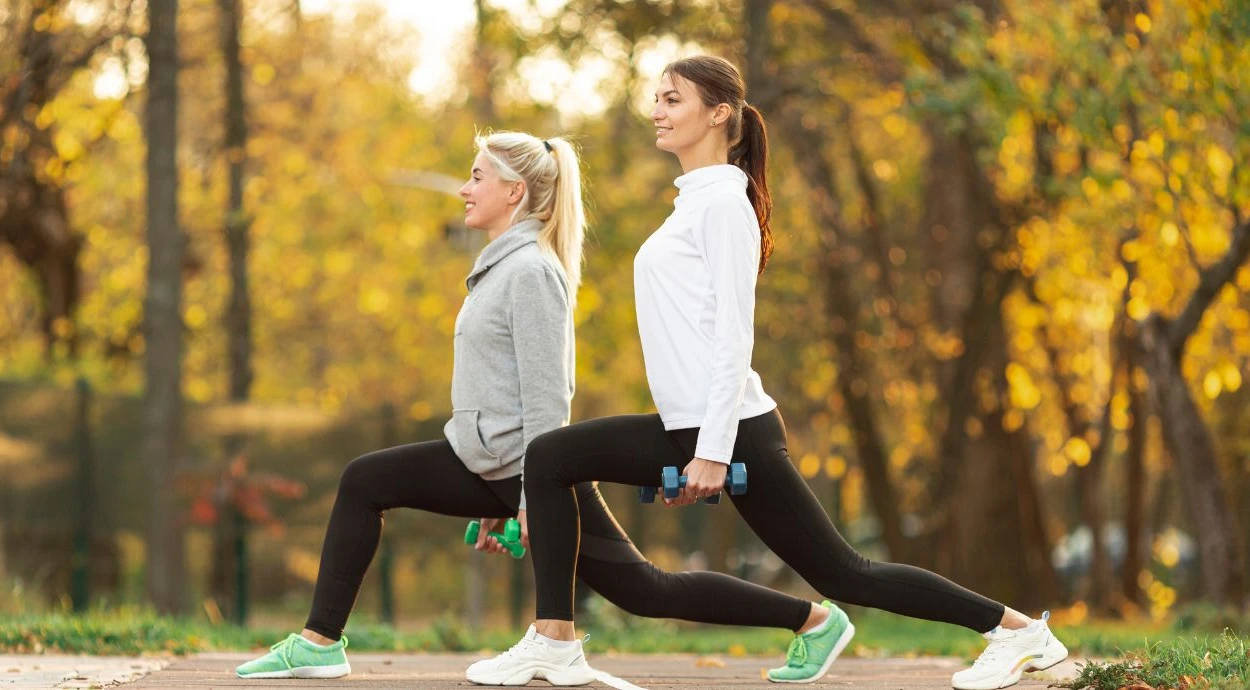
For vein diseases, the best activities are those without sudden impacts, jumps, or prolonged static tension. The safest options usually include walking, swimming, water aerobics, light cycling, Pilates, and leg exercises for varicose veins aimed at improving the function of the muscle-venous pump.
At the same time, the intensity of training is no less important than the type of sport itself. Excessive strength loads, exercises with heavy weights, or long training sessions without rest can increase pressure in the veins of the lower extremities and provoke worsening swelling or pain.
Doctors at “Oxford Medical” recommend increasing the load gradually and focusing not only on athletic goals but also on well-being. If pronounced swelling, pulsation of the veins, pain, or a strong feeling of fullness appears after training, it is worth temporarily reducing the intensity of exercise and undergoing a consultation with a phlebologist.
In some cases, before selecting physical activity, the doctor may recommend a vein examination, in particular an ultrasound examination of the vessels of the lower extremities, to assess the condition of the valve apparatus and blood flow.
Physical Activity with Varicose Veins: What Is Allowed and What Is Not
.jpg)
With varicose veins, it is important not to give up movement completely, but to choose physical activity correctly. The best activities for the veins are those with moderate dynamics, when the leg muscles contract regularly without a sharp increase in pressure in the vessels. Such training helps support blood circulation and reduce venous congestion.
| Allowed with varicose veins | Undesirable or with restrictions |
| Walking at a comfortable pace. | Lifting heavy weights. |
| Swimming and water aerobics. | Intense running on a hard surface. |
| Exercise bike without excessive load. | Jumping and plyometric training. |
| Pilates and light stretching. | High-intensity CrossFit. |
| Moderate cardio workouts. | Prolonged static exercises without movement. |
| Bodyweight exercises without overloading the legs. | Training to pronounced exhaustion. |
These recommendations are general, as tolerance to physical activity depends on the stage of the disease, the level of physical fitness, and the presence of concomitant vascular problems.
Doctors at “Oxford Medical” recommend paying attention not only to the type of sport, but also to how you feel after exercise. If pronounced pain, swelling, or a feeling of vein pulsation appears after physical activity, the training program should be reviewed.
In some cases, before starting regular exercise, Doppler ultrasound of the lower extremities may be recommended. The examination helps assess the condition of the veins, the features of blood flow, and the function of venous valves, which makes it possible to select the level of physical activity more safely.
Can You Walk a Lot with Varicose Veins?
Walking is considered one of the most beneficial types of physical activity for varicose veins. During movement, the calf muscles work actively, helping the veins push blood toward the heart. This reduces venous congestion and may also decrease the feeling of heaviness and fatigue in the legs. Data from the Society for Vascular Surgery confirm that moderate physical activity and regular walking can help improve venous circulation in chronic vein diseases.
Regular walking at a moderate pace without overloading is best. For most people, 30–60 minutes of active walking a day is sufficient. If work involves prolonged sitting, doctors advise taking short movement breaks every 1–2 hours.
At the same time, excessive loads are undesirable. Long walks without rest, fast walking with pronounced symptoms of varicose veins, or being on your feet constantly throughout the day can increase swelling and discomfort.
Can You Run with Varicose Veins?
The possibility of running with varicose veins depends on the stage of the disease, the severity of symptoms, and the type of load. In the early stages, moderate running without overloading is often not prohibited and can help maintain muscle tone and normal blood circulation in the lower extremities.
For vein diseases, short runs at a comfortable pace without sudden acceleration or overfatigue are usually tolerated best. It is advisable to choose a soft running surface and sports shoes with good cushioning, which reduce impact load on the legs.
At the same time, intense long-distance running, sprints, or workouts with sudden accelerations can create excessive strain on the vessels. This is especially true for people with pronounced swelling, pain, or large dilated veins.
Doctors at “Oxford Medical” recommend gradually increasing training intensity and carefully monitoring how you feel after running. If swelling increases, pain, a burning sensation, or vein pulsation appears after running, it is worth temporarily stopping this type of activity and consulting a doctor.
In some patients with pronounced vein damage or persistent discomfort, modern minimally invasive treatment may be considered, in particular EVLA, after which the level of permitted physical activity is determined individually.
.jpg)
Can You Squat with Varicose Veins?
Squats with varicose veins are not always prohibited, but they should be performed carefully. Much depends on technique, depth of movement, additional weight, and the condition of the veins. Moderate load can maintain the tone of the leg muscles, while strength variations can increase pressure in the veins and worsen symptoms.
With varicose veins, light squat variations are usually allowed:
- shallow squats without additional weight;
- squats near a support for better balance control;
- slow squats with a small range of motion;
- exercises with a small number of repetitions without overfatigue.
Deep squats, exercises with heavy weights, and intense strength training for the legs may be undesirable. Such loads create additional pressure on the venous system and can provoke pain, swelling, and a feeling of heaviness after exercise. In some cases, it is safer to replace classic strength exercises with gentler forms of activity: swimming, Pilates, walking, or special exercises to support venous circulation.
Exercises for Varicose Veins: What Really Helps
Properly selected physical activity can help support venous circulation, reduce blood stagnation, and ease the feeling of heaviness in the legs. The best exercises for varicose veins are those that activate the calf muscles without excessive strain on the vessels.
Doctors most often recommend simple daily exercises for varicose veins that can be done at home without special equipment:
- rolling from heel to toe;
- rotating the feet;
- standing calf raises;
- the “bicycle” exercise while lying down;
- flexing and extending the feet;
- light leg swings without sudden movements.
Such exercises help activate the work of the muscle-venous pump and may reduce the feeling of fatigue after prolonged sitting or standing.
Swimming, water aerobics, and moderate walking are also considered beneficial. In water, the load on the legs is distributed more evenly, and pressure on the vessels decreases. This is why water-based activities are often recommended for people with early signs of varicose veins.
Data from the National Institutes of Health indicate that regular moderate physical activity can have a positive effect on venous system function and quality of life in patients with chronic vein diseases.
Doctors at “Oxford Medical” recommend doing exercises regularly, but without overfatigue. It is better to exercise daily for 15–20 minutes than to periodically subject the body to excessive load.
.jpg)
Which Exercises Should Not Be Done with Varicose Veins?
With varicose veins, exercises that create excessive pressure on the vessels of the lower extremities or are accompanied by sudden impact load are undesirable. Such training can increase venous congestion, provoke swelling, and worsen discomfort in the legs after physical activity.
Doctors most often recommend limiting:
- squats and lunges with heavy weights;
- deadlifts and heavy strength exercises;
- intense jumping;
- sprint running;
- high-intensity CrossFit;
- prolonged static loads without movement.
People with pronounced varicose veins, swelling, pain, or a feeling of vein pulsation after training should be especially careful. In such cases, excessive loads can worsen well-being and intensify the symptoms of the disease.
Can You Have a Leg Massage with Varicose Veins?
Leg massage with varicose veins is not possible in all cases. Much depends on the stage of the disease, the condition of the veins, and the presence of complications. Light relaxing techniques can sometimes help reduce fatigue, a feeling of heaviness, and tension in the legs, but intense mechanical impact on areas with dilated veins may be undesirable.
With varicose veins, the following are usually allowed:
- light lymphatic drainage massage as recommended by a doctor;
- soft stroking movements without strong pressure;
- massage of the feet and calves without affecting pronounced varicose nodes.
At the same time, some types of massage may be contraindicated. This especially applies to aggressive anti-cellulite massage, vacuum techniques, intensive tissue kneading, and procedures with strong pressure on the veins.
Data from the National Library of Medicine indicate that with chronic vein diseases, it is important to avoid procedures that may additionally injure the vessels or worsen venous outflow.
Doctors at “Oxford Medical” recommend assessing the condition of the veins before a massage course, especially if there is pronounced swelling, soreness, thickening, or a change in skin color. In some cases, massage may temporarily worsen symptoms or be contraindicated due to the risk of complications.
Physical activity with varicose veins is not only allowed but often beneficial for supporting normal blood circulation and reducing venous congestion. Moderate loads without sudden impacts, overfatigue, or prolonged static tension are usually best. Walking, swimming, light cardio workouts, and exercises for the leg muscles can help reduce the feeling of heaviness and discomfort in the lower extremities.
At the same time, physical activity should be selected individually, because with pronounced varicose veins, some exercises can worsen symptoms and create excessive pressure on the vessels. That is why, in case of pain, swelling, the appearance of vascular nodes, or worsening well-being after training, it is important not to self-treat, but to consult a doctor for an assessment of the vein condition and selection of safe physical activity.
The information in this article is provided for informational purposes and is not an instruction for self-diagnosis or self-treatment. If symptoms of the disease appear, you should consult a doctor.
Sources: