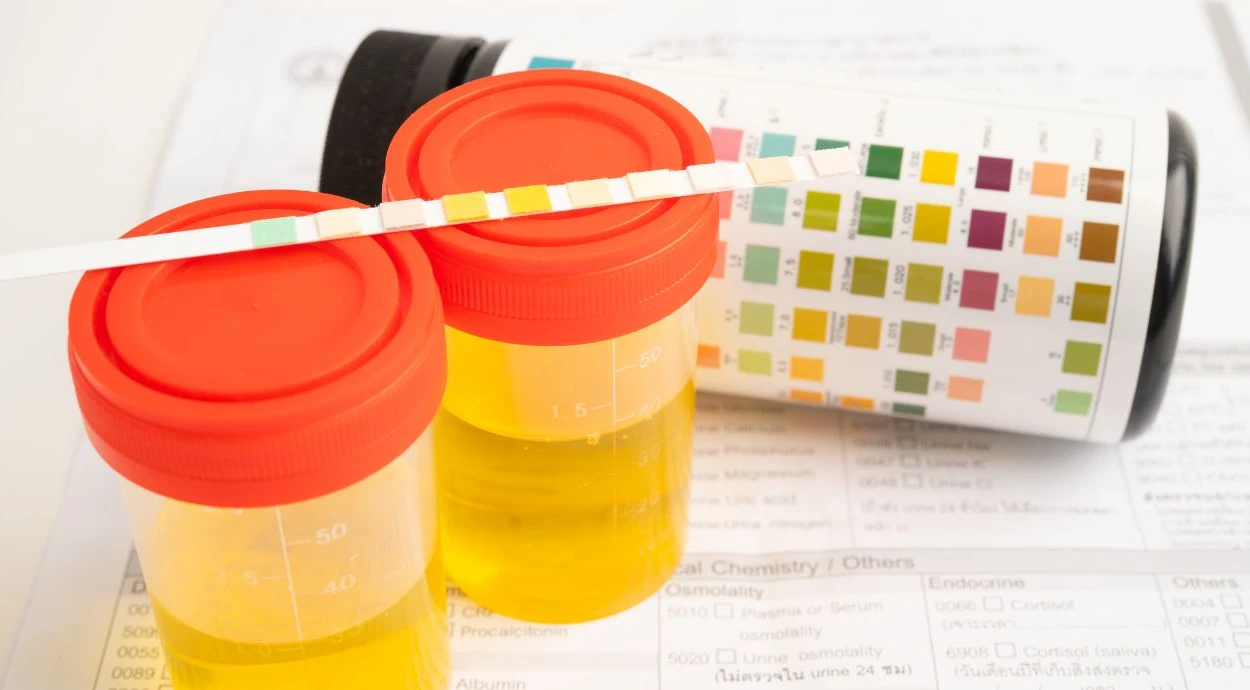
Contents:
- What color urine should normally be
- What urine color depends on
- Why urine color changes
- What urine color means
- Other alarming urine changes
- When to seek medical attention immediately
- What examinations may be needed when urine color changes
Normal urine color usually ranges from light straw-colored to yellow. The shade may change during the day depending on the amount of fluid consumed, diet, and physical activity.
A single change in urine color does not always indicate a disease. Urine may become darker after sleep, intense workouts, or insufficient fluid intake. Some foods and medications can also temporarily change its shade. At the same time, red, brown, cloudy, or very dark urine is sometimes associated with diseases of the kidneys, liver, bladder, or metabolic disorders.
In this article, we explain what urine color should normally be, why it changes, which shades may be safe, and which ones are a reason to consult a doctor and undergo an examination.
What color urine should normally be
Normally, urine should be clear, without a strong unpleasant odor or visible impurities. Most often, urine is straw-colored or light yellow. This is due to the presence of the pigment urochrome, which is formed in the body during natural metabolism.
A lighter urine color may also be a normal variant, especially if a person has recently drunk a lot of fluid. After sleep, a long interval between toilet visits, or physical activity, the shade may become more saturated.
Approximate normal variants
| Shade | What it may mean |
| Light straw-colored | Sufficient fluid intake, normal kidney function. |
| Light yellow | Most often a normal variant. |
| Deep yellow | May occur after sleep, physical activity, or consuming less fluid. |
| Almost transparent | Often occurs after drinking a large amount of water. |
The doctors at «Oxford Medical» explain: if the shade changes for a short time and quickly returns to the usual one, this does not always require treatment. But if the changes persist for several days, pain, burning, blood impurities, fever, or swelling appear, it is worth consulting a specialist.
What urine color depends on
.jpg)
The shade of urine depends on the concentration of pigments, the amount of fluid consumed, diet, medications, physical activity, and the general condition of the body. The less water the body receives, the more concentrated the urine becomes. If there is enough fluid, it is usually lighter.
Most often, the shade is affected by:
- the drinking regimen during the day;
- sweating during heat or workouts;
- foods with natural colorants;
- vitamins and medications;
- infections, inflammatory processes, or metabolic disorders;
- the condition of the liver, bile ducts, kidneys, and bladder.
For example, urine is often darker after the night because the body does not receive fluid for several hours. After active fluid intake, transparent urine may appear.
Why urine color changes
A change in shade may be short-term or related to health status. Most often, the cause depends on what a person ate, how much water they drank, which medications they took, and whether there are additional symptoms.
| Possible cause | How urine may change | When it is more often safe | When consultation is needed |
| Insufficient fluid intake | Becomes darker, more concentrated. | After sleep, heat, exercise. | If the dark shade does not go away after drinking water. |
| Foods with pigments | A pink, reddish, orange, or green shade may appear. | If the change occurred after a specific food and quickly passed. | If there is pain, fever, a strong odor, or blood impurities. |
| Vitamins and medications | Bright yellow, orange, green, or dark shades are common. | If this is stated in the medication instructions. | If the change is accompanied by worsening well-being. |
| Pregnancy | The shade may change due to drinking regimen, toxicosis, or taking vitamins. | If there is no pain, fever, swelling, or burning. | If there is discomfort, blood impurities, pain in the lower abdomen or lower back. |
| Diseases | A red, brown, cloudy, or very dark shade is possible. | It should not be assessed as normal on your own. | If the change persists for a long time, repeats, or is combined with symptoms. |
Which foods change urine color
Some foods contain natural pigments that are partially excreted by the kidneys. Because of this, the shade may temporarily change without signs of disease.
Most often, coloration is affected by:
- beetroot, blackberries, blueberries, rhubarb — may give a pink or reddish shade;
- carrots, pumpkin, foods with carotene — sometimes make urine more orange;
- asparagus — may change not only the shade but also the smell;
- foods with food dyes — can give an unusual yellow, green, or bluish shade.
Usually, such a change is short-lived. If the food is no longer consumed, the shade gradually returns to the usual one within 1–2 days.
Does beetroot change urine color
Urine color after beetroot is often pink or reddish. This phenomenon is called beeturia. It is not always a sign of disease and may depend on stomach acidity, digestive characteristics, the amount of beetroot eaten, and the composition of the diet.
Medications that cause urine color changes
Some medications and vitamins can change the shade of urine because their components or breakdown products are excreted through the kidneys. This is not always dangerous, but it is important to read the instructions and not stop taking medications on your own.
A change in shade may be caused by:
- B vitamins — often give urine a bright yellow color;
- some antibiotics and antimicrobial agents — may make the shade darker or orange;
- laxatives with herbal components — sometimes change the coloration to brownish;
- iron preparations and certain pain relievers — may affect the intensity of the color.
The doctors at «Oxford Medical» note: if an unusual shade appeared after the start of treatment, it is worth checking the medication instructions. If a rash, pain, fever, yellowing of the skin, severe weakness, or darkening of urine appeared at the same time, you should inform the doctor.
Does urine color change during pregnancy
During pregnancy, the shade may change due to toxicosis, changes in drinking regimen, intake of vitamins, iron, or dietary characteristics. For example, with insufficient fluid intake, urine becomes more concentrated, and after vitamin complexes, it may acquire a saturated yellow shade.
Urine color during pregnancy should not be the only criterion for assessing the condition. It is important to pay attention to pain, burning, frequent urges, swelling, increased blood pressure, fever, lower back pain, or a change in clarity.
Does urine color change with diseases
Yes, with some diseases it may become dark, brown, reddish, cloudy, or too light. But it is impossible to establish a diagnosis by shade alone. The same color may have different causes — from dehydration to inflammation, blood impurities, or impaired liver function. Situations require special attention when the change persists for more than a day, repeats, or is accompanied by pain, fever, weakness, nausea, swelling, yellowing of the skin, or a strong odor.
What urine color is seen in diabetes mellitus
If a person has diabetes mellitus, urine does not always have a specific shade. More often, the patient notices an increase in the volume of urination, severe thirst, dry mouth, fatigue, and nighttime trips to the toilet. The shade may be lighter due to frequent urination and a large amount of fluid consumed.
If the glucose level is significantly elevated, the body tries to excrete it in the urine. Therefore, accompanying signs are more important than color: constant thirst, sudden weight loss or weight gain, itchy skin, slow wound healing, and weakness.
What urine color is seen in hepatitis
Urine color with hepatitis may become dark, saturated, sometimes resembling strong tea or dark beer. This is associated with impaired bilirubin metabolism, when bile pigments enter the urine in increased amounts.
Other symptoms may also appear: yellowing of the skin or sclera, lighter stool, nausea, bitterness in the mouth, heaviness in the right upper abdomen, weakness, and decreased appetite. It is important not to explain such changes only by a lack of water if they are combined with worsening well-being.
What urine color is seen in kidney diseases
With kidney diseases, urine may become cloudy, pink, reddish, dark, or contain visible impurities. Sometimes not only the shade changes, but also the amount of urine; swelling, lower back pain, fever, or increased blood pressure may appear.
For example, pyelonephritis is often accompanied by lower back pain, fever, weakness, chills, frequent or painful urges. Urine may be cloudy, have a strong odor, and sometimes change its shade due to inflammation and impurities.
The doctors at «Oxford Medical» recommend not waiting for symptoms to go away on their own if there is lower back pain, fever, or a noticeable change in clarity. Kidney diseases require timely diagnosis to reduce the risk of complications.
What urine color is seen in urinary tract infections
With urinary tract infections, urine often becomes cloudy, sometimes darker, with a strong or unpleasant odor. Burning, frequent urges, pain in the lower abdomen, and a feeling of incomplete emptying of the bladder may appear.
If the inflammation rises higher, fever, lower back pain, chills, and weakness may develop. In this case, a doctor’s consultation, urine test, and, if indicated, additional examinations are needed. Self-administration of antibiotics may blur symptoms and complicate the choice of treatment.
What urine color means
.jpg)
The doctors at «Oxford Medical» note: conclusions should not be made only by coloration. To determine the cause, laboratory tests, assessment of accompanying complaints, and, if indicated, additional examinations are needed. It is the combination of diagnostic results and the clinical picture that helps determine whether the change is related to temporary factors or impaired functioning of internal organs.
| Shade | Possible explanation | What to pay attention to |
| Straw-colored, light yellow | Most often a normal variant. | It is important that there is no pain, strong odor, or impurities. |
| Bright yellow | Often occurs after B vitamins or a smaller amount of fluid. | If there is weakness, nausea, or yellowing of the skin, consultation is needed. |
| Amber | May indicate concentrated urine. | It is worth assessing the drinking regimen and well-being. |
| Dark | Dehydration, the effect of medications, or disease is possible. | Prolonged darkening requires examination. |
| Brown | May be associated with bile pigments, medications, or blood impurities. | It is especially important not to ignore pain, yellowing, or light-colored stool. |
| Red or pink | The influence of food is possible, but blood impurities may also be present. | If beetroot or berries were not consumed, a doctor’s examination is needed. |
| Green | Sometimes associated with dyes, medications, or infections. | If there is pain, an unpleasant odor, or fever — diagnosis is needed. |
| White or cloudy | May be due to salts, mucus, inflammation, or protein impurities. | Urine analysis and symptom assessment are important. |
| Almost transparent | Often occurs after drinking a large amount of water. | If combined with constant thirst and frequent urges, testing is needed. |
Straw-colored and light yellow urine — is it normal or not
Straw-colored urine and light yellow urine are most often considered normal. They indicate that the urine is not too concentrated and the body is receiving enough fluid.
After active fluid intake, the shade may become lighter; after sleep — slightly more saturated. This is a natural change if there is no pain, burning, strong odor, blood impurities, or noticeable sediment.
Bright yellow and amber urine color
Bright yellow urine often appears after taking vitamins, especially group B. In this case, the shade may be very saturated, but without other symptoms it is usually not dangerous.
Amber urine color is more often associated with higher concentration. This happens after sleep, in hot weather, after exercise, or with insufficient fluid intake.
If the amber shade quickly becomes lighter after normalization of the drinking regimen, this is usually not an alarming sign. But if it persists for several days or is combined with weakness, nausea, pain, or yellowing of the skin, it is worth consulting a doctor.
Why urine is dark in color
Dark-colored urine often occurs with dehydration. The body loses more fluid due to heat, physical activity, diarrhea, vomiting, or insufficient drinking, so the excretions become more concentrated.
At the same time, dark urine color may be related not only to a lack of water. It may be caused by some medications, intense workouts, impaired liver function, bile duct disorders, or blood impurities.
The doctors at «Oxford Medical» recommend paying attention to how long the change lasts. If the shade does not become lighter after sufficient drinking, pain, fever, nausea, yellowing of the skin, or severe weakness appears, diagnosis is needed.
Why urine is brown in color
Brown urine color may appear with pronounced dehydration, after taking certain medications, with blood impurities, or with an increased content of bile pigments. Brown urine color (the color of dark beer) is characteristic of conditions in which an increased amount of bilirubin gets into it. This may be observed with liver damage or impaired bile outflow.
If the urine darkens and the stool becomes lighter, yellowing of the skin or sclera, itching, heaviness on the right side under the ribs appear, the cause may be not only liver damage but also gallstone disease with impaired bile outflow.
Cola-colored urine also requires attention, especially if this shade is not related to medications or diet. In such a situation, you should not wait for the symptom to pass on its own.
Why urine is red or pink in color
Red urine may appear after beetroot, blackberries, blueberries, rhubarb, or foods with dyes. In such cases, the shade is usually temporary and disappears after the pigments are eliminated from the body.
But a red shade may also be a sign of blood impurities. This is possible with cystitis, stones in the kidneys or ureters, trauma, inflammation, tumor processes, and other conditions that require examination.
Pink urine is also not always safe. If a person has not eaten foods that could color it, or if there is pain, burning, frequent urges, clots, or discomfort in the lower back, it is necessary to consult a doctor.
Why urine is green in color
A green shade occurs less often. It may be associated with food dyes, some medications, vitamin complexes, or contrast agents used during certain examinations.
Sometimes a greenish shade is combined with an unpleasant odor, cloudiness, pain, or fever. In this case, it is necessary to rule out a urinary tract infection or other inflammatory processes.
The doctors at «Oxford Medical» explain: if the change appeared after a specific food or medication and quickly passed, it usually does not pose a danger. If it persists or is accompanied by symptoms, consultation with a specialist is needed.
White or cloudy urine color — what it means
White urine color or pronounced cloudiness may be associated with impurities of salts, mucus, leukocytes, protein, bacteria, or discharge from the genital tract. Sometimes urine becomes cloudy after standing in a container for a long time, so it is important to collect a fresh morning portion for analysis.
Cloudiness together with burning, frequent urges, pain in the lower abdomen, or an unpleasant odor often indicates inflammation. If there is swelling, high blood pressure, or a change in the amount of urine, kidney function should be checked.
Transparent urine: normal or a sign of changes
Almost transparent urine often occurs after drinking a large amount of water. In this situation, it is simply less concentrated, so it has a very light shade.
Transparent urine color may be a normal variant if a person drank a lot and has no complaints. But if transparent urine is combined with constant thirst, frequent nighttime urination, dry mouth, or weakness, it is worth checking glucose levels.
Other alarming urine changes
Not only the shade matters, but also clarity, smell, volume, frequency of urges, and the presence of impurities. Sometimes these signs appear earlier than a pronounced change in coloration.
The following changes should be alarming:
- a strong, unpleasant, or atypical odor;
- noticeable cloudiness, flakes, sediment;
- foam that does not disappear for a long time after urination;
- impurities of blood, mucus, or pus;
- frequent urges with a small amount of urine;
- a sharp decrease or increase in urine volume;
- pain, burning, or stinging during urination;
- nighttime urges that did not bother before.
The doctors at «Oxford Medical» note: short-term changes may be related to diet, medications, or insufficient drinking. But if symptoms repeat, intensify, or are combined with pain, fever, weakness, or swelling, the cause should be clarified.
When to seek medical attention immediately
.jpg)
You should seek medical care if a change in urine is accompanied by symptoms that may indicate inflammation, bleeding, impaired kidney or liver function, or disorders of the bile ducts.
You should not postpone consultation if the following appear:
- blood in the urine or a red shade unrelated to foods;
- severe pain in the lower back, side, or lower abdomen;
- fever, chills, pronounced weakness;
- burning, stinging, or sharp pain during urination;
- frequent urges with a small amount of urine;
- swelling of the face, hands, or legs;
- yellowing of the skin or whites of the eyes;
- dark urine together with light-colored stool;
- nausea, vomiting, pain, or heaviness in the right upper abdomen;
- a sharp decrease in the amount of urine.
If the symptoms are moderate but persist for several days, you can first consult a therapist. The doctor will assess the general condition, prescribe basic tests, and determine whether consultation with a narrow specialist is needed.
If there is pain, burning, frequent urges, blood impurities, or suspicion of inflammation of the urinary tract, a urologist is needed. If there are signs of liver damage or impaired bile outflow, consultations with a gastroenterologist or hepatologist may be recommended to the patient.
What examinations may be needed when urine color changes
The list of examinations depends on symptoms, the patient’s age, the presence of concomitant diseases, and other individual characteristics. Most often, diagnosis begins with laboratory tests, because they help detect inflammation, blood impurities, protein, salts, bacteria, or metabolic disorders.
The doctor may prescribe:
- general urine analysis — helps assess clarity, specific gravity, protein, leukocytes, erythrocytes, salts, and other indicators;
- urine analysis according to Nechiporenko — clarifies the number of leukocytes, erythrocytes, and casts when inflammation or kidney damage is suspected;
- urine culture — helps identify the causative agent of infection and sensitivity to antibiotics;
- complete blood count — shows signs of inflammation, anemia, or other systemic changes;
- biochemical blood test — allows assessment of creatinine, urea, liver indicators, bilirubin, and glucose;
- blood glucose test or HbA1c — needed in case of thirst, frequent urination, weakness, or suspicion of carbohydrate metabolism disorders;
- ultrasound of the kidneys and bladder — helps assess the structure of the kidneys, the presence of stones, signs of urine stagnation, or inflammation;
- abdominal ultrasound — may be needed if impaired function of the liver, gallbladder, or bile ducts is suspected;
- pelvic ultrasound — prescribed according to indications if there is pain in the lower abdomen, urination disorders, or a need to assess adjacent organs.
In some cases, additional methods may be needed: tests for viral hepatitis, coagulation test, CT, MRI, cystoscopy, or consultations with related specialists. This depends on the preliminary diagnosis and the results of the basic examination.
You should not take antibiotics, diuretics, or medications «for the kidneys» on your own. Such treatment may temporarily reduce symptoms but complicate diagnosis and lead to incorrect selection of therapy.
The information in the article is provided for informational purposes and is not an instruction for self-diagnosis or treatment. If symptoms of a disease appear, you should consult a doctor.
Sources:
US National Library of Medicine
National Institute of Diabetes and Digestive and Kidney Diseases