Contents:
- Is it necessary to undergo a medical checkup for school?
- What is form 086/о
- Which doctors should a child visit before school?
- Is it necessary to take tests before school?
- How to undergo a medical checkup for school
Before each school year, students must undergo a preventive medical examination and receive a medical certificate for the educational institution. This examination helps assess the child’s health, determine the group for physical education classes and, if necessary, detect conditions that require observation or treatment in time.
In this article, we will explain who needs to undergo a medical checkup for school and when. We will also explain which doctors should be visited, whether tests need to be taken, whether additional examinations are required and how a medical certificate under form 086/о for school is issued.
Is it necessary to undergo a medical checkup for school?
According to the recommendations of the Ministry of Health of Ukraine, preventive medical examinations are mandatory for school-age children. Based on their results, the doctor issues a medical certificate, which is submitted to the educational institution.
Before entering a secondary education institution, a child must undergo a medical checkup for school for grade 1 and obtain the relevant certificate. After that, the preventive examination is carried out annually, usually in summer.
Doctors at Oxford Medical recommend not postponing the medical examination until the last days before the beginning of the school year. This will allow parents to calmly complete the certificate and, if necessary, undergo additional consultations or examinations.
What is form 086/о?
Form No. 086/o is a unified medical certificate that is submitted to an educational institution after a child has undergone a preventive medical examination. It replaced the certificate in form No. 086-1/o, which was previously issued for school admission.
The new school certificate form is not needed merely “for formality.” It indicates whether the student can attend classes, which physical education group the student belongs to and which recommendations should be taken into account during studies.
If there are chronic diseases, temporary restrictions after an injury or other medical features, this is also taken into account when the document is issued. This way, the educational institution receives clear information about which level of physical activity will be safe.
Which doctors should a child visit before school?
.jpg)
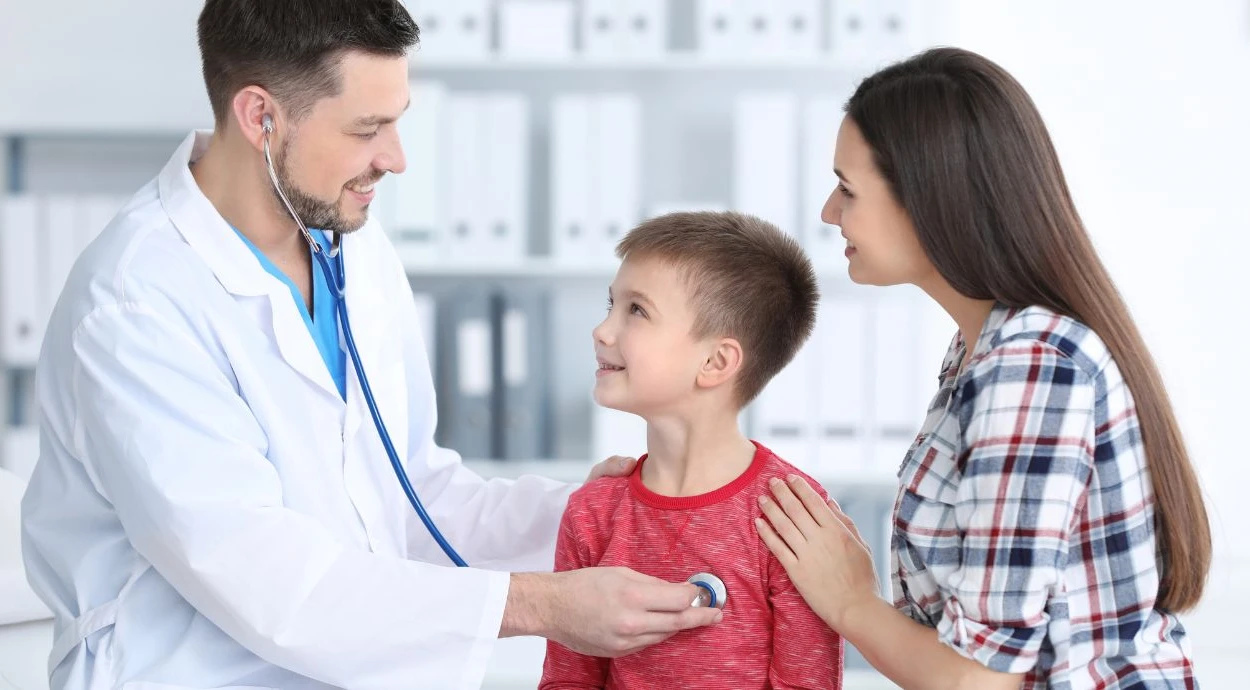
The child is first examined by a pediatrician or family doctor. The doctor assesses the general state of health, physical development, checks vaccination records and determines which specialists need to be visited to issue the certificate.
The medical checkup may include consultations with:
- an ophthalmologist — to check visual acuity and detect possible disorders;
- a neurologist — to assess the functioning of the nervous system, especially if there is headache, sleep disturbance, tics or dizziness;
- an orthopedic traumatologist — to check posture, gait and the condition of the musculoskeletal system;
- a dentist — to assess the condition of the teeth and oral cavity;
- an otolaryngologist — if there are complaints about hearing, nasal breathing or frequent ENT diseases.
The list of specialists depends on the child’s age, well-being, previous illnesses and the results of the initial examination. If the pediatrician sees a need for an additional consultation, the doctor explains to the parents which specialist to see and why it is necessary.
Is it necessary to take tests before school?
It is not always necessary to take tests before school. Usually, the pediatrician or family doctor decides this after examining the child: taking into account age, complaints, previous illnesses, chronic conditions and data from previous medical examinations.
Most often, the following may be needed:
- a complete blood count — to assess the body’s basic indicators;
- a general urine test — if it is necessary to check the function of the urinary system;
- additional laboratory tests — in case of complaints, chronic diseases or recommendations from a narrow specialist.
There is no need to undergo laboratory tests on your own before the visit. It is better to first see a doctor so as not to waste time on unnecessary examinations and to immediately understand what is actually needed to issue the certificate.
How to undergo a medical checkup for school
.jpg)
To undergo a medical checkup for school without rushing, it is worth first making an appointment for the child with a pediatrician or family doctor. During the appointment, the doctor will perform an examination, clarify complaints and explain which consultations or examinations are needed specifically for your child.
Usually, the process takes place in several stages:
- appointment with a pediatrician or family doctor;
- initial examination of the child;
- consultations with narrow specialists, if needed;
- taking tests or undergoing examinations as prescribed;
- issuing a medical certificate for school.
It is advisable to bring the child’s medical record, vaccination data and results of previous examinations, if available, to the appointment. This will help the doctor assess the child’s health faster and correctly issue the certificate.
If the child has chronic diseases, allergies, previous surgeries or injuries, this should also be reported to the doctor. Such information is important for determining the physical education group.
Our specialists note that in the pediatrics department of Oxford Medical, it is possible to receive consultations from doctors, take tests, undergo the necessary examinations and issue a medical certificate for school in comfortable conditions. The team is attentive to young patients, so all stages take place calmly, consistently and with care for the child’s comfort.
A medical examination before the school year helps not only to issue a certificate, but also to make sure that the child is ready for school workload. A medical checkup for school for children aged 14 and older is no less important than for first-graders.
The information in the article is provided for informational purposes and is not an instruction for self-diagnosis or treatment. If symptoms of a disease appear, you should consult a doctor.
Sources: