Contents:
- What is an intrauterine device
- How an intrauterine device works
- Why an intrauterine device is inserted
- When an intrauterine device can be inserted
- What you need to know after IUD insertion
- Possible complications after intrauterine device insertion
- The most common questions about an intrauterine device
The intrauterine device has remained one of the most reliable methods of contraception for many years. However, there are still many questions and common myths surrounding its use. Some women are concerned about the insertion procedure, while others worry about possible side effects or the risk of pregnancy.
In this article, we will explain how an intrauterine device works, how effectively it protects against pregnancy, whether IUD insertion is painful, who this method of contraception is suitable for, and what happens after insertion. We will also explain how to understand that the IUD has shifted and in which cases it is necessary to consult a gynecologist.
What is an intrauterine device
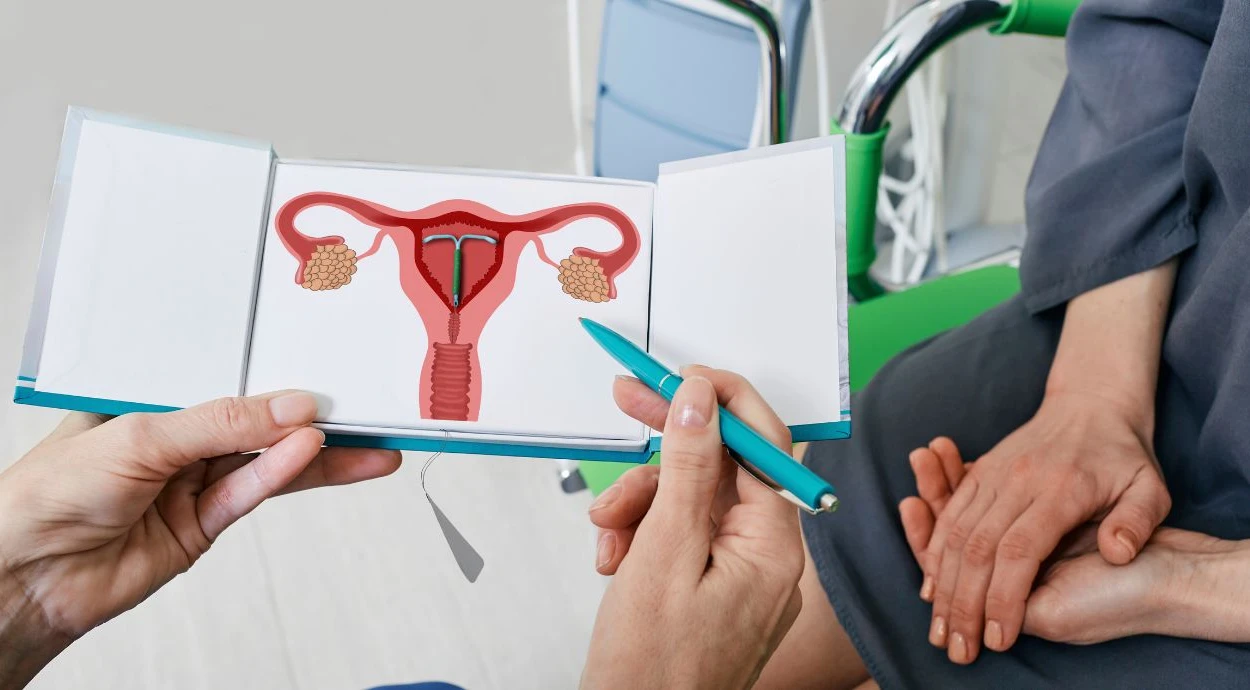
An intrauterine device (IUD) is a method of long-term contraception that is inserted into the uterine cavity to protect against unwanted pregnancy. According to the World Health Organization (WHO), modern intrauterine devices are more than 99% effective, making them one of the most reliable methods of contraception. At the same time, they do not protect against STIs — sexually transmitted infections, so a condom should additionally be used when there is a risk of infection.
Many women are interested in what an IUD looks like inside the uterus. Intrauterine devices may be T-shaped, F-shaped, or ring-shaped, but T-shaped models are used most often today. After insertion, the IUD is located entirely within the uterine cavity. Two thin threads extend from it and are positioned in the upper part of the vagina. They are needed to check the position of the IUD and for its subsequent removal.
How an intrauterine device works
After insertion, the intrauterine device creates conditions in which sperm cells lose the ability to fertilize the egg. Depending on the type of IUD, this effect is achieved in different ways.
How different types of intrauterine devices work:
-
a copper IUD releases copper ions that affect sperm cells: they reduce their motility and viability, preventing them from reaching and fertilizing the egg;
-
a hormonal IUD gradually releases levonorgestrel, which thickens the mucus in the cervix, makes it more difficult for sperm cells to enter the uterine cavity, and causes changes in the endometrium, reducing the likelihood of a fertilized egg implanting.
As a result, an IUD provides one of the highest levels of protection against unwanted pregnancy among modern methods of contraception.
.jpg)
Why an intrauterine device is inserted
An intrauterine device is most often chosen for long-term protection against unwanted pregnancy. It is a convenient method of contraception that does not require taking medication every day or using contraceptives before every sexual intercourse.
Hormonal ones may be used not only for contraception but also for medical indications. A doctor may recommend them to women with heavy and painful menstruation, menstrual cycle disorders, adenomyosis, or endometriosis to reduce the manifestations of the condition and improve quality of life.
Doctors at «Oxford Medical» recommend choosing an IUD after consulting a gynecologist. This makes it possible to select the type of IUD based on the woman’s health, reproductive plans, and individual needs.
When an intrauterine device can be inserted
In most cases, IUD insertion is performed during menstruation or in the first few days after it ends. However, if there are no contraindications, the procedure can also be performed on other days of the menstrual cycle.
Before the procedure, the gynecologist performs an examination and, if necessary, prescribes additional tests, including transvaginal ultrasound and laboratory tests. After evaluating the results, the doctor determines whether the woman has any contraindications to IUD insertion.
When an intrauterine device can be inserted after childbirth
The timing of IUD insertion after childbirth is determined by the gynecologist. If the delivery was uncomplicated, the IUD is usually recommended no earlier than 6–8 weeks later, when the uterus returns to its normal size. After a cesarean section, this period may be longer because it is necessary to wait for the scar to heal completely.
Can an intrauterine device be inserted if a woman has not given birth
According to the American College of Obstetricians and Gynecologists (ACOG), modern IUDs are a safe and effective method of contraception for women who have not given birth. At the same time, the decision to insert an IUD is always made individually after consultation and examination. The doctor considers the woman’s age, health, risk of infections, and reproductive plans in order to select the safest and most effective method of contraception.
What you need to know after IUD insertion
For several days after IUD insertion, mild discomfort in the lower abdomen and spotting may occur — this is a normal reaction of the body to the procedure. However, if severe pain, heavy uterine bleeding, fever, or discharge with an unpleasant odor occurs, it is necessary to consult a gynecologist as soon as possible.
What should not be done after IUD insertion
During the first 24–48 hours after the procedure, the body should be given time to adapt. During this period, doctors recommend:
-
avoiding intense physical activity and lifting heavy objects;
-
not visiting a sauna or steam bath and not taking hot baths;
-
not swimming in pools or open bodies of water;
-
maintaining intimate hygiene.
After this, most women can return to their usual lifestyle without any restrictions.
When sexual activity can be resumed after IUD insertion
If the procedure was completed without complications and the woman feels well, sexual activity can usually be resumed after 2–3 days. In some cases, the doctor may recommend abstaining from sexual intercourse for a longer period depending on the type of IUD, the day of the menstrual cycle, and the specific features of the procedure.
How long bleeding lasts after IUD insertion
Mild bleeding or spotting may persist for several days to two weeks. This is a normal reaction of the body to the procedure. If the bleeding becomes heavy, does not decrease over time, or is accompanied by severe pain, it is necessary to consult a gynecologist as soon as possible.
Brown discharge with an IUD
Brown discharge during the first days or weeks after IUD insertion is also usually considered normal. Its color is explained by a small amount of blood remaining in the genital tract and having time to darken. If the discharge gradually decreases, has no unpleasant odor, and is not accompanied by pain or fever, there is usually no reason for concern.
The first menstrual periods after IUD insertion
Doctors at «Oxford Medical» explain: the first menstrual periods after IUD insertion may differ from the usual ones. After the insertion of a copper IUD, menstruation may sometimes become heavier and last longer. A hormonal one, on the contrary, often reduces the amount of menstrual bleeding, and over time, menstruation may become very light or stop completely.
If the changes are accompanied by severe pain, excessive blood loss, or a sudden deterioration in well-being, it is necessary to consult a gynecologist.
Possible complications after intrauterine device insertion
.jpg)
Serious complications after IUD insertion are rare. However, in some cases, the IUD may shift or completely fall out of the uterine cavity, reducing its contraceptive effect. Therefore, it is important to know which symptoms may indicate such a problem and when it is necessary to consult a gynecologist.
When an intrauterine device may fall out and why
IUD expulsion most commonly occurs during the first few months after insertion. The main causes of IUD expulsion include:
-
incorrect positioning of the contraceptive after insertion;
-
individual anatomical features of the uterus;
-
heavy menstruation or strong uterine contractions;
-
IUD insertion shortly after childbirth, when the uterus has not yet fully recovered.
Doctors at «Oxford Medical» explain: the risk of expulsion is low, but it cannot be completely ruled out. Therefore, it is important to attend follow-up examinations with a gynecologist.
Symptoms of IUD expulsion
IUD expulsion may be suspected based on the following signs:
-
the threads have become longer or can no longer be felt;
-
discomfort or a sensation of a foreign object has appeared in the vagina;
-
unusual bleeding or pain in the lower abdomen has occurred;
-
the contraceptive has completely come out of the vagina.
If any of these symptoms occur, it is necessary to consult a gynecologist as soon as possible and use an additional method of contraception until the correct position of the IUD is confirmed.
How to understand that the intrauterine device has shifted
It is impossible to determine the exact position of the IUD independently. If there is any suspicion, it is necessary to consult a gynecologist. The doctor will perform an examination and, if necessary, prescribe a transvaginal ultrasound to assess the position of the IUD.
Symptoms of IUD displacement
The following may indicate that the intrauterine device has shifted:
-
pain or cramps in the lower abdomen that were not present before;
-
pain during sexual intercourse;
-
a change in the length of the threads;
-
bleeding outside menstruation.
Doctors at «Oxford Medical» recommend not attempting to check or adjust the IUD independently. If any suspicious symptoms occur, it is necessary to consult a gynecologist as soon as possible to make sure that the IUD is in the correct position.
The most common questions about an intrauterine device
.jpg)
The intrauterine device is one of the most thoroughly studied methods of contraception, but there are still many questions surrounding it. Below, we have collected answers to the questions women most often ask during a consultation with a gynecologist.
Can you become pregnant with an intrauterine device
Yes, but the likelihood is very low. Modern IUDs provide more than 99% protection against unwanted pregnancy. Pregnancy may most often occur if the IUD has shifted, fallen out, or reached the end of its recommended period of use.
Will a pregnancy test show pregnancy with an IUD
The presence of an IUD does not affect the result of a pregnancy test. If fertilization has occurred, the test will show a positive result. In this situation, it is important to consult a doctor as soon as possible to confirm the pregnancy and rule out an ectopic pregnancy.
Can a man feel the intrauterine device
In most cases, no. Sometimes the thin threads may be felt during sexual intercourse, but they usually do not cause discomfort. If the woman or her partner experiences discomfort, it is advisable to consult a gynecologist. If necessary, the doctor can adjust the length of the threads.
Do women gain weight from the Mirena intrauterine device
There is no convincing evidence that the «Mirena» intrauterine device directly causes weight gain. At the same time, some women may experience individual changes in appetite, fluid retention, and slight weight fluctuations during the first few months after insertion. If the weight gain is significant or accompanied by other symptoms, it is advisable to consult a gynecologist.
The intrauterine device is a modern, reliable, and convenient method of long-term contraception that provides a high level of protection against unwanted pregnancy when inserted correctly. To ensure that the IUD is effective and safe, it is important to follow the doctor’s recommendations and not postpone a visit to a specialist if unusual symptoms appear.
The information in this article is provided for informational purposes and is not a guide to self-diagnosis or treatment. If symptoms of a condition occur, you should consult a doctor.
Sources: