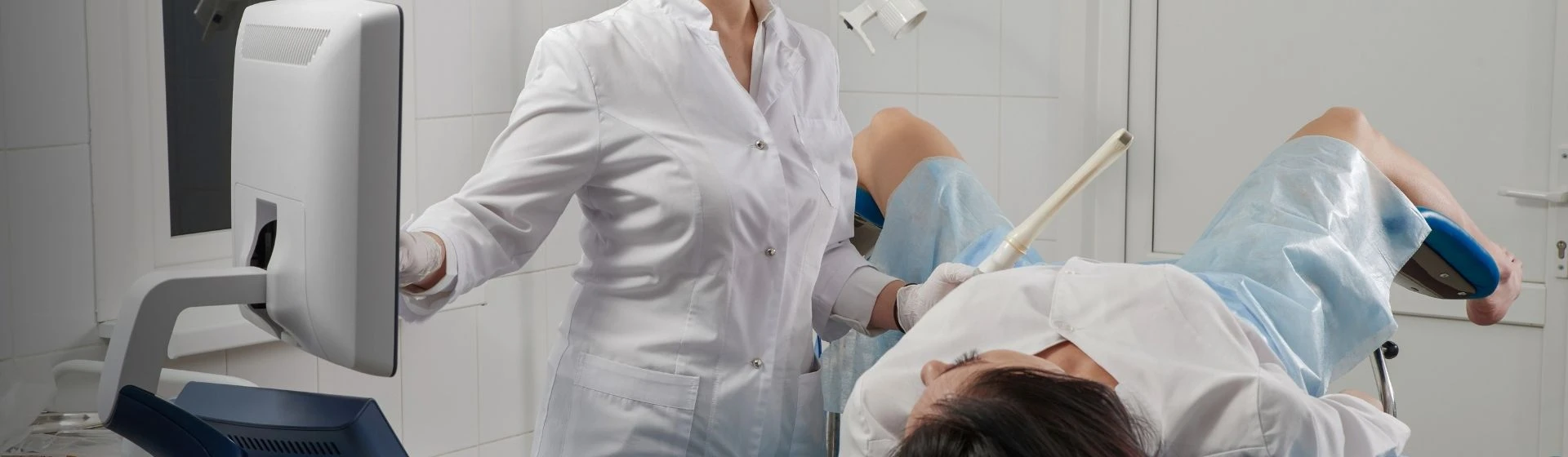
A transvaginal examination is performed in a modern ultrasound room with respect for the patient’s privacy and comfort. Before the procedure, the doctor explains the course of the examination, after which the patient is positioned on the couch.
A special vaginal probe is used for the examination. A disposable protective cover is placed on it, gel is applied, and it is carefully inserted into the vagina. The examination usually does not cause pain, but with an inflammatory process, increased sensitivity, or tension, moderate discomfort may be felt.
During transvaginal ultrasound of the internal female genital organs, the doctor assesses the uterus, endometrium, cervix, ovaries, pelvic space, and other structures that are available for visualization. If necessary, the specialist may take measurements, save images, and compare the results with previous examinations.
The procedure usually lasts 10–20 minutes. After the examination is completed, the patient receives a conclusion with a description of the results. Then it is assessed by the obstetrician-gynecologist who prescribed the examination, taking into account the complaints, examination results, tests, and medical history.