


Contents:
- What is shingles
- What herpes zoster looks like
- What causes shingles
- Is herpes zoster contagious
- What is the incubation period
- Where shingles can appear on the body
- How shingles begins
- How to understand that you have shingles
- How to treat shingles at home
- When to see a doctor
Shingles (HZ) often begins not with a rash, but with pain, burning, tingling, or increased skin sensitivity in a specific area of the body. After a few days, characteristic blisters may appear, usually arranged in a band on one side of the torso, face, neck, or limb.
This disease is associated with the varicella-zoster virus, which, after a previous infection, can remain in nerve cells for years and become active when immune protection decreases. Therefore, it is important to understand how shingles manifests, how it differs from allergy, dermatitis, or common herpes, and when it is not advisable to postpone a doctor’s consultation. This is exactly what our article will be devoted to.
What is shingles
Shingles is a viral disease that develops as a result of the reactivation of the varicella-zoster virus. In medical practice, it is also called Herpes zoster. After chickenpox in childhood or adulthood, the virus does not disappear completely but enters a “dormant” state in the nerve ganglia.
After chickenpox, the virus may remain in the body even when the symptoms have long disappeared. Therefore, successful treatment of chickenpox and complete clinical recovery do not mean that the virus has been completely eliminated from the body.
When the immune system weakens, the virus can become active again. It then spreads along the nerve fibers and causes inflammation, pain, and a characteristic rash on the skin. That is why, with this disease, not only the skin surface often hurts, but also the deeper tissues in the affected area.
Shingles is not ordinary skin irritation or an allergic reaction. It is an infection that has a neurological component, so it may be accompanied by pronounced pain, burning, itching, increased sensitivity, and discomfort even after the rash has healed.
The doctors of “Oxford Medical” note: it is important to understand that this is not repeated chickenpox, but another form of activity of the same virus. If the primary infection usually manifests as chickenpox with a widespread rash over the body, then with shingles, the lesion is more often limited to one area and follows the course of a nerve.
What herpes zoster looks like
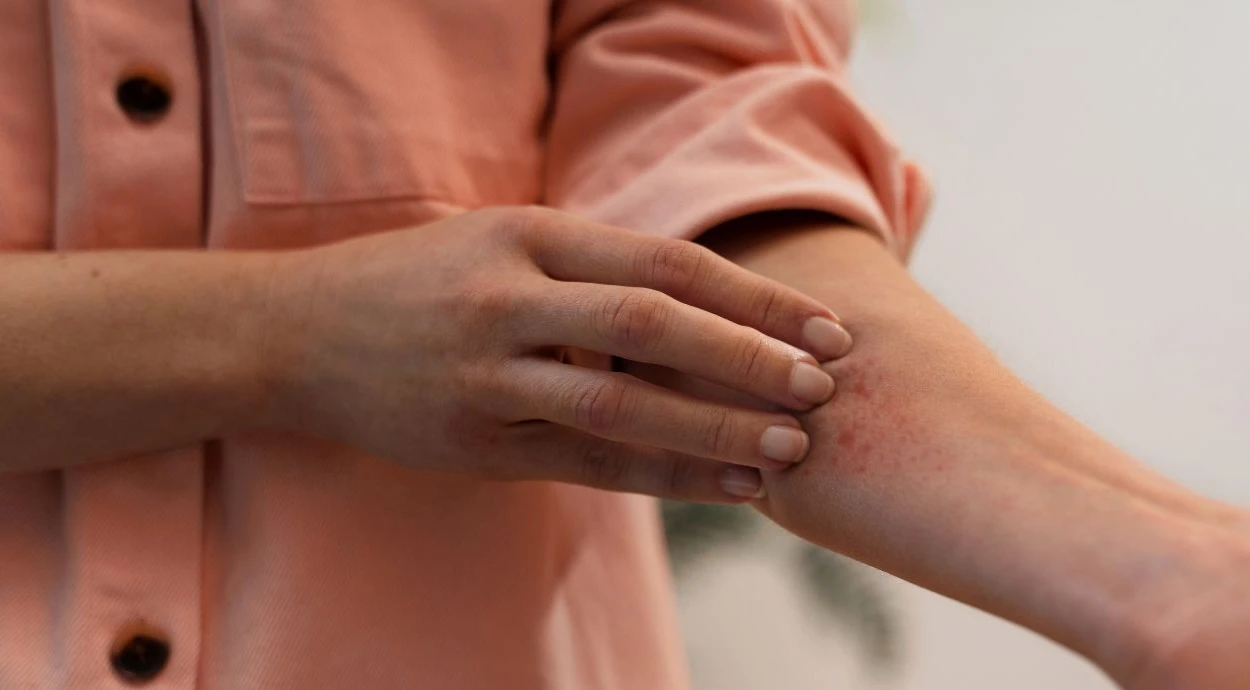
Herpes zoster usually appears as a limited area of rash located in groups or in a band along the course of a nerve. Most often, the elements appear on one side of the body or face rather than symmetrically. According to CDC, the rash in shingles is usually one-sided, painful or itchy, and the blisters dry out over time and become covered with crusts.
A characteristic sign is small blisters with clear fluid on reddened skin. They may be arranged in dense groups, forming a band, arc, or “belt” on the torso. It is because of this arrangement that the disease received the name shingles.
The most noticeable signs of the rash in herpes zoster are:
- localized redness of the skin;
- groups of small fluid-filled blisters;
- rash arranged in a band or “belt”;
- lesion mainly on one side of the body;
- pain, itching, or burning in the area of the rash;
- gradual drying of the blisters with the formation of crusts.
The blisters may not appear all at once, but over several days. Therefore, in one area, fresh elements, tense blisters, and crusts can sometimes be seen at the same time. According to information from the WHO, the rash in shingles most often appears as one band of blisters on one side of the body.
During healing, the clear fluid in the blisters may become cloudy, after which the rash elements gradually dry out. Crusts form in their place and later fall off. According to clinical data from the CDC, new blisters may form over 3–5 days, and the entire rash usually heals within 2–4 weeks.
What causes shingles
.jpg)
Shingles occurs not because of a new infection from outside, but because of the reactivation of the Varicella zoster virus. When the immune system controls the virus well, a person has no symptoms. But under certain conditions, the protective mechanisms weaken, and the virus becomes active again.
The reactivation of the virus is most often provoked by:
- decreased immune protection;
- severe or prolonged stress;
- previous infectious diseases;
- chronic diseases that exhaust the body;
- immunosuppressive therapy;
- oncological diseases;
- HIV infection or other immunodeficiency states;
- physical overexertion.
According to information from the WHO, the risk of developing shingles increases with age, as well as in people with a weakened immune system. That is why the disease occurs more often after the age of 50, although it can also develop in younger patients.
The doctors of “Oxford Medical” explain: shingles does not appear because of hypothermia, contact with cold water, or a draft by themselves. Such factors can only indirectly affect the general condition of the body, but the true cause of the disease is reactivation of the varicella-zoster virus.
Is herpes zoster contagious
Herpes zoster is not transmitted as a separate disease: a person cannot “catch shingles” from another person. At the same time, the Varicella zoster virus can be transmitted to those who have not previously had chickenpox and do not have immune protection after vaccination. In this case, after contact, not shingles but chickenpox may develop.
The period when fresh blisters are present on the skin is the most important. It is their contents that may contain viral particles. When all elements of the rash dry out and become covered with crusts, the risk of transmitting the virus decreases significantly.
Special caution is needed around people for whom primary infection with the virus may be dangerous. High-risk groups include:
- pregnant women who have not had chickenpox;
- newborn babies;
- people with a weakened immune system;
- patients after chemotherapy or immunosuppressive treatment;
- people who do not have immunity to chickenpox.
To reduce the risk of transmitting the virus, it is advisable to cover the rash with clean clothing or a dressing, not touch the blisters with your hands, wash your hands thoroughly after contact with the skin, and not use shared towels. It is also worth temporarily avoiding close contact with people from risk groups until the blisters have completely dried out.
What is the incubation period
For shingles, the concept of an incubation period is conditional. In primary infection with the Varicella zoster virus, the incubation period applies to chickenpox and usually lasts 10–21 days. But with herpes zoster, the virus can remain inactive for years, so it is impossible to determine the exact interval before symptoms appear.
Before the rash, there is often a short period of pain, burning, tingling, or increased skin sensitivity. Such sensations usually appear 1–5 days before the blisters develop. That is why, at the beginning of the disease, it is sometimes confused with neuralgia, back pain, or skin irritation.
Where shingles can appear on the body
Shingles can appear on different areas of the body, but most often the rash occurs where the affected nerve passes. Because of this, it has a characteristic one-sided location: on the right or left, without crossing the midline of the body.
The most common areas affected by HZ are:
- the chest and intercostal spaces;
- the back, lower back, or side;
- the abdomen;
- the neck;
- the face;
- the scalp;
- the shoulder, arm, or leg.
The most typical variant is a rash on the torso, when the blisters are arranged in a band from the back to the chest or abdomen. This form often creates the impression of a “belt” around the body.
The doctors of “Oxford Medical” warn: if the rash appears on the face, especially near the eye, on the eyelids, forehead, or nose, the situation requires a prompt doctor’s consultation. Involvement of this area may be associated with a risk of complications affecting the organ of vision, so waiting for spontaneous healing is dangerous.
How shingles begins
Shingles often begins with unpleasant sensations in one area of the skin even before the rash appears. A person may feel burning, tingling, itching, pain, or increased sensitivity to touch. Sometimes even clothing causes discomfort in the area where the rash will later appear.
The onset of shingles may also be accompanied by general symptoms:
- weakness;
- headache;
- a slight increase in temperature;
- chills;
- body aches;
- pain in the affected area.
At an early stage, the disease is easily confused with neuralgia, muscle pain, allergy, or skin irritation. Therefore, it is important not to focus only on the external appearance of the rash, but also to take into account the sequence of symptoms: first pain or burning, then localized blisters along the course of a nerve.
How to understand that you have shingles
Shingles can be suspected by the combination of two signs: one-sided pain, burning or tingling, and a localized rash in the same area. However, it is impossible to establish the diagnosis accurately on your own, so if such symptoms appear, a doctor’s examination is needed.
During the consultation, a dermatologist assesses the appearance of the rash and the patient’s general condition. In most cases, this is enough to distinguish herpes zoster from other diseases. Additional examinations are not always needed, but they may be prescribed in cases of an atypical course of the disease.
To clarify the diagnosis, the following may be used:
- PCR testing of blister contents or a skin swab;
- blood tests if immunodeficiency or complications are suspected.
It is advisable to see a doctor within the first 72 hours after the rash appears. During this period, antiviral therapy may be most effective and helps reduce the risk of long-lasting pain after the skin has healed.
How to treat shingles at home
.jpg)
The basis of treatment usually consists of antiviral medications prescribed by a doctor. You should not start treating shingles on your own or change the treatment regimen, because the wrong choice of medication can reduce the effectiveness of therapy.
At home, it is important to reduce skin irritation, avoid injuring the rash, and maintain hygiene so as not to increase the risk of bacterial infection. For this, it is recommended to:
- keep the rash area clean and dry;
- wear loose clothing made of soft fabrics;
- not scratch or puncture the blisters;
- not cover the rash with tight adhesive plasters unless necessary;
- use a separate towel;
- wash your hands after contact with the affected area;
- avoid close contact with people who have not had chickenpox, pregnant women, newborns, and patients with weakened immunity.
The doctors of “Oxford Medical” warn: it is not recommended to cauterize the rash with alcohol, iodine, concentrated antiseptics, or other aggressive agents. They may additionally irritate the skin, increase pain, and contribute to the formation of cracks.
What to apply to shingles
Topical agents for shingles are selected depending on the condition of the rash: whether there is oozing, irritation, itching, crusts, or signs of bacterial inflammation. They do not replace the main treatment, but help care for the affected area and reduce discomfort.
For local care, the doctor may recommend:
- mild antiseptic solutions for skin treatment;
- drying agents if the blisters are oozing;
- medications to reduce itching and irritation;
- topical antibacterial agents if there are signs of infection.
Any agent should be applied carefully, without rubbing or pressing on the blisters. If severe burning, sharp redness, or increased pain appears after treatment, it is worth stopping the use of the medication and consulting a doctor.
How to relieve shingles pain
Pain in shingles is associated not only with the rash, but also with inflammation of the nerve fibers. Therefore, ordinary topical agents do not always provide a sufficient effect. The doctor may recommend:
- paracetamol or nonsteroidal anti-inflammatory drugs;
- local cooling compresses without ice or alcohol;
- medications for the treatment of neuropathic pain if the pain is severe or prolonged.
It is important not to exceed the dosage of painkillers and not to combine several medications without consulting a doctor. People with diseases of the stomach, liver, kidneys, or heart, as well as patients taking anticoagulants, should be especially careful.
The doctors of “Oxford Medical” explain: if the pain is sharp, burning, prevents sleep, or persists after the rash disappears, you should see a doctor again. This may be a sign of postherpetic neuralgia — a complication in which nerve pain lasts longer than the skin manifestations.
When to see a doctor
You should see a doctor at the first signs of shingles: one-sided pain, burning, tingling, and the appearance of a localized blistering rash. The earlier the diagnosis is established, the faster treatment can be selected and the risk of complications reduced.
It is especially important not to postpone a consultation if the rash appears on the face, near the eye, on the eyelids, nose, in the ear, or on the scalp. In such cases, the disease may affect not only the skin but also nerves and sensory organs.
You need to seek medical help urgently if there is:
- a rash in a pregnant woman, newborn baby, or older person;
- severe pain that does not decrease after painkillers;
- high fever, pronounced weakness, or chills;
- spread of the rash to large areas of the body;
- a rash near the eye or worsening vision;
- dizziness, hearing impairment, or severe ear pain;
- purulent discharge, sharp redness, or swelling of the skin.
In complicated cases, hospitalization may be required. This applies to severe disease, involvement of the eyes or nervous system, widespread rash, pronounced intoxication, as well as situations when the patient has immunodeficiency or serious concomitant diseases.
Shingles does not always pass easily, so it is not worth limiting yourself only to home care. A timely consultation helps confirm the diagnosis, select safe treatment, and prevent consequences that may persist longer than the rash itself.
The information in this article is provided for informational purposes and is not an instruction for self-diagnosis or self-treatment. If symptoms of the disease appear, you should consult a doctor.
Sources: