Contents:
- When ragweed blooms
- How ragweed allergy manifests: main symptoms
- Cross-reactive allergy to ragweed
- What to do if you are allergic to ragweed
- How to reduce contact with the allergen during the blooming season
Ragweed allergy is one of the most common seasonal allergies, which most often worsens in late summer and early autumn. Ragweed pollen can cause a runny nose, nasal congestion, sneezing, itchy eyes, cough, and a general deterioration of well-being.
In this article, we explain when the plant blooms, what the symptoms of ragweed allergy may be, and what can intensify the body’s reaction. We also explain how to relieve the condition at home and when it is necessary to consult a doctor.
When ragweed blooms
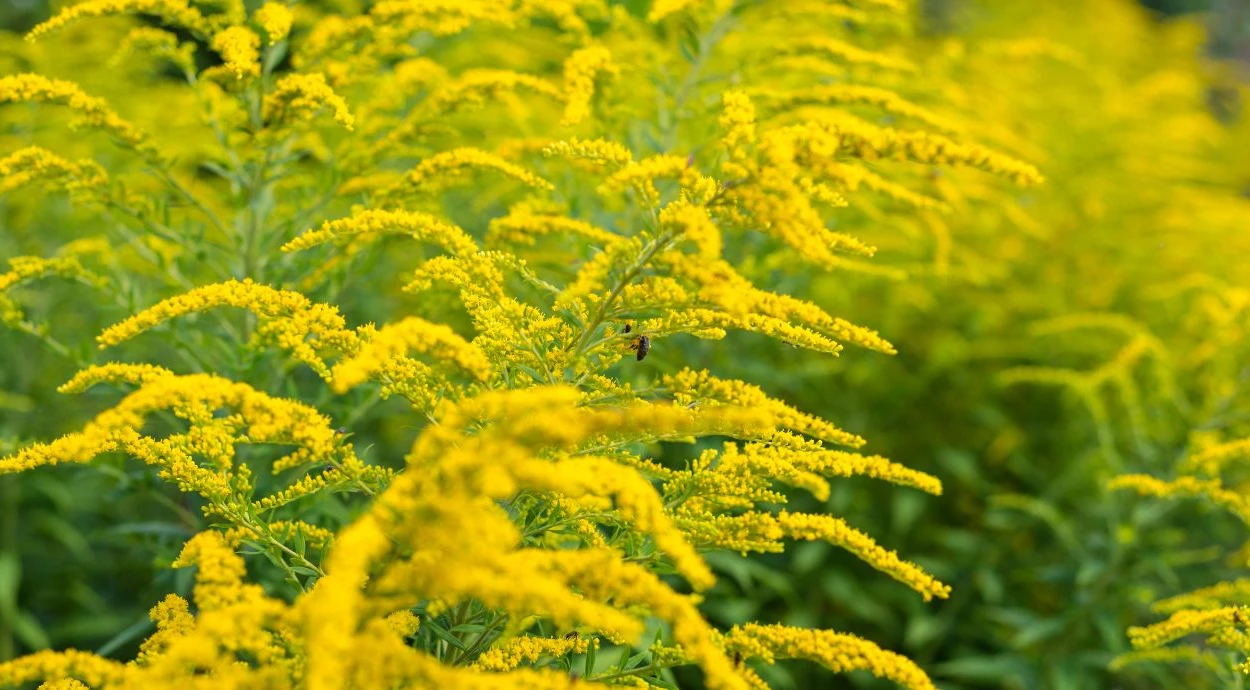
The ragweed blooming period in Ukraine usually begins in late July or August and may last until October. The highest concentration of pollen in the air is most often observed in August and the first half of September. It is during this period that allergy caused by ragweed usually manifests most intensely.
Ragweed pollen is easily carried by the wind over long distances, so symptoms may occur even without direct contact with the plant. Well-being most often worsens in dry and windy weather.
Doctors at Oxford Medical note: on days with a high concentration of pollen in the air, people with seasonal allergies are advised to monitor their well-being more carefully and, if possible, limit prolonged time outdoors.
How ragweed allergy manifests: main symptoms
Ragweed pollen irritates the mucous membranes of the respiratory tract and eyes, which is why seasonal allergy often resembles a cold. However, symptoms usually appear or worsen during the plant’s blooming period, especially after spending time outdoors. The severity of the reaction may vary — from mild discomfort to a significant deterioration of well-being.
The most common manifestations of ragweed allergy are:
- allergic rhinitis;
- nasal congestion;
- frequent sneezing;
- itching in the nose and throat;
- redness and tearing of the eyes;
- dry cough;
- headache;
- increased fatigue.
In some people, a reaction to ragweed pollen may be accompanied by difficulty breathing, a feeling of shortness of breath, and coughing attacks. People who have been diagnosed with asthma or have a tendency to bronchospasm should be especially attentive to such symptoms.
.jpg)
Cross-reactive allergy to ragweed
Doctors at Oxford Medical explain: cross-reactive allergy occurs when the immune system reacts not only to ragweed pollen but also to proteins with a similar structure in certain foods. Because of this, during the blooming season, itching in the mouth, throat irritation, swelling of the lips, abdominal discomfort, or worsening of a runny nose may occur after eating.
According to the American Academy of Allergy, people who are sensitive to ragweed pollen may have a cross-reaction to banana, cucumber, melon, watermelon, zucchini, and some other plant-based foods. Such reactions do not occur in all people with seasonal allergies. In some patients, symptoms appear only during the active blooming period of the plant, while at another time of year these foods may be tolerated normally.
What not to eat if you are allergic to ragweed
In cases of ragweed allergy, foods that may provoke a cross-reaction are most often limited. Not all patients need to completely exclude them from their diet, but during the blooming season it is worth carefully monitoring well-being after meals.
Potentially undesirable foods:
- melon;
- watermelon;
- banana;
- cucumber;
- zucchini;
- sunflower seeds;
- sunflower oil;
- honey;
- chamomile and other herbal teas.
If itching in the mouth, throat irritation, swelling of the lips, a rash, or worsening of a runny nose appears after a certain food, it is better to temporarily remove it from the diet.
Diet for ragweed allergy
A diet does not mean strict restrictions for all patients. The main goal is to reduce the risk of cross-reactions and not overload the body with foods that may intensify symptoms during the blooming season.
During an exacerbation, it is better to give preference to simple and well-tolerated dishes: porridge, lean meat, fish, heat-treated vegetables, soups, and fermented dairy products without additives. New foods or those after which discomfort occurred earlier should preferably be introduced gradually, so that it is easier to track the body’s individual reaction.
What to do if you are allergic to ragweed
With seasonal allergy, it is important not only to reduce symptoms but also to limit contact with pollen as much as possible. If the allergic reaction is not controlled, symptoms may become more pronounced with each blooming season.
To relieve the condition during the ragweed blooming period, it is recommended to:
- wash your face and rinse your eyes with water after returning home;
- wash your hair daily to rinse pollen from the hair;
- change clothes after walks;
- do wet cleaning at home;
- use saline solutions to rinse the nose;
- spend less time outdoors in windy weather;
- keep windows closed during the active blooming of plants, especially during the day.
These measures help reduce the amount of allergen that gets onto the mucous membranes and skin. It is especially important to follow these recommendations during the peak blooming period of ragweed.
How to treat ragweed allergy at home
Home methods do not eliminate the cause of the allergy, but they can help reduce discomfort and relieve symptoms. The best effect is usually achieved by combining household measures with properly selected medications.
To relieve symptoms, the following may be used:
- antihistamines (as prescribed by a doctor);
- saline solutions for the nose;
- nasal sprays;
- eye drops for itching and tearing.
Medication treatment for allergy caused by ragweed should preferably be selected together with a doctor, especially if symptoms recur every year or become more pronounced. Self-treatment may temporarily mask allergy manifestations, but it does not always make it possible to control the inflammatory process.
Doctors at Oxford Medical recommend not using vasoconstrictor nasal drops without control. With prolonged use, they can cause dryness of the mucous membrane and worsening of nasal breathing.
How to treat ragweed allergy: when to consult a doctor
.jpg)
In some cases, seasonal allergy requires not only symptomatic treatment but also full medical supervision. This is especially important if well-being significantly worsens or usual remedies do not help.
In such cases, an allergist consultation is needed:
- nasal congestion does not go away for a long time;
- shortness of breath or wheezing occurs;
- a severe cough appears at night;
- symptoms interfere with sleep and everyday life;
- anti-allergy medications do not provide sufficient effect;
- there is a suspicion of a cross-reactive food reaction;
- symptoms recur every year during the same period.
An allergist may recommend allergy tests, help identify the specific allergen, and select an individual therapy plan. In some cases, allergen-specific immunotherapy is used — a treatment method that helps reduce the body’s sensitivity to ragweed pollen.
If the allergy is accompanied by rashes, itching, or skin irritation, an additional consultation with a dermatologist may be needed. Skin manifestations sometimes intensify during a period of active contact with the allergen or with cross-reactive food reactions.
In case of pronounced eye redness, tearing, burning, or light sensitivity, it is also worth consulting an ophthalmologist. The specialist will help rule out other eye diseases and select drops to reduce irritation.
How to reduce contact with the allergen during the blooming season
It is difficult to completely avoid contact with ragweed pollen, but proper organization of daily life helps significantly reduce the burden on the body. It is especially important to follow preventive measures during the active blooming period and in dry, windy weather.
To reduce contact with pollen, it is recommended to:
- go outside after rain whenever possible, when the pollen concentration is lower;
- avoid long walks in the morning and in the first half of the day;
- not dry clothes and bed linen on the balcony or outdoors;
- use air conditioners and air purifiers with filters;
- keep car windows closed during trips;
- rinse the nose with saline solutions after returning home.
Our doctors recommend following these rules especially carefully for people with a severe course of seasonal allergy. Even simple household changes can help reduce the frequency of exacerbations and the need for medications.
An allergic reaction to ragweed may manifest as a runny nose, itchy eyes, cough, difficulty breathing, and other symptoms that worsen during the plant’s blooming season. Timely diagnosis and properly selected treatment of ragweed allergy help better control the manifestations of the disease and reduce the risk of complications during the active blooming period.
The information in this article is provided for informational purposes and is not an instruction for self-diagnosis or treatment. If symptoms of the disease appear, you should consult a doctor.
Sources: