Contents:
- Why knees hurt after running
- What is “runner’s knee”
- What are the symptoms of patellofemoral syndrome
- When it is worth making an appointment with a doctor
- How the condition is diagnosed
- How to get rid of pain: the main methods of treating “runner’s knee”
- How to prevent the condition
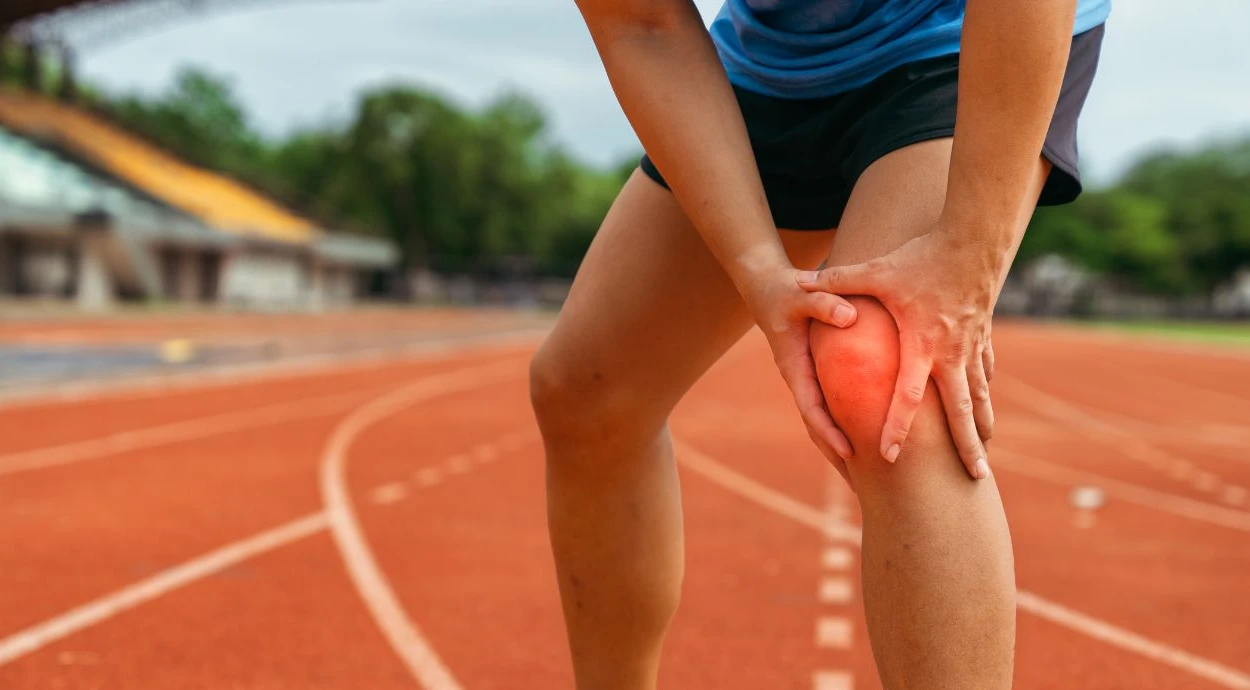
Running helps maintain physical fitness, reduces stress levels, and improves overall well-being. At the same time, regular stress on the joints can lead to discomfort or pain, especially in the knee area. These sensations often appear gradually and at first do not cause concern, but over time they may intensify and affect quality of life.
If your knee hurts after running, this may be a signal of overuse, improper technique, or the development of a certain musculoskeletal disorder. It is important not to ignore the symptoms, but to determine their cause in a timely manner.
In this article, we will look at why knee pain occurs during and after running, what “runner’s knee” is, as well as which treatment and prevention methods help return to activity without discomfort.
Why knees hurt after running
The knee joint withstands a significant load every day, and during running this load increases several times. That is why even minor technique errors or overuse can lead to discomfort. Most often, patients come with the complaint that pain in the knees after running appears gradually and intensifies with each workout.
One of the key reasons is excessive or sudden increase in physical activity. If the body does not have time to adapt, the tissues of the joint and the surrounding structures begin to become overloaded. As a result, microtrauma, inflammation, and pain may occur.
The condition of the muscles also plays an important role. Weakness or imbalance of the thigh and lower leg muscles disrupts proper load distribution. Because of this, the trajectory of patellar movement changes, which can cause tissue irritation and painful sensations.
Among other common causes:
- running on a hard or uneven surface, which increases impact load;
- improperly selected footwear without sufficient cushioning;
- lack of a warm-up before training;
- poor running technique;
- excess body weight, which increases the load on the joints.
Doctors at “Oxford Medical” note that sometimes pain in the knees during running may be associated not only with overuse, but also with the initial manifestations of joint diseases or surrounding tissues. That is why, in the case of regular or increasing pain, it is important to consult a doctor in a timely manner and undergo an examination.
What is “runner’s knee”
“Runner’s knee” is not a separate diagnosis, but a generalized name for conditions in which pain occurs in the knee area as a result of regular stress, in particular during running. Most often, people who train actively or have sharply increased the intensity of physical activity face this problem.
In most cases, this term refers specifically to patellofemoral syndrome, which is associated with impaired movement of the patella and uneven load distribution in the joint. Because of this, tissue irritation occurs and pain appears in the front part of the knee.
At the same time, “runner’s knee” may also include other conditions associated with overuse of the knee joint. In particular, discomfort sometimes arises due to tension or inflammation of an anatomical structure such as the iliotibial tract, which runs along the outer surface of the thigh and takes part in stabilizing the knee.
The pain usually has a gradual nature: at first it appears only during physical activity, but over time it may bother a person even at rest. That is why it is important not to ignore the first symptoms and to pay attention to changes in well-being in time.
What are the symptoms of patellofemoral syndrome
Patellofemoral syndrome is one of the most common causes of discomfort in the front part of the knee, especially in physically active people. Its development is associated with impaired gliding of the patella along the articular surface of the femur, which leads to tissue irritation and the appearance of pain.
The symptoms usually increase gradually and may differ in intensity. The most characteristic sign is pain in the knee after running, which occurs during exertion or immediately after it. At first, it may be minor, but without treatment it often intensifies.
Typical manifestations include:
- discomfort or aching pain in the front part of the knee;
- pain in the knees during running, especially when going downhill, squatting, or climbing stairs;
- a feeling of friction, clicking, or “creaking” in the joint;
- worsening of symptoms during prolonged sitting with bent legs;
- sometimes — slight swelling or a feeling of stiffness.
In many cases, patients also note that pain in the knees after running persists for some time after finishing the workout. This may indicate an inflammatory process and requires attention.
If the symptoms recur or become more intense, you should not postpone consulting a doctor, because correction of the condition is much more effective in the early stages.
When it is worth making an appointment with a doctor
Slight discomfort after an intense workout may occur even in healthy people and usually goes away on its own after rest. However, there are situations when the symptoms should not be ignored. This especially applies to cases when the knees hurt after running regularly or the pain gradually intensifies.
You should consult a specialist if:
- the pain lasts for more than several days or does not decrease after rest;
- the discomfort returns after every workout;
- swelling, redness, or increased temperature in the joint area appears;
- restricted mobility or a feeling of stiffness occurs;
- there is a feeling of instability or the leg “giving way.”
A consultation is also needed if pain in the knees after running interferes with usual physical activity or even daily tasks. In such cases, it is important not to delay the examination, because in the early stages most problems respond to conservative treatment.
It is best to consult a doctor — an orthopedic traumatologist will perform an examination, determine the cause of pain, and, if necessary, prescribe additional tests. This helps avoid complications and return to an active lifestyle faster.
How the condition is diagnosed
.jpg)
Diagnosis begins with a detailed interview with the patient and a clinical examination. The doctor уточняет when exactly the pain appears, under what conditions it intensifies, and whether it is related to physical exertion. For example, if pain in the knees after running occurs, this helps suspect overuse or specific syndromes associated with the biomechanics of movement.
During the examination, the position of the patella, the range of motion in the joint, the condition of the muscles and ligaments, as well as the response to functional tests are assessed. This makes it possible to determine whether there are disturbances in the movement of the kneecap or signs of inflammation.
Instrumental methods may be used to clarify the diagnosis:
- ultrasound examination — helps assess the condition of soft tissues;
- X-ray imaging — is used to rule out bone changes;
- magnetic resonance imaging — provides detailed information about cartilage, ligaments, and other joint structures.
In complex or disputable cases, the doctor may recommend knee arthroscopy. This is a minimally invasive procedure that makes it possible to directly examine the internal structures of the joint and, if necessary, simultaneously perform therapeutic manipulations.
How to get rid of pain: the main methods of treating “runner’s knee”
Specialists at “Oxford Medical” note that treatment depends on the cause of the pain, its intensity, and the duration of symptoms. In most cases, conservative methods are used for “runner’s knee,” which make it possible to reduce inflammation, restore joint function, and return to physical activity without discomfort.
The first stage is reducing the load. It is recommended to temporarily limit running or replace it with less traumatic types of activity in order to give the tissues an opportunity to recover. If there is pain in the knee after running, it is important not to continue training through pain, because this may worsen the condition.
The basis of treatment is the restoration of proper biomechanics of movement. For this purpose, therapeutic exercises are prescribed, aimed at strengthening the muscles of the thigh, buttocks, and lower leg, as well as improving coordination of movements. This helps stabilize the knee joint and reduce the load on the patella.
An effective addition is physiotherapy, which helps reduce inflammation, improves blood circulation in tissues, and accelerates the recovery process. Depending on the situation, various treatment methods may be used.
Kinesio taping is used to reduce the load on the knee and improve stability. Special elastic tapes help support the muscles and ligaments, reduce pain, and make movement easier.
If necessary, the doctor may prescribe medication therapy, in particular anti-inflammatory drugs, which help reduce pain and swelling.
In cases when conservative treatment does not produce results or there is structural damage, surgical intervention may be considered. Most often, knee arthroscopy is used, which makes it possible to eliminate the cause of pain with minimal intervention.
A comprehensive treatment approach makes it possible not only to eliminate symptoms, but also to prevent the problem from recurring.
How to prevent the condition
Prevention plays a key role in maintaining the health of the knee joints, especially during regular physical activity. Following basic recommendations helps reduce the risk of tissue overload and the development of conditions such as patellofemoral syndrome.
To avoid a situation when pain in the knees after running appears, it is important to gradually adapt the body to physical loads and not allow a sharp increase in workout intensity.
Main prevention recommendations:
- gradual increase of load — increase distance and workout intensity step by step, giving the body time to adapt;
- proper footwear — choose running shoes taking into account foot type and with sufficient cushioning;
- warm-up before running — preparing the muscles and joints reduces the risk of injury;
- muscle strengthening — regular exercises for the thigh, buttock, and core muscles help stabilize the knee joint;
- control of running technique — proper foot placement and body position reduce the load on the knees;
- recovery — sufficient rest between workouts prevents the accumulation of microtraumas;
- kinesio taping — may be used for additional support of the knee joint during exertion and reducing the risk of overload.
Timely prevention makes it possible not only to avoid pain, but also to preserve activity without limitations in the long term.
The information in this article is provided for informational purposes and is not an instruction for self-diagnosis or self-treatment. If symptoms of a disease appear, you should consult a doctor.
Sources:
Journal of Orthopaedic & Sports Physical Therapy