

 Adults Adults Adults Adults Adults Adults Adults Adults Adults
  Children Children Children Children


 Hotline:
 Adults Adults Adults Adults Adults Adults Adults Adults Adults Children Children Children Children


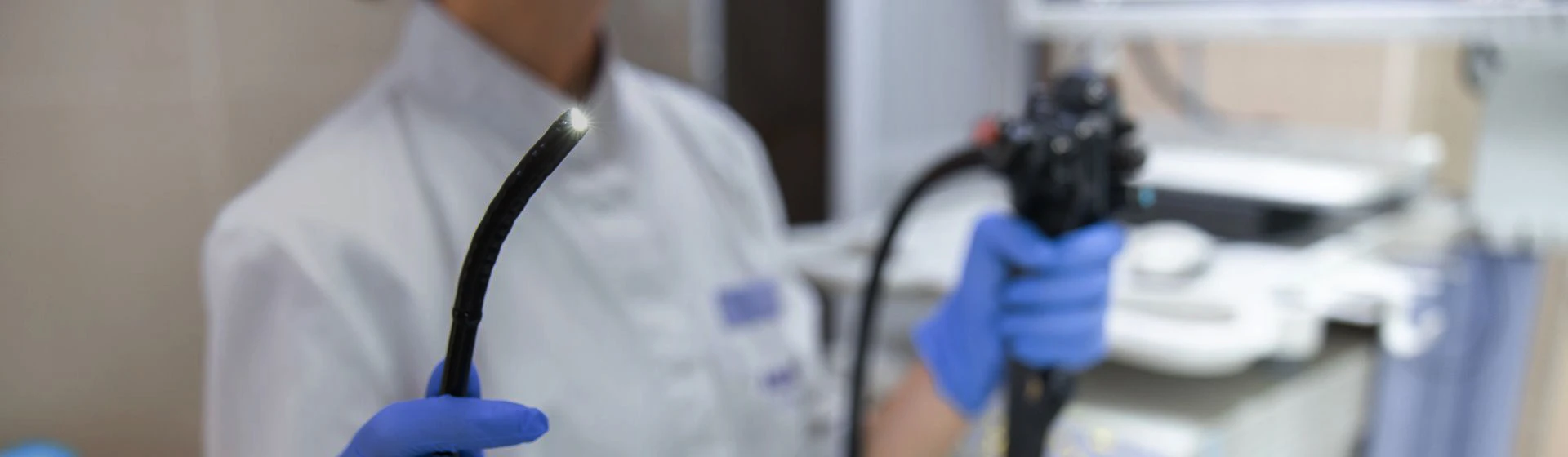
Gastric polypectomy
Gastric polypectomy
The gastric polyps are the growths from the epithelium of gastric mucosa in form of indurations on thinner pedicle. The polyps are the benign tumors and can increase up to 3 centimeters in diameter. Though the polyp is benign, it is a dangerous neoplasm for health.
Symptoms and causes of gastric polyps
In most cases, the gastric polyps are developed symptom-free, not manifesting themselves.
In rare cases, the patient may have:
- stomachache;
- bleeding;
- sickness;
- vomiting;
- permanent heartburn;
- bad breath.
The similar symptoms may be manifested in case of gastritis (inflammation of the gastric mucosa) and duodenitis (inflammation of duodenal mucosa); that is why it is impossible to diagnose the gastric polyp without performing the gastroscopy.
The polyps are the reaction of the organism to the inflammation of gastric mucosa.
The increased risk of development of gastric polyps is among the following categories of patients:
- older than 40;
- suffering from bacterial infections (including Helicobacter pylori);
- having relatives with gastric or intestinal cancer.
Diagnosis and treatment of gastric polyps
The polyps are usually detected during the diagnostic gastroscopy, to which the patient is sent for other reasons. Taking into account the high risk of regeneration of polyps into cancerous tumors, their removal is recommended in most cases.
Now, the polypectomy is possible during the gastroscopy. For the patient’s comfort and reducing unpleasant feelings, the polypectomy procedure is performed “while asleep” – under sedation.
During the gastroscopy, the doctor loops a thin wire, called a snare, around the base of the polyp. Then the loop is electrocuted, due to which the pedicle is coagulated.
During the gastroscopy, it is also possible to get a biopsy – sampling of a piece of polyp tissue for further analysis in the laboratory.


4 advantages of Oxford Medical Clinic

The latest equipment – studies are conducted on the high-precision Olympus Exera II video system, which provides a clear image and high information content.
Accurate diagnosis with NBI – Narrow-band imaging (NBI) allows you to detect precancerous changes and early stages of tumors that may remain undetected during standard examination
Possibility of performing endoscopy while asleep – for maximum patient comfort, the procedure can be performed under sedation, which avoids discomfort and stress
Safety and experience of doctors – endoscopic examinations are performed by experienced endoscopists who adhere to international standards of diagnosis and treatment
Possibility of taking a biopsy and removing polyps – during the procedure, the doctor can perform additional manipulations, which reduces the need for repeated examinations
Comfortable conditions and attentive approach – modern medical offices, caring staff and an individual approach to each patient

Our doctors

 5
5  25+
25+  25+ Years of experience
  Kyiv, Sribnokilska St. 20
 4.91 21+
  21+ Years of experience Kyiv, Mykhayla Hryshka St., 1
  5 29+ 29+ Years of experience Kyiv, Hlybochytska St., 40x
  4.38 5+ 5+ Years of experience Kyiv, 9 Ivana Kramskoho Street Kyiv, Hlybochytska St., 40x


 in the clinic
  online

 Hello!
Let's take care
about your health:

