blurred or distorted vision of objects
Computer determination of the degree of refractive changes.

 Adults Adults Adults Adults Adults Adults Adults Adults Adults
  Children Children Children Children


 Hotline:
 Adults Adults Adults Adults Adults Adults Adults Adults Adults Children Children Children Children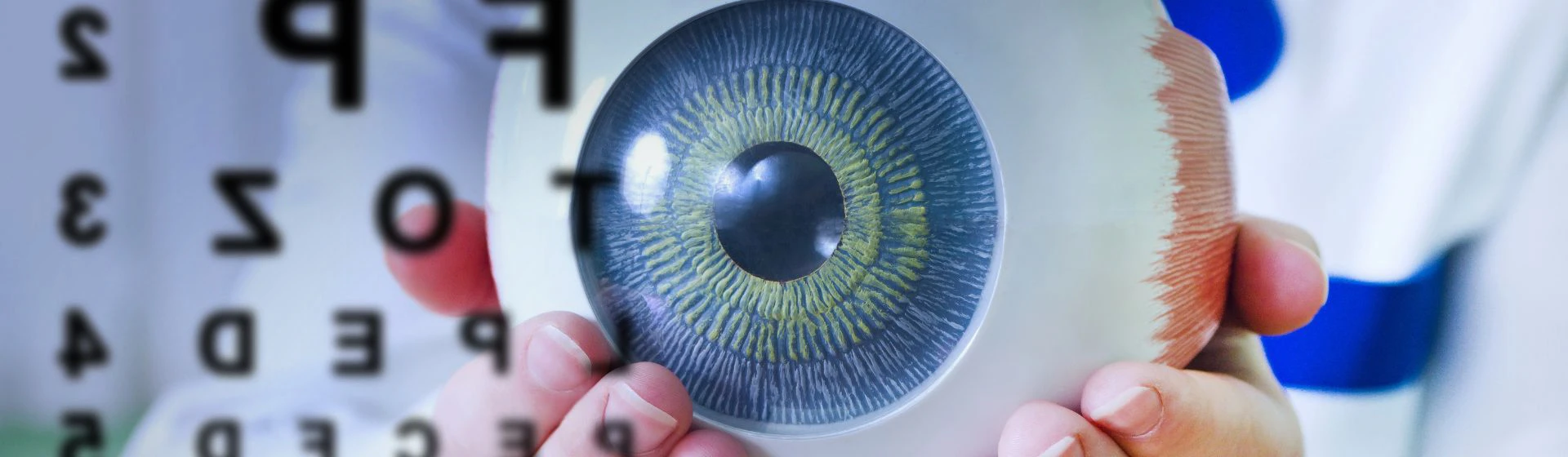
Astigmatism is one of the most common vision disorders that causes blurred and distorted images. Without proper treatment, this condition can worsen the quality of life, cause headaches, eye fatigue, and reduced visual acuity. The Oxford Medical Center in Kyiv offers modern methods of diagnosing and correcting astigmatism.
Make an appointment with an ophthalmologist at the Oxford Medical Clinic and receive an individual astigmatism treatment program!
Astigmatism is a disorder of the refraction of light rays due to the irregular shape of the cornea or lens. In a healthy eye, the surface of the cornea has a spherical shape, which allows the rays to focus evenly on the retina. With astigmatism, refraction occurs unevenly, which causes blurred images at different distances.
There are several types of astigmatism:
One of the forms is myopic astigmatism, the treatment of which depends on the degree of myopia and the age of the patient.
If you notice one or more of these symptoms, do not delay a visit to the doctor.
Timely diagnosis of astigmatism allows you to choose effective correction methods and avoid complications.
Astigmatism can provoke the appearance of the following symptoms:


blurred or distorted vision of objects
rapid eye fatigue
discomfort when reading or working at the computer
headache and eye strain
difficulty focusing when changing distances

Accurate diagnostics allows you to determine not only the form of the disease, but also the individual characteristics of the patient, which is important for choosing treatment methods.
At the Oxford Medical clinic, diagnostics includes a comprehensive examination, which allows you to accurately determine the degree of astigmatism and choose the optimal correction method.
The main diagnostic methods:
Computer determination of the degree of refractive changes.
Visual acuity testing using special tables.
Assessment of corneal curvature.
Examination of the fundus to rule out other pathologies.
Treatment methods for astigmatism in adults depend on the degree of impairment and the individual characteristics of the patient.
Depending on the indications, the following may be prescribed:
This is the most common method that helps compensate for the uneven refraction of light. For astigmatism, vision correction can be performed using:
These methods allow you to eliminate the symptoms of astigmatism, but do not change the shape of the cornea, so they are only a temporary solution.
This method is used to improve visual function and strengthen the eye muscles. It includes special training and physiotherapy procedures that help improve focusing and the general condition of the visual system. Hardware treatment of astigmatism is especially effective for children, but can also be used in adults in the early stages of the disease.
If the degree of astigmatism is high or other correction methods do not give the desired result, surgery may be necessary.
There are several types of surgery for astigmatism:
Mixed astigmatism is more difficult to correct because it combines signs of nearsightedness and farsightedness. Treatment may include a combination of methods: wearing toric lenses, eye exercises, and surgical methods for high degrees of impairment.
Many patients seek to avoid surgery.
For astigmatism, non-surgical treatment may include:

The choice of treatment method depends on the patient's age, the degree of astigmatism and associated vision problems. At the Oxford Medical Medical Center, doctors select an individual solution for each patient to achieve the best result.
If you have astigmatism of the eye, treatment should be started as early as possible to avoid complications and improve the quality of vision. Make an appointment with an ophthalmologist at the Oxford Medical Clinic in Kyiv and get professional help.
The main causes of astigmatism:
In some cases, astigmatism may be congenital or develop due to age-related changes.
The Oxford Medical Medical Center in Kyiv has a modern ophthalmology department, where patients can undergo a comprehensive examination and receive high-quality medical care.
The cost of astigmatism treatment depends on the chosen correction method, the degree of the disorder, and the individual characteristics of the patient. You can find out about the prices at the Oxford Medical Ophthalmology Department here. The doctor will provide you with more detailed information about the options and prices during the consultation. If the patient needs surgery for astigmatism, the price can be determined after the diagnosis, as it depends on the type and degree of the pathology.
Make an appointment with an ophthalmologist at Oxford Medical, undergo high-quality diagnostics, and receive individual recommendations for the treatment of astigmatism. We will help you regain clarity of vision and comfort in everyday life!


We are often asked:
People with astigmatism see objects as blurry or distorted, regardless of distance. Contours may appear fuzzy and letters may appear “split.” Vision is often impaired in the dark, and bright light sources may produce halos or glare.
Astigmatism can be corrected, but it cannot be completely cured without surgery. Glasses, contact lenses, astigmatism treatment, and eye exercises are used to improve vision. In some cases, surgery may be necessary.
Treatment for astigmatism depends on its severity and type. Glasses with cylindrical lenses, contact lenses, astigmatism treatment devices, and eye exercises are used. Severe forms may require surgical correction.
Astigmatism in children can be effectively corrected with glasses, contact lenses, and hardware techniques. It is important to diagnose the disorder in a timely manner and begin treatment to avoid the development of amblyopia (lazy eye syndrome) and other complications.
Yes, vision correction is possible for astigmatism. Depending on the degree of the disorder and the individual characteristics of the patient, glasses, toric contact lenses, or surgical methods are used. One of the common methods is laser vision correction for astigmatism, which allows you to change the shape of the cornea and improve the focusing of light. It should be noted that laser vision correction for astigmatism is not suitable for everyone. Only a doctor can determine whether it will be effective and safe after a diagnosis.


Qualified doctors - our ophthalmologists have many years of experience in diagnosing and correcting vision for astigmatism, which allows us to select the optimal treatment for each patient.
Modern diagnostic methods - precise equipment helps to detect even minimal disorders and determine the most effective method of astigmatism correction.
Individual approach – we select methods of treating astigmatism taking into account the patient's vision, lifestyle, and wishes.
Comfortable treatment conditions – convenient appointment booking, attentive attitude of doctors, and the opportunity to undergo a comprehensive examination in one clinic.

 4.95
4.95  23+
23+  23+ Years of experience
 4.86 30+ 30+ Years of experience
  4.93 49+ 49+ Years of experience
  m. Irpin vul. University, 2/1, building 3


 in the clinic
  online
  Hello!