deterioration of the visual acuity
They allow you to see well at long distances, but glasses may be needed for reading and working at close range.

 Adults Adults Adults Adults Adults Adults Adults Adults Adults
  Children Children Children Children


 Hotline:
 Adults Adults Adults Adults Adults Adults Adults Adults Adults Children Children Children Children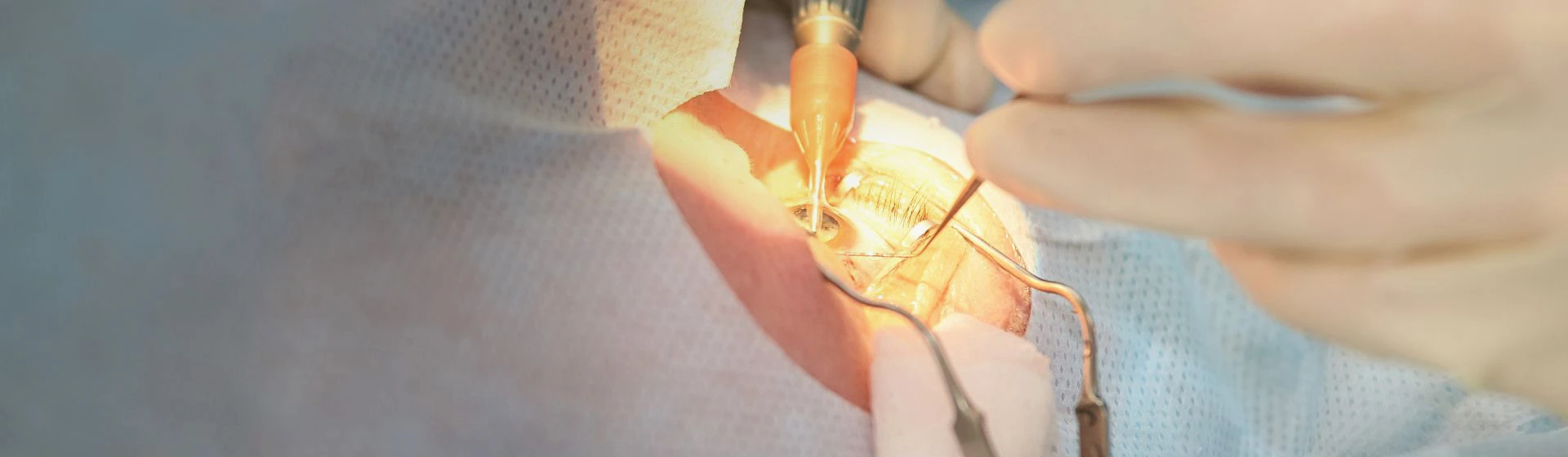

In the modern world, the cataract has a special place in the human life, affecting the eyesight, and often resulting in its complete loss.
The cataract is the clouding of the lens of the eye of different density and intensity. Under normal conditions, the lens is transparent from the birth. It does not have vessels and nerve endings and is the optical lens of the eye. It consists of water, mineral substances and proteins that allows us to see well.
The clouding of the lens occurs with each man during different periods of his life and is the physiological process in most cases, except for the congenital and traumatic cataracts.
As our lens is in the intraocular fluid, it diffusively feeds the microelements, vitamins, which get into our organism with food.
Therefore, its transparency depends on many factors such as:
Depending on the layer and degree of the clouding of the lens,
the man may have the following symptoms:


deterioration of the visual acuity
change of perception of color brightness and tone
difficulty in reading, writing
some patients start reading without glasses – it occurs in case of the change of refraction towards near-sightedness (phacomyopisation)

The several stages of the cataract are distinguished in case of the change of transparency of the lens:
Meanwhile, the viewed objects with different stages of the cataract are visualized differently (from ‘blurred’ image of the object to the complete loss of the definition, up to its contours).
The age-related cataract is the most widespread type of the cataract, as in the young age, it is encountered very seldom, only in case of presence of concomitant diseases (uncompensated diabetes, rheumatism, traumas, undergone chemotherapy, impact of toxins, ionizing radiation etc.)
With the swelling cataract, there occurs the disruption of the permeability of the anterior lens capsule, the protein substance of which is soaked in the intraocular fluid and increases in size. In most cases, it results in the phacomorphic glaucoma. At the same time, the glaucoma is secondary, but also leads to the total blindness and thus is not less dangerous. Therefore, the measurement of intraocular pressure and thickness of the lens are recommended for the patients above 40 and in case of appearance of the primary symptoms of the cataract.
The secondary cataract occurs with the clouding of the posterior lens capsule in the patients, who underwent the lens replacement surgery and had the artificial intraocular lens (IOL) implanted. Meanwhile, the percent of clouding varies from several hundredths to several tenths and depends on the material of the intraocular lens.
The hydrophobic material causes the least clouding of the posterior capsule (hundredths of the percent). That is why in our clinic, the priority is given namely to this material, the global leader in manufacturing of which is ALCON (USA).
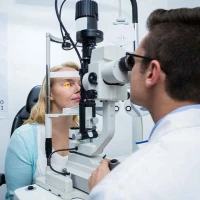
To diagnose cataracts and other eye diseases, an ophthalmologist may prescribe the patient:
The prevention of the quick progression of the cataract is carried out through the conservative method of prescribing the vitamin drops. It helps at the initial stages. When the visual acuity deteriorates, the complications of the cataract appear that leads to the worsening of the quality of person’s life in future.
The removal and implantation of the artificial lens is the only method of treatment of the cataract.
Only the phacoemulsification of the cataract with implantation of the artificial lens (PEC+ posterior chamber intraocular lens) is one of the modern methods of the cataract surgery. In the meantime, it is not always necessarily to wait until the complete clouding of the lens, as it was required previously, with extracapsular extraction (EEC + posterior chamber intraocular lens), as the ultrasound energy is minimal and the surgical treatment is performed mainly on the vacuum of the used machine.
The femtosecond laser performs only the stages of the operation (corneal tunnel incision and anterior capsulorrhexis). And the main part of the operation is performed by using the vacuum and ultrasound, controlled by the surgeon.
The surgery room of OXFORD MEDICAL clinic is fitted with the best microsurgical equipment, which allows successfully coping with the cataracts of any degree of severity as well as minimizing the risk of postoperative complications. The surgeries are performed by using Oertli CataRhex phacoemulsificator of Swiss manufacture under the control of Leica microscope of German manufacture.
Oxford Medical uses various models of IOLs from leading manufacturers. They differ in technical features and cost. Only an ophthalmologist can tell you which option is right for the patient after diagnosis.
Types of intraocular lenses:
They allow you to see well at long distances, but glasses may be needed for reading and working at close range.
They provide good vision at close range, but glasses may be required for distance vision.
They provide equally good vision at any distance.
Correct corneal astigmatism.


Affordable prices
Fast rehabilitation period
The eye care professional with huge experience in surgery (over 6,000 operations) performs operations
The operations are performed on the modern Swiss and German equipment

 4.95
4.95  23+
23+  23+ Years of experience
 4.86 30+ 30+ Years of experience
  4.93 49+ 49+ Years of experience
  m. Irpin vul. University, 2/1, building 3



 in the clinic
  online
  Hello!