Complaints of impaired vision – blurriness, double vision, decreased visual acuity
The doctor will ask the patient about their symptoms and medical history.

 Adults Adults Adults Adults Adults Adults Adults Adults Adults
  Children Children Children Children


 Hotline:
 Adults Adults Adults Adults Adults Adults Adults Adults Adults Children Children Children Children
According to statistics, every fourth person has impaired vision, and this figure continues to grow due to increased strain on the eyes - working at a computer, using gadgets and other factors.
Regular diagnostics allow you to detect ophthalmological diseases in the early stages, preventing their progression. Ophthalmoscopy is a key method of assessing the condition of the fundus, which helps to timely diagnose pathologies of the retina, blood vessels and optic nerve.
At the Oxford Medical clinic, the examination is performed using modern equipment by experienced ophthalmologists. Sign up for diagnostics now and take care of the health of your eyes!
Ophthalmoscopy is a diagnostic procedure during which an ophthalmologist examines the fundus, i.e. the inner surface of the eye, which includes the retina, optic nerve and blood vessels. This is an important diagnostic method that helps to assess the condition of the visual apparatus and detect various ophthalmological diseases.
The procedure is performed using a special device - an ophthalmoscope, which allows the doctor to carefully examine the internal structure of the eye from different angles.
During the ophthalmoscopy procedure, the doctor examines the fundus: how the condition of the retina, optic nerve and blood vessels is checked depends on the type of examination - direct or indirect.
The difference between direct and indirect ophthalmoscopy lies in the technique:
Direct ophthalmoscopy provides a detailed magnified image of the central part of the fundus, which allows for a thorough assessment of minor changes in the retina and optic nerve.
Indirect ophthalmoscopy provides a wider view of the fundus, including its peripheral areas, which is especially important for detecting retinal detachment or other peripheral pathologies.
Ophthalmoscopy is an absolutely safe and painless diagnostic method that is crucial for the early detection of serious pathologies.
During ophthalmoscopy, the doctor assesses the condition of the retina, optic nerve,
and blood vessels, to determine whether their structure corresponds to the characteristics of
a normal fundus, or to identify possible pathological changes.
Fundus examination is prescribed in the following cases:


Complaints of impaired vision – blurriness, double vision, decreased visual acuity
Symptoms of eye diseases – pain, itching, dryness, redness of the eyes
Chronic diseases – diabetes, hypertension, vascular diseases
Eye injuries – mechanical damage or chemical burns
Monitoring the dynamics of the disease – monitoring the effectiveness of treatment or operations

Regular ophthalmoscopy should be performed:
Regular examination of the fundus allows you to detect problems at an early stage and prevent complications.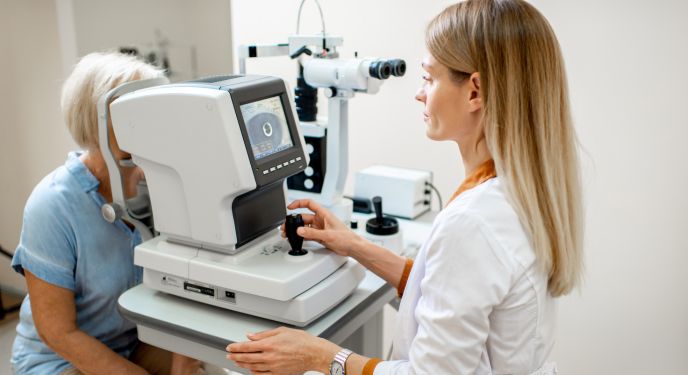
Ophthalmoscopy allows you to detect the following diseases:
Timely diagnosis of these diseases allows you to avoid significant complications and preserve vision.
The procedure takes 10 to 30 minutes. If drops are used to dilate the pupils, the patient may need to stay in the clinic until normal vision is restored. During this time, it is not recommended to travel independently on the street or drive a car, so it is better to come for the examination accompanied by a loved one.
The ophthalmoscopy procedure consists of several stages:
The doctor will ask the patient about their symptoms and medical history.
To dilate the pupils (not always necessary).
The doctor examines the fundus using an ophthalmoscope.


On the day of the examination, avoid eye strain (long-term computer work, reading in dim light).
If you plan to use drops, it is recommended to come without your own car, as dilation of the pupils may temporarily reduce visual acuity.
Do not use eye makeup.
 All tips
The cost of eye diagnostics may vary depending on the number of examinations required. You can find out the prices in advance here. The doctor will determine the detailed diagnostic plan and the final cost during the consultation. Do not delay in taking care of your eye health!
Make an appointment with an ophthalmologist at Oxford Medical by phone or via the online form!


Modern equipment allows for accurate and detailed diagnostics.
Experienced ophthalmologists – we employ doctors with many years of experience.
Comfortable atmosphere – we provide an attentive approach to each patient.
Speed – diagnostics take a minimum of time.


 4.95
4.95  23+
23+  23+ Years of experience
 4.86 30+ 30+ Years of experience
  4.93 49+ 49+ Years of experience
  m. Irpin vul. University, 2/1, building 3



 in the clinic
  online
  Hello!