


The main symptoms are:
sharp pain (sometimes only a burning sensation) in the chest;

 Adults Adults Adults Adults Adults Adults Adults Adults Adults
  Children Children Children Children


 Hotline:
 Adults Adults Adults Adults Adults Adults Adults Adults Adults Children Children Children Children
Myocardial infarction is damage and necrosis of certain areas of the heart caused by insufficient blood supply or interruption of blood flow through the coronary arteries. It is an acute condition that requires urgent medical care. A myocardial infarction causes irreversible changes in the myocardium and can lead to cardiac arrest.
If symptoms of a heart attack appear, it is necessary to seek medical attention immediately. The earlier assistance is provided, the higher the chances of avoiding severe complications.
The main symptoms are:


sharp pain (sometimes only a burning sensation) in the chest;
a feeling of pressure behind the breastbone;
spreading of pain or discomfort to the lower jaw, neck, shoulders, arms, upper abdomen;
arrhythmia, shortness of breath, dizziness, severe weakness, cold sweat, a feeling of anxiety, etc.

Most often, a heart attack is accompanied by sharp and severe pain in the heart area that does not subside even after taking medication. In some cases, the pain may decrease and then intensify again after some time. As a rule, this is accompanied by arrhythmia — a disturbance of the heart rhythm, an increase in the intervals between contractions, and a rapid pulse.
Another characteristic feature is the spread of pain to the upper part of the body. It may occur in the neck and chin area, shoulders, arms, chest, and abdomen.
In most cases, shortness of breath also occurs during a myocardial infarction. A person finds it difficult to breathe and is unable to take a full breath. In some cases, breathing difficulties may be the main symptom.
Symptoms of myocardial infarction do not develop in the same way in all patients. They may vary: some are mildly expressed, while others may be absent. Certain forms of myocardial infarction are even characterized by an asymptomatic course.
Because of this, it can be difficult to recognize a heart attack in oneself or in someone close.
Atypical symptoms may include:
pain in the stomach and esophagus area, accompanied by nausea and vomiting;
pain in the shoulder blades, between the ribs, or in the arms, resembling intercostal neuralgia;
pronounced swelling of the legs and/or arms;
ringing in the ears, dizziness, and loss of consciousness;
rapid heartbeat at rest in the absence of other symptoms;
severe cough, a feeling of suffocation, cold sweat.
According to statistics, an atypical course of myocardial infarction occurs in 30% of patients. In some of them, heart damage develops without symptoms or is accompanied only by weakness, which is most common in people with diabetes mellitus.
Symptoms that indicate a risk of a heart attack may appear 1–2 days or several hours before the attack. However, in some cases, due to spasm of the coronary arteries, it may develop suddenly. Intense physical exertion or psychological stress often becomes the trigger.
The following may indicate a risk of myocardial infarction:
attacks of angina pectoris;
periodic chest pain;
shortness of breath;
a tickling sensation in the throat;
cough;
dizziness;
severe fatigue.
When the coronary arteries narrow, blood supply to the heart is impaired, which may lead to heart failure — the heart is unable to pump a sufficient amount of blood, resulting in hypoxia of internal organs. As a result, the symptoms listed above may occur.
Myocardial infarction develops gradually. In total, 5 periods are distinguished:
prodromal — lasts from several hours to several days and is accompanied by periodic pain in the heart and other symptoms;
hyperacute — lasts from 30 minutes to 6 hours from the moment of infarction development and, as a rule, is accompanied by pronounced symptoms;
acute — lasts from 2 days to 12 weeks and is characterized by a decrease in pain and a reduction in blood pressure by 20 mm Hg from usual values;
subacute — lasts up to 2 months and is accompanied by normalization of heart rhythm, reduction of shortness of breath, and weakening of other symptoms;
postinfarction — over a period of 6 months, necrotic tissues are replaced by scar tissue, and if the damage was minor, the symptoms of infarction completely disappear, while in the case of a large infarction, progressive heart failure develops.
Myocardial infarction is classified according to the degree and depth of myocardial tissue damage, the nature of symptoms, and some other parameters.
By the severity of symptoms, it can be:
typical — manifested by chest pain and other characteristic symptoms;
atypical (this also includes silent or asymptomatic) — the symptoms do not correspond to the classic clinical course.
By the frequency of development, the following are distinguished:
primary infarction;
recurrent — necrotic damage to other areas of the heart occurs within the first 7 days after the infarction;
repeated — develops one month or later after the first case.
By the size of the affected tissues, it can be:
microinfarction;
extensive.
By the localization of the affected tissues, infarction of the following is distinguished:
left ventricle (as a rule, necrosis of one of its walls occurs);
right ventricle;
interventricular septum;
apex of the heart;
combined — damage to several areas of the heart occurs.
In most cases, a heart attack is a complication of atherosclerosis of the coronary arteries and coronary heart disease. They are characterized by a gradual narrowing of the lumen of the arteries supplying the myocardium due to the growth of atherosclerotic plaques. Blockage of the arteries by blood clots or narrowing as a result of spasm is also possible.
The risk of myocardial infarction is increased by:
thrombosis;
atherosclerosis;
coronary heart disease;
heart defects;
hypertension;
high cholesterol levels;
rheumatic carditis;
obesity;
unbalanced diet;
smoking;
alcohol abuse;
sedentary lifestyle;
hereditary predisposition and others.
With the development of myocardial infarction, irreversible changes occur in the heart. Part of the tissues becomes necrotic and subsequently scars. The latter are non-elastic and cannot contract, which leads to impaired heart function.
Complications after a heart attack develop quite often and, as a rule, in the first hours or days. A return to an active rhythm of life and disappearance of symptoms are possible only in the case of microinfarction.
Main complications:
arrhythmia;
rupture of the heart wall;
heart failure;
pericarditis — inflammation of the heart lining;
formation of blood clots in the heart cavities;
endocarditis;
sudden cardiac arrest and others.
To diagnose myocardial infarction, the doctor examines the symptoms that concern the patient and prescribes instrumental studies. They are performed immediately upon the patient’s arrival at the clinic.
Early diagnosis of myocardial infarction usually includes:
electrocardiogram (ECG);
echocardiography of the heart (ultrasound);
blood tests for enzymes that are released when the heart muscle is damaged.
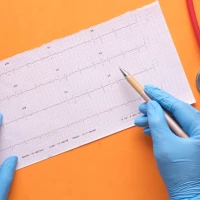
ECG is the main diagnostic method. It is a simple and fast procedure that allows assessment of heart function. During the examination, electrical impulses that pass through the heart are recorded. Damaged tissues lose this ability, which is reflected in the cardiogram results. Using ECG, it is possible to determine a recent or currently ongoing heart attack, as well as changes characteristic of other heart diseases.
To confirm the diagnosis, blood tests for myocardial infarction markers are also performed.
Cardiac ultrasound is an additional method. It allows determination of the localization and area of damaged tissues.
Later, the patient may also be prescribed computed tomography of the heart, coronary angiography, and other examinations.
When symptoms of a myocardial infarction appear, it is important to immediately call an ambulance. The degree of myocardial damage, the risk of complications, and the patient’s life itself may depend on how quickly treatment is started.
Before the ambulance arrives, if cardiac arrest occurs, external cardiac massage should be performed. If the patient is conscious, it is recommended to:
sit down or lie down with the upper part of the body elevated;
take an aspirin tablet and nitroglycerin if blood pressure is elevated and there are no contraindications;
free the chest so that nothing compresses it or interferes with breathing;
open windows to ventilate the room.
If the patient has heart disease, they should clarify with their doctor what to do in case of an attack. Nitroglycerin is often prescribed. When a myocardial infarction develops, it is placed under the tongue. A maximum of 3 tablets are taken at intervals of 5 minutes if the pain does not subside. However, if the patient has weakness or it appears after taking nitroglycerin, repeated use of the drug is contraindicated. The nitroglycerin tablet is placed under the tongue. Aspirin is recommended to be crushed and taken with water. At the same time, it is important to be sure that the patient has no contraindications to these medications (nitroglycerin is contraindicated when blood pressure is below 90/60 mm Hg, etc.).
When symptoms of a heart attack appear, the patient should not stand up, walk, or perform any physical activity. It is also not recommended to go to the clinic independently — it is necessary to immediately call an ambulance and inform the doctor about the symptoms.
Treatment of myocardial infarction is divided into several stages. If necessary, resuscitation measures are performed first to stabilize the patient’s condition. Medications are also administered to dilate blood vessels, reduce blood pressure, and others in order to stop the process of necrotic damage to the heart and reduce the risk of complications.
After relief of the attack, the patient is prescribed long-term drug therapy. It is selected individually, taking into account the characteristics of the infarction, its causes, and the presence of concomitant diseases.
In some cases, surgery may be required — coronary stenting, bypass surgery, or implantation of a pacemaker.
Rehabilitation after myocardial infarction may last for several months. As a rule, it is carried out at home — the doctor prescribes drug therapy, recommends following a special diet, performing light physical exercises, and other measures.
At “Oxford Medical”, patients with myocardial infarction are treated in a modern surgical inpatient department with two high-tech operating units and an intensive care ward equipped to monitor and support vital body functions. Experienced doctors are on duty around the clock. The clinic also has an emergency medical service.
The main goal of infarction prevention is to reduce the risk of its development. Myocardial infarction is a complication of other cardiovascular diseases, therefore the first thing that should be done is to undergo the treatment prescribed by a doctor in a timely manner and follow all recommendations.
Methods for preventing the development of cardiovascular diseases include:
healthy nutrition — predominance of fresh vegetables, fruits, cereals, and lean meats in the diet, with a simultaneous reduction in fatty meats, processed foods, sugar, and bakery products;
moderate physical activity — it is recommended to exercise at least 2–3 times a week (if diseases are present, exercises and load levels should be agreed with a doctor);
quitting smoking, alcohol consumption, and other harmful habits;
maintaining normal body weight — obesity increases the risk of myocardial infarction;
control of blood pressure levels;
if cardiovascular or other chronic diseases are present, it is necessary to consult a doctor in a timely manner, undergo treatment, and follow all recommendations.
It is especially important to maintain a healthy lifestyle if there are problems with blood vessels and the heart or if a myocardial infarction has already occurred in the past.
To schedule a consultation with a cardiologist at “Oxford Medical”, please call our contact center or write in the chat on the website.


Experienced cardiologists. Highly qualified specialists who follow modern treatment approaches.
Modern equipment. The latest devices for diagnosing and monitoring the condition of the heart and vessels.
Comprehensive treatment. Possibility to undergo examination, treatment, and rehabilitation in one place.
Comfort and care. Convenient location of clinics in different districts of Kyiv, friendly atmosphere, and attentive staff.


 0
0  5+ 5 23+
  5 4+
5 4+ 
 4+ Years of experience
  m. Kyiv, Parkovo-Syretska St., 7A
  4.45 22+




 in the clinic
  online
  Hello!


