






for fractures, dislocations, concussions, head injuries
- single-slice CT
- multi-slice CT (2 to 64 slices)

 Adults Adults Adults Adults Adults Adults Adults Adults Adults
  Children Children Children Children


 Hotline:
 Adults Adults Adults Adults Adults Adults Adults Adults Adults Children Children Children Children


The CT scan is required for detecting many diseases, which affect different organs
and systems of the organism:


for fractures, dislocations, concussions, head injuries
in case of spinal diseases (e.g. osteoporosis)
for digestive tract problems
if there is suspicion of tumors
in the diagnosis of aneurysms and other vascular pathologies
for respiratory diseases, etc.

For some diseases, CT with contrast is more informative. It allows for better visualization of soft tissues, vessels, and neoplasms.


Accuracy – detailed image of body structures, including the smallest changes
Speed – the study takes only a few minutes
Safety – reduced radiation exposure thanks to modern technologies
Advanced capabilities – CT with contrast for even more accurate diagnosis




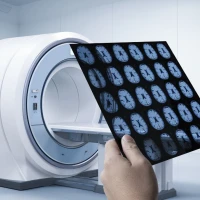

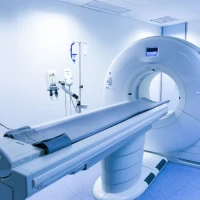
The precise and timely diagnosis of the disease is of crucial importance for the correct and successful treatment of the disease. This particularly explains the popularity of the most perfect method of X-ray diagnosing - computed tomography (CT) scan. CT scan is the fastest, safest and painless method of obtaining a full information about his organism. The report on CT scan findings is issued to the patient on the same day, when the examination is performed.
The CT scan is required for detecting many diseases, which affect different organs and systems of the organism:
Computed tomography is based on the use of the penetrating power of X-rays, but compared to conventional X-rays, computed tomography has a number of advantages.
If as a result of an X-ray, the doctor receives only one picture of the organ under study, then with CT, many layered "slices" are created, on the basis of which a three-dimensional model of the organ under study is formed, which allows for a detailed examination and diagnosis of even the slightest deviations from the norm. The use of contrast agents allows for detailed visualization of the pathological process (its nature, prevalence), and assessment of the condition of the vessels of the organ under study. CT helps to accurately localize and determine the nature of tumors and metastases.

In our clinic, the multi-slice CT scan of the following organs is performed:
The CT scan with application of special contrast preparations is performed for obtaining more precise data. The contrast is used for studying the brain, soft tissue of the throat, thoracic organs, liver, kidneys, pancreas, spleen, adrenal glands, salivary glands, pelvic organs and vessels.
Toshiba Asteion CT scanner, used for performing the diagnosis, allows examining all the body organs with a 0.5 mm thick slice. The effective use of radiation allows obtaining the image of the high quality and definition with the minimal radiation dose.
You can make appointment for CT scan by calling us.
The main difference between these types of studies is the use of a special contrast agent. Non-contrast CT scans visualize dense structures (bones, organs with high density) well, while contrast scanning allows you to assess the blood supply to tissues, identify vascular pathologies, tumors and their boundaries.
When choosing between CT with and without contrast, the doctor is guided by the clinical task. For example, a regular CT scan is sufficient to detect fractures, while the use of a contrast agent is necessary to diagnose a brain tumor or vascular pathology.
Both computed tomography and magnetic resonance imaging scan the area being examined step by step. As a result, three-dimensional black-and-white images are formed on the computer, which show thin sections of individual organs. At the same time, the principles of operation of CT and MRI machines are significantly different, since they are based on different physical phenomena.
During MRI, a high-frequency electromagnetic field is used, which allows you to analyze the chemical structure of tissues and organs. CT is performed using X-ray radiation, and the areas being scanned are studied from the point of view of their physical state. Thus, the indications for CT and MRI, as well as the interpretation of images, are significantly different.
CT provides better visualization of bone tissue and internal organs that have a dense tissue structure, while MRI is more suitable for diagnosing soft tissues, blood vessels and the brain.
Another difference is the time of the study. A CT scan is performed within 1 minute, while an MRI can take between 15 and 60 minutes, depending on the area being examined.

You can find out how much a computed tomography scan costs at «Oxford Medical» here.
For CT and SCT, the price depends on the area being examined. For CT with contrast, the prices are slightly higher, since intravenous administration of the drug is required. This study is more complex, but for a number of diseases it is much more informative than without contrast.
Important! «Oxford Medical» has an emergency medical service that works 24/7. For patients with acute conditions, hospitalization to a 24-hour therapeutic or surgical hospital is possible. If you are looking for a 24-hour CT scan in Kyiv, contact «Oxford Medical». Specialists will assess the patient's condition and, if necessary, take him to a hospital for urgent computed tomography.
The price of a CT scan with contrast is higher than without contrast. This is due to additional costs for the drug, the introduction of contrast, and more complex interpretation of the results. You can find out the prices here. If you are interested in a CT scan near Poznyaki, contact the Oxford Medical clinic. We conduct research on a modern 64-slice tomograph with high accuracy of results.
Computed tomography is a highly informative diagnostic method based on multiple X-ray scans of the body. The Siemens Somatom tomograph installed at Oxford Medical provides 64-slice scanning of the examined area with a step of 0.7 mm with minimal radiation exposure and allows diagnosing pathological changes from 1 mm in size.
CT, or computed tomography, is a diagnostic procedure that involves scanning the body layer by layer using X-rays. During the examination, 64 images are taken at 0.7 mm intervals. They are transmitted to a computer, where three-dimensional images are formed, showing thin sections of the organs being examined.
Many patients worry that CT scans are dangerous to health. This opinion arose because of the old analog X-ray machines, which had a strong radiation effect on the body. Now the studies are carried out using digital X-ray machines, which are much safer. As for CT scans, the radiation exposure during their performance is even lower.
According to the recommendation of the World Health Organization, radiation exposure is allowed at a level of up to 150 m3V during the year. In this case, the risk of negative effects on the body is minimal.
During a CT scan of the head, the radiation is 1-2 m3V, and of the pelvic or abdominal organs - from 6 to 11 m3V. Therefore, during the year, you can undergo several studies without significant harm to the body.
At Oxford Medical in Kyiv, CT scans are performed on a modern Siemens Somatom Go.UP device, which provides 64-slice scanning of the body with a step of 0.7 mm with minimal radiation exposure.
Computed tomography can be performed on children from birth, but only by prescription. The examination is used to diagnose diseases and assess the effectiveness of treatment. As for the frequency of CT repetition, it is determined individually.
When performing a CT scan with contrast, the child's general health should be taken into account and check whether there are any contraindications to the drug used.
CT scans can be performed up to 10-20 times per year. The World Health Organization states that radiation exposure of up to 150 m3V over 1 year is associated with minimal risk of adverse effects on the body. During a CT scan of the head, the radiation exposure is 1-2 m3V, and of the pelvic and abdominal organs – from 6 to 11 m3V.
Repeated CT on the left bank can be done even the next day after the examination, but only if there are indications and a referral from a doctor. The degree of potential harm to health depends not on the frequency, but on the level of radiation to the body. According to WHO, during the year, the permissible exposure is up to 150 m3v, while during CT of the head it is 1-2 m3v, and for the pelvic and abdominal organs - from 6 to 11 m3v.
You can get a CT scan in Kyiv at the Oxford Medical medical center. CT scan in Kyiv (left bank) is performed on weekdays and weekends by appointment. The clinic has an expert-class CT scanner Siemens Somatom Go.UP. It provides 64-slice scanning of the examined area with a step of 0.7 mm with minimal radiation exposure. To get a CT scan in Kyiv, call (044) 204-40-40.
CT scan results are interpreted by radiologists in Bereznyaki. At Oxford Medical, this task is performed by highly qualified specialists with many years of experience. They carefully study all the images, after which they describe them.
It is worth considering that the conclusion indicates whether the condition of the examined organ is normal, and if not, what changes there are. At the same time, the radiologist does not write an exact diagnosis. Only the doctor who sent the patient for a CT scan can make it, taking into account the patient’s symptoms and the results of other examinations.
The cost of computed tomography depends on several factors: the area of examination, the need for contrast and the complexity of the diagnosis. In the Oxford Medical clinic, examinations are performed on a high-precision 64-slice Siemens Somatom Go.UP tomograph, which provides excellent image quality with minimal radiation exposure.
You can get additional information or sign up for a CT scan on Bereznyakivska in Kyiv by phone or by writing to the operator in the chat on the website.
 in the clinic
  online
  Hello!


