Sign up via call center
Department
CT angiography at the private clinic Oxford Medical Kyiv

CT angiography

CT angiography

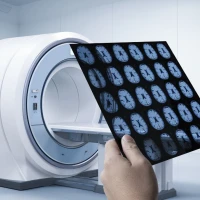
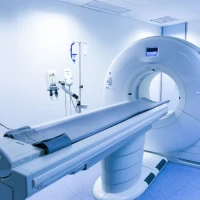
Computed tomographic angiography is a method of detailed examination of blood vessels with the help of a computed tomographic scanner, which provides assessing of blood flow intensity and blood supply to the examined organs. The 64-slice Siemens Somatom computed tomographic scanner, used in the «Oxford Medical» clinic in Kiev, makes it possible to examine the vessels of the head, neck, limbs, as well as the aorta and pulmonary arteries.


MSCT angiography

MSCT angiography (multislice computed tomography) is a modern non-invasive research method that allows you to assess the condition of the vascular system with high accuracy. The advantage of this technique is fast scanning with detailed images of even the smallest vessels. The Oxford Medical clinic uses an expert-class Siemens Somatom Go.UP tomograph with 64-slice scanning to perform MSCT angiography. Such diagnostics allows you to detect pathological changes in blood vessels, including aneurysms, stenoses and thrombosis in the early stages.

Indications for CT angiography

Computed tomographic angiography helps to diagnose:

vascular abnormalities

aneurysms

narrowing (stenosis) or overlapping (obstruction) of the lumen of the vessels

thrombosis (pulmonary embolism, legs deep vein thrombosis, etc.)

List of diseases

What vessels can CT angiography examine?

Angiography, or computed tomography of the vessels, allows you to examine the vessels in any part of the body.

The most commonly diagnosed are:

  • vessels of the lower extremities;
  • vessels of the brain;
  • aorta;
  • carotid arteries;
  • renal arteries;
  • inguinal arteries
  • visceral arteries;
  • subclavian arteries.

CT angiography of the vessels of the lower extremities

CT angiography of the vessels of the lower extremities is used to diagnose diseases of the arteries and veins of the legs, in particular thrombosis, varicose veins, atherosclerotic lesions, stenoses. The procedure is performed using a contrast agent, which allows for accurate visualization of the vascular bed and blood flow.

CT angiography is a safe, fast and highly informative technique that often replaces traditional angiography. At the Oxford Medical clinic, the examination is performed on a modern 64-slice tomograph with minimal radiation exposure.

CT angiography of the lower extremities helps the doctor make a decision about further treatment, in particular the need for surgery or angioplasty.

You can find out the price for CT angiography of the lower extremities below.

Cerebral angiography

Cerebral angiography allows you to assess the patency of the arteries, detect aneurysms, malformations and other vascular pathologies that can lead to ischemic or hemorrhagic strokes. At Oxford Medical, the study is performed using certified contrast agents that provide high image accuracy.

Along with cerebral angiography, if necessary, angiography of the neck vessels may also be prescribed, since these arteries are responsible for supplying the brain.

Preparation for CT angiography

CT angiography is always performed with the introduction of a contrast agent – a special medicine that is injected into the vein and makes the vascular pattern in the images more distinct. The contrast agent often contains iodine, so if you are allergic to it or to seafood, you need to notify your doctor about this – if it is possible, another agent is selected for this patient.

The doctor should be also notified if kidney disease, heart disease, diabetes takes place. In these cases the patient may need additional prep procedures, such as tests, glucose measurement, pressure measurement or ECG. If the patient has severe heart or kidney failure – this may be a contraindication to computed tomographic angiography.

Approximately 4-5 hours before the examination the patient should stop eating and drinking fluids. Immediately before the angiography the patient must remove all metal jewelry, accessories and devices from the body. 

How CT angiography is performed

The patient is placed on the slide-out table of the tomographic scanner in the position face up. Then the doctor inserts a catheter into the patient’s vein to supply a contrast agent. The administration of the agent is carried out by a special injector, which eliminates the entry of insufficient or excessive amount of the agent into the bloodstream. When contrast is introduced, a short-term sensation of heat spreading through the body may appear, and a salty or metallic taste may appear in the mouth – this is how the body perceives the introduction of contrast.

After that the doctor moves to an adjacent room, from where he controls the progress of the study through monitors and a special window for keeping an eye on the patient. Communication with the doctor is constantly maintained through a two-way intercom device, which is built in the CT machine.

The table slides into the scanner tunnel and the examination begins. The patient does not experience any unpleasant sensations during the procedure. All that is required during CT angiography is to be in a stationary position, because any movement worsens the quality of the images obtained. In some cases the doctor asks the patient to hold the breath for a few seconds.

After the procedure the diagnostician forms a medical report, which is issued to the patient along with a film on which the results of the examination are recorded. After CT angiography the patient is recommended to drink more liquid – this contributes to the rapid removal of contrast from the body.

You can make an appointment for CT angiography at the «Oxford Medical» clinic in Kiev by calling us or writing to the chat operator on the website.

Contraindications to CT angiography

Contraindications to CT angiography are mainly related to the use of contrast medium.

It is not recommended for use in:

  • kidney dysfunction;
  • liver failure;
  • hyperthyroidism;
  • iodine allergy;
  • acute diseases and some other pathologies.

Angiography: price at the Oxford Medical clinic

The cost of angiography and CT of the vessels of the brain, as well as the neck, pulmonary arteries, aorta, vessels of the arms and legs can be found here.

The examinations are performed using a contrast agent, so the price for CT angiography is higher than for conventional computed tomography. Unlike the diagnosis of other organs, the use of contrast is mandatory when performing an X-ray of the vessels. It increases the clarity of the image, allows you to visualize blood flow and detect pathological changes.

At «Oxford Medical» angiography of the vessels of the brain, as well as other veins and arteries, is performed on a new expert-class tomograph Siemens Somatom Go.UP. It provides 64-slice scanning of the examined area with a step of 0.7 mm. At the same time, the body is exposed to minimal radiation exposure compared to older devices. Prices for heart CT scans, as well as for other examinations, are as affordable as possible, since our main goal is to provide assistance to the largest number of patients who need it. 

Our services
Vascular
CT angiography of the upper extremities (with contrast)
4099.00 ₴
Sign up by the call center
CT angiography of the entire aorta and iliac arteries (with contrast)
4989.00 ₴
Sign up by the call center
CT angiography of the thoracic aorta (with contrast)
3989.00 ₴
Sign up by the call center
CT angiography of the thoracic and abdominal aorta (with contrast)
6489.00 ₴
Sign up by the call center
CT angiography of pulmonary arteries (with contrast)
3989.00 ₴
Sign up by the call center

Q&A

What is an angiogram?

An angiograph is a device for angiography, i.e., computer tomography of blood vessels with contrast enhancement. The correct name is a computer tomograph. Its action is based on the use of X-ray radiation. During the examination, many X-ray images are taken, including three-dimensional black-and-white images formed on a computer, which show thin sections of blood vessels.

Vascular angiography: how is it done?

Vascular angiography is essentially a computer tomography with the use of a contrast agent. During the examination, the patient lies on a retractable table of the tomograph. The doctor inserts a catheter into his vein to administer the drug. Then the couch moves inside the scanner, where a series of X-rays are taken within 1-2 minutes. After that, the doctor describes them and gives the patient a conclusion.

Where to get angiography done in Kyiv?

You can get an angiography and CT scan in Kyiv at the modern medical center «Oxford Medical». You can make an appointment for an examination at a convenient time on any weekday or weekend. You can also get a consultation from a specialized doctor at the clinic. Make an appointment by phone (044) 204-40-40.

You can make an appointment for CT angiography at the clinic «Oxford Medical Kyiv» by calling or writing to the chat operator on the website.

( Rating: 4.54 , Votes: 26 )

Advantages of CT Angiography at Oxford Medical Clinic

New expert-grade equipment

High-quality contrast agents

Qualified specialists with many years of experience

Get results quickly

Possibility of consultation with doctors of various specialties

Flexible loyalty system

Reviews
Коломієць Катя 23.02.2024
Дуже задоволена цією клінікою,робила КТ черевної порожнини і гастроскопію дуже вдячна спеціалістам гарне обслуговування . Дякую ще дівчаткам на інформаційній.
Star Star Star Star Star
Роман 24.10.2022
Дякую за якісне КТ легенів , результати надійшли вже на наступний день. Дуже ввічливий персонал.
Star Star Star Star Star
Current information
All Articles
Sign up
in the clinic
online
This site is protected by reCAPTCHA technology, and the Google Privacy Policy and Terms of Service apply.
Hello!
Let's take care
about your health:
Sign up via call center

We use cookies and other technologies to remember your preferences and find out exactly how you use and interact with the site.

By using our site, you also agree to the terms of the "User Agreement" and "Regulation on the processing and protection of personal data". By clicking "I AGREE", you consent to the processing of your data.