






Regular headaches and dizziness;
An ultrasound examination that allows assessment of blood flow in the vessels, detecting spasms, stenoses, or venous outflow disorders. It is often prescribed for dizziness, headaches, and autonomic disorders.

 Adults Adults Adults Adults Adults Adults Adults Adults Adults
  Children Children Children Children


 Hotline:
 Adults Adults Adults Adults Adults Adults Adults Adults Adults Children Children Children Children
 Neurology is a branch of medicine that specializes in the study, diagnosis, and treatment of diseases of the central and peripheral nervous systems. These systems control the functioning of nearly all organs, so the symptoms of neurological disorders are often masked as other diseases. Timely consultation with a doctor helps to avoid complications and maintain a high quality of life.
At the «Oxford Medical» clinic in Kyiv, experienced neurologists are available for consultations. We have created all the necessary conditions for accurate diagnostics, safe treatment, and recovery of patients with various neurological disorders. Schedule a consultation to receive quality medical care without queues or stress.

 Looking for a place to record...


Regular headaches and dizziness;
Numbness in the limbs, tremors, tingling;
Unsteady gait, weakness in the legs or arms;
Sleep disorders, memory issues, or anxiety.

An ultrasound examination that allows assessment of blood flow in the vessels, detecting spasms, stenoses, or venous outflow disorders. It is often prescribed for dizziness, headaches, and autonomic disorders.
A method for recording the brain's electrical activity, which helps detect seizure activity, changes in biorhythms, effects of traumatic brain injuries, or epilepsy. The test is completely painless.
A modern diagnostic method used to assess nerve impulse conduction in muscles and nerves. It is used when neuropathy, radiculopathy, myasthenia, muscle weakness, or numbness is suspected. ENMG helps determine the level of damage and the extent of dysfunction in the peripheral nervous system.

No special preparation is required. However, it’s advisable to recall or write down all symptoms, when they appear, and how often they occur. This will help the doctor navigate the situation more effectively.

If you have EEG results, Doppler ultrasound, or reports from other doctors — bring them with you. If not, this will not interfere with the consultation — the doctor will order necessary tests if needed.
Continue taking your prescribed medications if they’ve already been recommended to you. If you are taking painkillers or anticonvulsants, be sure to inform the doctor.
 All advices
 The neurologist will ask in detail about the symptoms: when they started, what they might be related to, and their specific manifestations. Comorbidities and family history are also important.
Gait, facial expressions, and motor activity are assessed. The doctor performs neurological tests: checks reflexes, sensitivity, coordination, and pupil reaction. If necessary — basic cognitive tests are performed.
Based on the examination, the neurologist will develop a diagnostic plan: EEG, Doppler ultrasound, MRI, blood tests, and consultations with other specialists.
The doctor provides a conclusion based on the consultation results, offers a preliminary diagnosis, and outlines a further treatment plan — from lifestyle adjustments to medication or rehabilitation.


Experienced doctors. All neurologists have extensive clinical experience and continually improve their qualifications.
Modern diagnostics. We use precise diagnostic methods to establish diagnoses.
Comprehensive approach. Consultations with related specialists and required examinations are available in the clinic.
Day hospital treatment option. Patients can receive infusions and monitoring on-site if needed.

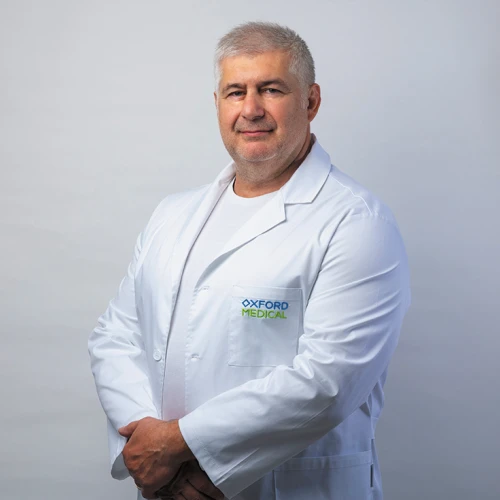
 4.91
4.91  26+
26+ 
 26+ Years of experience
  Kyiv, Hlybochytska St., 40x Kyiv, Vasyl Lypkivskoho St., 38
 4.84 10 10 Years of experience Kyiv, st. Bereznyakivska, 30b
 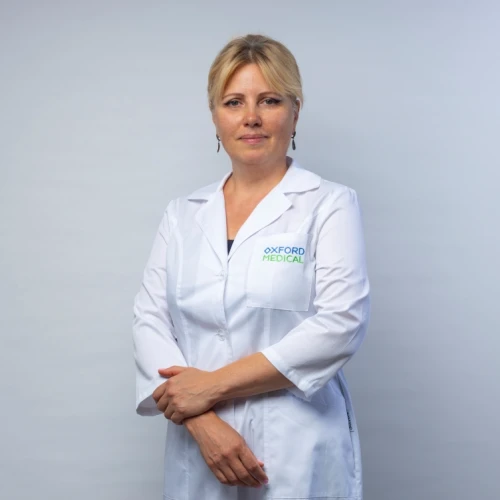 4.83 28+
 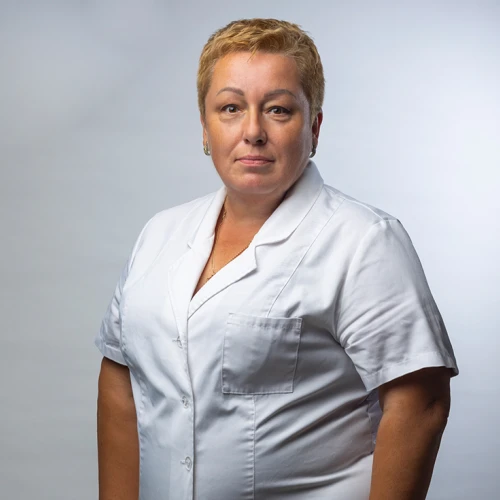 4.88 26+










You can view the prices for diagnostics and treatment in the neurology department here. Book a consultation with a doctor — they will answer all your questions and provide personalized recommendations.
The «Oxford Medical» clinic offers consultations with experienced neurologists in various districts of Kyiv, allowing every patient to choose the most convenient location.
If you're looking for a neurologist in central Kyiv, visit our branches on Predslavynska Street or Knyaziv Ostrozkykh Street — also suitable for those seeking neurology services in Pechersk.
Need a neurologist on the Left Bank? You can visit our clinics in Pozniaky or Osokorky. There is also a neurology department at 30B Berezniakivska Street, where you can undergo a full examination right away.
Residents of Sviatoshynskyi District can also get a consultation at nearby branches, without needing to travel far. We have neurologists available on Zhytomyrska Street and in Sviatoshyno.
All «Oxford Medical» clinics use modern equipment for diagnosing and treating neurological diseases. Our neurologists in Osokorky, Pozniaky, and other city districts always provide qualified care, taking an individual approach to each patient. Call or leave a request on the website — our administrators will help you choose a convenient time and clinic for your visit!
«Oxford Medical» is a modern multidisciplinary medical center with more than 10 clinics in Kyiv, including a 24/7 inpatient department and emergency service.
All clinics are equipped with new expert-class equipment from leading manufacturers. Thanks to this and our team of highly qualified specialists, each patient receives medical care that meets the highest quality standards.
When you consult a neurologist at «Oxford Medical», you have access to diagnostics using the most advanced equipment, ensuring maximum accuracy. This is particularly important in neurology, as the effectiveness of treatment directly depends on correct diagnosis.
Advantages of the «Oxford Medical» clinic:
Experienced neurologists with the highest medical qualifications;
New expert-class diagnostic equipment;
Possibility to undergo all examinations in one clinic;
Conditions for both conservative and surgical treatment, as well as physiotherapy;
Comfortable visit conditions;
Loyalty program for regular patients.
Treatment of neurological diseases typically involves comprehensive therapy. The goal is to eliminate the cause of the disease and its complications, as well as to relieve disturbing symptoms.
Depending on the diagnosis, the doctor may prescribe:
Medication therapy — IV infusions, injections, oral medications;
Physiotherapy procedures;
Therapeutic exercises;
Massage;
Manual therapy.
Most neurological diseases require long-term medication aimed at improving CNS function, electrical conduction of nerve endings, and vascular blood flow. When coordination or limb mobility is affected, physiotherapy, massage, and exercise play a significant role in restoring full function.
In rare cases, when neurological disorders are caused by spinal hernias or brain tumors, surgical treatment may be required.
Evaluating cognitive functions, reflexes, motor activity, and medical history plays a key role in diagnosing neurological conditions.
During the initial consultation, the neurologist immediately assesses how the patient moves around the office, how they sit, speak, etc. The doctor notes all behavioral characteristics, identifying potential symptoms of the disease.
Usually, the visit starts with a conversation where the doctor inquires about complaints, when they started, chronic conditions, and even similar issues in close relatives. It’s best to provide detailed information, as even minor details might be crucial for making an accurate diagnosis.
The next step is an examination and neurological tests. The doctor first checks basic reflexes in the arms and legs with a reflex hammer and evaluates the pupil response to light. Then the neurologist may ask the patient to stand up, touch their nose with their index finger, walk across the room, stand with closed eyes, and perform other simple tasks.
Neurological tests help assess coordination, muscle tone, sensitivity, etc. Based on the results, the doctor can make a preliminary diagnosis and determine which tests are needed to confirm it.
You should also schedule a visit to a neurologist if MRI, duplex scanning of the head and neck vessels, or EEG has revealed:
Vascular encephalopathy;
Hydrocephalus;
Demyelination foci in the brain;
Brain seizure activity;
Changes in the brain’s bioelectrical activity;
Atherosclerotic deposits or plaques;
Venous circulatory disorders;
Disturbed blood flow in the vertebral artery;
Disc protrusion or intervertebral hernia.
A neurologist’s examination is also recommended during routine preventive medical checkups.
A neurologist is a doctor who diagnoses and treats disorders of the nervous system. They assess brain, spinal cord, and peripheral nerve function, and may prescribe additional tests (MRI, CT, EEG, etc.) to clarify the diagnosis. Treatment may include medication, physiotherapy, exercises, and other methods depending on the case.
A neurologist treats various disorders of the nervous system, including headaches and migraines, epilepsy, sleep disorders, Parkinson’s disease, multiple sclerosis, strokes, radiculitis, neuralgia, and consequences of traumatic brain injuries. They also address memory, focus, and emotional regulation issues.
A neurologist or neuropathologist diagnoses and treats diseases of the central and peripheral nervous systems such as neuralgia, myasthenia gravis, multiple sclerosis, Parkinson’s disease, epilepsy, polyneuropathy, and others.
A neurologist evaluates the functioning of the central and peripheral nervous systems, which influence all organ systems. During a consultation, they assess reflexes, movement coordination, cognitive abilities, etc.
Medication therapy is a key component of treating neurological conditions. Depending on the diagnosis, doctors prescribe medications to improve nerve signal transmission, enhance or relax vascular tone, and relieve symptoms. A wide range of drugs is used in neurology, some in tablet form, others via IV or injection.
 in the clinic
  online
  Hello!


