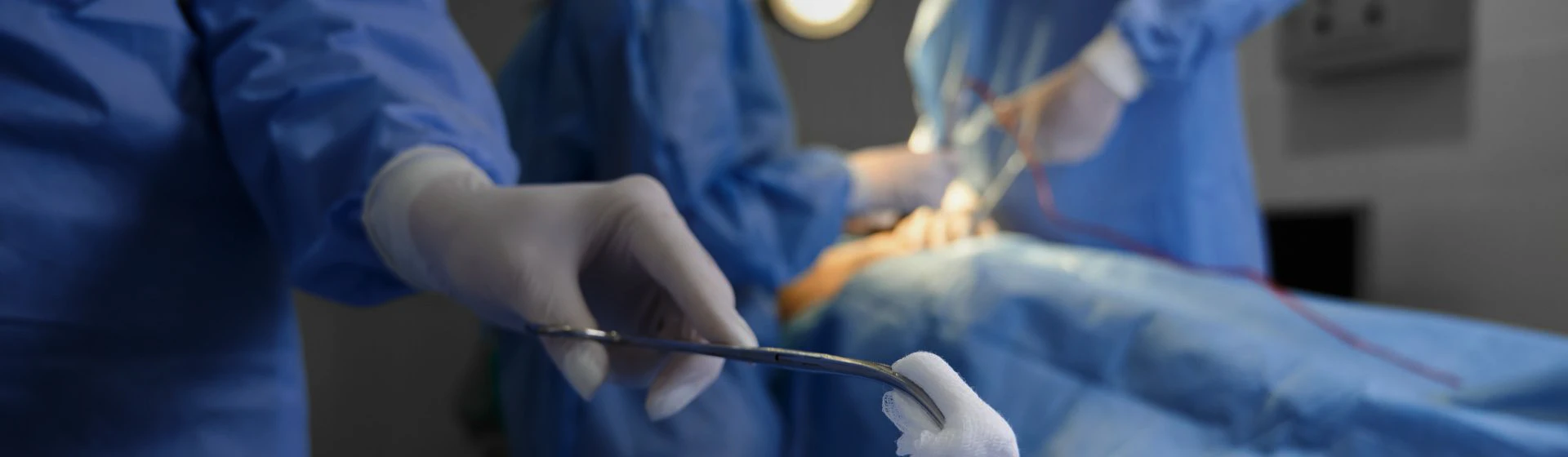
Removal of a lipoma on the face or body is performed without hospitalization. The procedure usually takes no more than half an hour, and the entire stay in the clinic is up to 2–3 hours. Removal of a large lipoma on the back, leg, or another area of the body may take longer.
To ensure the patient does not feel pain or discomfort, local anesthesia is performed before surgery.
During surgical removal, the surgeon cuts the skin with a scalpel, excises the lipoma along with the capsule, sanitizes the wound, and applies sutures.
If laser removal is performed, the surgeon dissects the skin around the neoplasm using a laser beam. The lipoma is then excised with the capsule. The use of a laser minimizes damage to healthy tissues, and blood vessels coagulate immediately, eliminating severe bleeding. After the procedure, the surgeon, if necessary, applies cosmetic sutures and covers the wound with a sterile dressing.
During liposuction, no skin incisions are made. A special needle is inserted into the lipoma, through which fat tissue is destroyed and aspirated. After the procedure, a small bandage (plaster) is applied to the puncture site.
In some cases, after removing a lipoma on the neck or another body area, the material is sent for histological analysis to accurately determine the nature of the neoplasm.