Sign up via call center
Department
Fibroid removal

Fibroma removal

Cost of services
Consultations
Consultation with a plastic surgeon
1789.00 ₴
Order

If a neoplasm has appeared on the skin that does not disappear over time, increases in size, is injured, or simply causes concern, it is worth consulting a doctor. During the examination, the doctor will determine the nature of the formation and explain whether it requires observation or removal.

At «Oxford Medical», patients can undergo a doctor's examination and diagnostics, and, if necessary, fibroma removal. During the appointment, the doctor assesses the characteristics of the neoplasm and selects the optimal method of intervention. To make an appointment for a consultation, use the online appointment form on the website or contact the «Oxford Medical» contact center.

What is a fibroma?

A fibroma is a benign neoplasm that develops from connective tissue. It can occur on the skin, mucous membranes, and even internal organs. Most often it forms in the face, neck, armpits, back, and chest. In some cases, it develops on the surface of internal organs, such as uterine or ovarian fibroma in women.

Fibromas can be flat or raised above the skin; differ in color from the surrounding skin or have the same shade. The size of fibromas usually ranges from a few millimeters to several centimeters.

Types of skin fibromas

By structure and appearance, skin fibromas are divided into the following types:

  • Hard — a dense rounded nodule that is usually located within the thickness of the skin and may have a flesh-colored, pink, or brown shade. Such formations more often appear on the limbs and trunk and usually grow slowly.
  • Soft — a small soft flesh-colored or light-brown formation that protrudes above the skin, often on a thin stalk. Such formations are also called acrochordons. They more often appear on the neck, in the armpits, groin folds, and other areas where the skin regularly rubs.

The type of neoplasm is taken into account when choosing the method of removal, since superficial soft formations and dense nodules may require different approaches.

Causes of skin fibroma formation

According to DermNet, the exact mechanism of hard fibroma development remains not fully understood. The appearance of such neoplasms is partly associated with the skin’s reaction to minor trauma, but this pattern is not observed in all cases. For soft fibromas, skin friction and metabolic factors may be significant.

Fibrous nodules form as a result of the proliferation of connective tissue, in particular cells that produce collagen. As a result, a fibrous formation gradually develops within the thickness of the skin, which may differ in density, size, and appearance.

Risk factors include:

  • hereditary predisposition;
  • constant friction and irritation of the skin;
  • minor injuries, insect bites, and other local damage;
  • age-related and hormonal changes;
  • metabolic disorders, in particular insulin resistance.

Doctors at «Oxford Medical» recommend seeking an examination as soon as possible if the neoplasm has begun to increase rapidly, change color, bleed, or become regularly injured.

Indications for the removal of cutaneous fibromas

Small fibromas may not pose a serious health risk, but they should be monitored.
With any changes in the size or shape of the neoplasm, it is necessary
to consult a surgeon.

Indications for fibroma removal include:


location in areas of skin friction and risk of injury;


rapid increase in the size of the neoplasm;

appearance of discomfort or pain;

suspicion of malignant transformation.

More details

Contraindications to fibroma removal

In most cases, removal of the neoplasm can be performed. However, sometimes it is advisable to postpone the procedure until the condition is stabilized or temporary contraindications are eliminated.

These include:

  • acute infectious diseases and elevated body temperature;
  • active inflammation, rash, or skin damage in the area of the future intervention;
  • blood clotting disorders that increase the risk of bleeding;
  • decompensated chronic diseases in which a planned intervention is temporarily undesirable;
  • exacerbation of herpes infection if the rash is located near the removal area.

Before the procedure, the doctor clarifies information about the patient’s health condition, the presence of chronic diseases, and the medications they take. If there are temporary restrictions, removal of skin neoplasms is postponed until the intervention can be performed safely.

Fibroma removal methods

Oxford Medical surgeons perform removal of both superficial fibromas and those located on internal organs. If fibromas develop on internal organs, removal is performed using laparoscopic or laparotomic (open) surgery.

The choice of fibroma removal method depends on its size and location. In each case, the surgeon individually decides how best to remove the fibroma to ensure the best aesthetic result.

Superficial fibroma removal is performed using:

Surgical laser

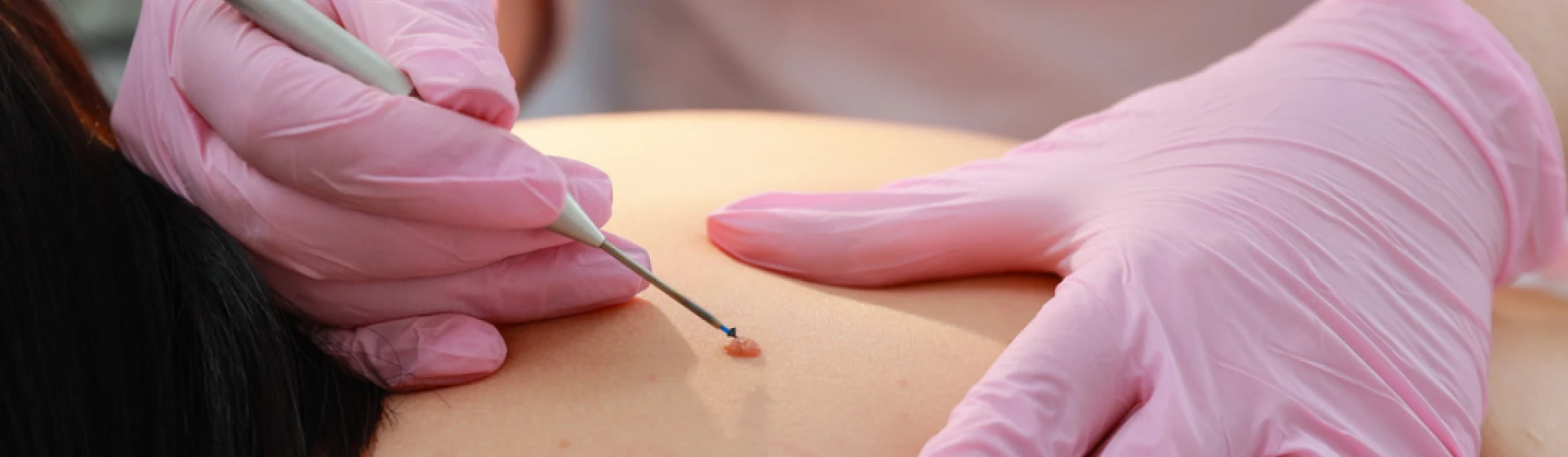
The laser beam causes an instant increase in temperature in the affected cells, leading to fluid evaporation and destruction. This way, an incision is made, and the neoplasm is removed. Blood vessels are immediately coagulated, preventing bleeding.

Radio wave destruction

This method is similar to laser removal of fibroma, but here radio wave energy is applied to tissues. It causes a rapid temperature increase inside the cells, leading to their destruction, while surrounding tissues are not affected by heat.

Electrocoagulation

This method is based on the use of electric current. It allows simultaneous excision and coagulation of tissues, reducing the risk of bleeding.

Surgical excision

 The traditional method of removing fibroma with a scalpel. It is used for large or deeply located fibromas.

Cryotherapy

Involves the use of liquid nitrogen cooled to -196 °C. It freezes the neoplasm’s tissues, causing them to die and gradually detach. Cryodestruction is less effective and is mainly used when the patient has contraindications to other methods.

Preparation for fibroma removal

First of all, if a fibroma is found on the body, it is necessary to undergo an examination by a dermatologist or surgeon. The specialist will assess the condition of the neoplasm and choose the optimal removal method.

Since fibroma removal with a laser or even a scalpel is a minimally traumatic procedure performed under local anesthesia, special preparation is not required. However, the surgeon should be informed about existing diseases and medications being taken, and a few days before the procedure, cosmetics and creams should not be used on the area where the removal will be performed.

How does the fibroma removal procedure take place?

Skin fibroma removal is performed without hospitalization. The procedure usually takes 15–30 minutes, after which the patient can leave the clinic.

First, the surgeon treats the skin area with an antiseptic. Then local anesthesia is applied. Next, the tissue is excised with a scalpel, electrosurgical unit, laser, or radio wave knife. The wound is sanitized, and if necessary, sutures and a sterile dressing are applied.

Recovery after skin fibroma removal

Most often, healing after fibroma removal proceeds quickly and without complications. However, it is important to follow the doctor’s recommendations to ensure the best aesthetic result and fast recovery.

Patients are advised to:

not remove the sterile dressing before the time specified by the doctor;

avoid direct sunlight on the wound;

refrain from intense physical activity.

How much does skin fibroma removal cost in Kyiv at the «Oxford Medical» clinic

The cost of the procedure depends on the size, number, and location of the neoplasms, as well as on the chosen removal method. Therefore, the doctor can say exactly what the price for fibroma removal will be after an examination and determining the extent of the intervention.

You can preliminarily familiarize yourself with the cost of the consultation and other medical services here. To make an appointment, use the online appointment form on the website or contact the «Oxford Medical» contact center.

The information is for informational purposes and does not replace a doctor's consultation.
Sources:

Frequently asked questions

Does a skin fibroma need to be removed?

Not always. If the skin fibroma is small, does not change, and does not cause discomfort, it usually does not need to be removed. Removal is advisable if the neoplasm increases in size, is injured, bleeds, causes aesthetic discomfort, or there are doubts about its nature.

Can a skin fibroma develop into cancer?

An ordinary fibroma is a benign neoplasm and is not considered a precancerous condition. At the same time, some malignant neoplasms may outwardly resemble a fibroma. Therefore, in case of rapid growth, a change in color, bleeding, or other atypical changes, a doctor's examination is necessary.

Does a scar remain after fibroma removal?

After surgical removal, a scar remains because the tissues need to be excised. Its size and visibility depend on the size and depth of the formation, its location, and the characteristics of skin healing. Over time, the scar usually becomes less noticeable.

How long does the skin heal after fibroma removal?

Primary healing of a small wound usually takes about 1–2 weeks, but the timing depends on the size of the neoplasm, the method of intervention, and the area of the body where it was performed. Final scar formation continues for several months.

Is histology needed after fibroma removal?

During surgical excision, it is advisable to send the removed material for histological examination. It allows the type of tissue to be confirmed and other neoplasms with similar external signs to be excluded. Histological examination is especially important if the neoplasm has an atypical appearance or increases rapidly in size.

Can a fibroma reappear after removal?

Yes, recurrence is possible, particularly if the formation was not removed completely. After complete surgical excision, an ordinary dermatofibroma rarely recurs, but new neoplasms may appear on other areas of the skin.

( Rating: 4.85 , Votes: 72 )
Surgical ward

Advantages of fibroma removal at «Oxford Medical»

Use of various methods – removal with a laser, electrocoagulation, radio wave destruction, cryodestruction, or scalpel excision;

Procedures performed by plastic surgeons with many years of experience;

Painless removal with local anesthesia;

Maximum aesthetic result;

Our doctors

Pirus Volodymyr Petrovych
4.88
rating (24)
26+
Years of experience
Plastic Surgeon, Master of Medicine
26+ Years of experience
Consultation 3100
Make an appointment
All doctors
Reviews
Александра 14.08.2026
У меня была асимметрия губ из-за введения геля тридцать лет назад. Но долгое время я не обращала на это внимания, пока не начала снимать себя на камеру для ведения блога. Именно тогда я увидела, насколько заметна эта проблема. Я решила удалить старый гель, но столкнулась с тем, что никто не хотел за это браться. Говорили, что это очень сложная операция, и что ещё нужно постараться найти хирурга, который согласится её выполнить. Но мне повезло — я нашла клинику рядом с домом. На консультации Самко Кристина и Сергей Петрович Галич подробно рассказали, как будет проходить операция, и тогда я решила не откладывать давнюю мечту — одновременно сделать круговую блефаропластику. Подумала, что лучше решить сразу обе проблемы, так как был общий наркоз. Операция прошла успешно, а результат превзошёл мои ожидания. В день, когда сняли швы, я поняла, что ничего не будет видно. Прошло только два месяца, но уже вижу результат. Отдельная благодарность анестезиологу, я проснулась через три часа и пошла домой.
Star Star Star Star Star
Олена 15.06.2026
Після схуднення залишилася проблема, яка дуже впливала на мою впевненість у собі. Крістіна Артаківна допомогла її вирішити, детально пояснила всі етапи лікування та супроводжувала під час відновлення. Результатом дуже задоволена.
Star Star Star Star Star
Current information
All Articles
Sign up
in the clinic
online
This site is protected by reCAPTCHA technology, and the Google Privacy Policy and Terms of Service apply.
Hello!
Let's take care
about your health:
Sign up via call center

We use cookies and other technologies to remember your preferences and find out exactly how you use and interact with the site.

By using our site, you also agree to the terms of the "User Agreement" and "Regulation on the processing and protection of personal data". By clicking "I AGREE", you consent to the processing of your data.