


large benign tumors;
The operation is performed for large benign or malignant neoplasms, ovarian torsion with impaired blood supply, purulent inflammatory processes, or severe endometriosis.

 Adults Adults Adults Adults Adults Adults Adults Adults Adults
  Children Children Children Children


 Hotline:
 Adults Adults Adults Adults Adults Adults Adults Adults Adults Children Children Children Children

The need to remove an ovary usually raises many questions for a woman: whether surgery is really unavoidable, what will happen after the intervention, and how it will affect hormonal balance and the possibility of becoming pregnant. At the «Oxford Medical» medical center, you can receive a consultation with an experienced gynecologist who will answer all questions and suggest the optimal treatment method.
If surgery is indeed necessary, the surgical intervention can be performed in the clinic’s inpatient department. The high qualifications of the doctors and modern expert-class equipment make it possible to perform most operations using a minimally invasive method. Take a step toward restoring women’s health — you can make an appointment for a consultation with a gynecologist by calling the contact center or through the form on the website.
Ovarioectomy — is a surgical operation to remove one or both ovaries. In medical practice, the terms ovariectomy and oophorectomy are also used.
The ovaries — are paired sex glands located on both sides of the uterus. They perform two main functions: eggs mature in them and female sex hormones — primarily estrogens and progesterone — are produced.
Depending on the scope of the operation, ovarioectomy can be:
unilateral — one ovary, right or left, is removed;
bilateral — both ovaries are removed.
The choice of the scope of the operation depends on the type of disease. If the pathological process extends not only to the ovary but also to the fallopian tube, the doctor may recommend removal of the uterine appendages. The scope of the operation is determined individually after examination.
According to the method of surgical access, the following are distinguished:
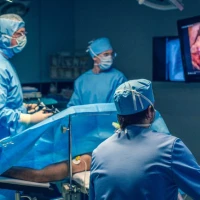
Laparoscopic ovarioectomy. The operation is performed through 3–4 small punctures of the abdominal wall. A laparoscope with a camera and surgical instruments are inserted through them. The image is transmitted to a monitor, which allows the doctor to control all stages of the intervention.
Laparotomic ovarioectomy. The operation is performed through an incision in the anterior abdominal wall. Open access is used, in particular, for large neoplasms, significant internal bleeding, or a pronounced adhesive process.
The doctor chooses the method of performing the operation taking into account the diagnosis, the nature of the detected changes, and the patient’s condition.
Surgery to remove an ovary may be recommended for various gynecological diseases.
The doctor makes the decision to perform it after an examination, when removal of
the organ is the safest or most effective method of treatment.
The main indications are:


large benign tumors;
ovarian torsion or tubo-ovarian abscess;
suspicion of a malignant neoplasm or cancer;

In some cases, an ovarian cyst may also be an indication for surgery if it is large, frequently recurs, or cannot be removed while preserving healthy tissue of the organ.
Doctors at «Oxford Medical» explain: if possible, doctors try to perform organ-preserving surgery — for example, to remove only the cyst or another pathological formation while preserving the ovary. Ovarioectomy is recommended only when this cannot be done or when it is not advisable.
Before a planned ovarioectomy, the doctor assesses the patient’s general health condition and examination results to make sure that the operation and general anesthesia are safe. If there are conditions that may increase the risk of complications, the intervention is postponed until they are eliminated or the condition is stabilized.
The main contraindications include:
acute infectious diseases;
severe blood clotting disorders;
decompensated diseases of the cardiovascular or respiratory system.
After treatment of the acute disease or stabilization of the condition, the issue of performing the operation is considered again.
These restrictions apply only to planned interventions. In emergency conditions, in particular ovarian torsion or rupture with internal bleeding or a tubo-ovarian abscess, the operation is performed urgently. According to the recommendations of the American College of Obstetricians and Gynecologists, in acute ovarian torsion, timely surgical intervention is necessary to prevent severe complications.
Preparation for the operation begins with a consultation with a gynecologist and a preoperative examination. The doctor clarifies the diagnosis, assesses the diagnostic results, and determines the scope of the upcoming intervention.
Usually, before the operation, the following are prescribed:
transvaginal ultrasound of the pelvic organs;
general and biochemical blood tests;
general urine test;
coagulogram;
determination of blood group and Rh factor;
tests for HIV, syphilis, viral hepatitis B and C;
electrocardiogram;
consultation with an anesthesiologist.
If indicated, the doctor may also recommend the determination of tumor markers, computed tomography or magnetic resonance imaging, or other examinations if it is necessary to assess the nature of the neoplasm in more detail.
The operation is performed under general anesthesia, so before the intervention it is important to follow the recommendations regarding preparation for anesthesia. Usually, food intake is stopped 6–8 hours before, and water intake — 2 hours before the operation.
Doctors at «Oxford Medical» note that you need to inform the doctor in advance about all medications that you take regularly. Some of them, in particular medications that affect blood clotting, as well as certain medications for the treatment of diabetes mellitus, may be contraindicated before the operation. The doctor will explain which specific medications need to be stopped, when they need to be stopped, and when their intake can be resumed.
Surgery to remove an ovary in women is most often performed laparoscopically under general anesthesia. The surgeon makes several small punctures in the anterior abdominal wall, through which a laparoscope — an optical device with a camera — and special surgical instruments are inserted. The enlarged image is displayed on a monitor, which makes it possible to precisely control each stage of the intervention.
The main stages of the operation:
Examination of the pelvic organs. The doctor assesses the condition of the ovaries, fallopian tubes, uterus, and surrounding tissues and determines the extent of the pathological process.
Separation of the ovary. The surgeon gradually separates the ovary from the adjacent tissues while simultaneously closing off the blood vessels.
Removal of the ovary. The organ is placed in a special container and removed through one of the punctures. If necessary, the second ovary is removed in the same way.
Completion of the operation. The doctor checks whether there is any bleeding, after which the instruments are removed and the punctures are closed.
In some cases, the operation is performed using an open approach — through an incision in the anterior abdominal wall. Such access may be necessary for large neoplasms, an extensive adhesive process, or other complex clinical situations. If circumstances arise during laparoscopy that do not allow the intervention to be completed safely through small punctures, the surgeon may also switch to open surgery.
After laparoscopic ovarioectomy, the patient usually remains in the hospital until the next day. After open surgery, hospitalization lasts longer — most often several days. Getting out of bed for the first time is usually allowed on the day of the intervention or the following morning, since early physical activity promotes faster recovery.
In the postoperative period, moderate discomfort in the lower abdomen, soreness in the area of the punctures or postoperative suture, a feeling of fatigue, and slight bloody discharge are possible. In most patients, these manifestations gradually weaken as the tissues heal and do not require additional treatment.
After discharge, it is recommended to:
take medications prescribed by the doctor;
care for the postoperative wounds in accordance with the recommendations received;
walk daily, gradually increasing physical activity;
avoid lifting heavy objects and intense physical exertion for 1–2 weeks;
abstain from sexual intercourse until the follow-up examination by a gynecologist.
According to Royal College of Obstetricians and Gynaecologists, after laparoscopic surgery, most women can return to work in approximately 2–3 weeks. After laparotomy, this period is generally longer and often amounts to 4–6 weeks.
Doctors at «Oxford Medical» recommend: after discharge, carefully monitor your well-being. If your body temperature rises above 38 °C, abdominal pain increases, bloody discharge becomes heavy, or purulent discharge appears from the postoperative wound, it is necessary to consult a doctor as soon as possible. An ambulance should be called immediately in case of sudden chest pain, shortness of breath, or the appearance of pain and swelling in one leg, since such symptoms may indicate the development of thrombosis or thromboembolism.
The consequences of the operation depend primarily on its scope. If one ovary is removed, the other in most cases continues to produce sex hormones and ensures the maturation of eggs. Therefore, the menstrual cycle is usually preserved, and natural pregnancy remains possible.
After removal of both ovaries, the situation is different. The body stops producing the main amount of estrogens and progesterone, so surgical menopause occurs.
It may be accompanied by:
hot flashes;
night sweats;
dryness of the vaginal mucosa;
mood changes;
sleep disturbances.
According to The Menopause Society, women who underwent bilateral ovarioectomy before natural menopause may, in the absence of contraindications, be recommended menopausal hormone therapy to relieve symptoms and prevent the long-term consequences of estrogen deficiency.
The cost of the operation depends on the scope of the surgical intervention and the method of performance (laparoscopic or open). You can find out in advance what the price for ovary removal is here. The doctor will provide more details about the specifics of the operation and its cost during the consultation. You can make an appointment by calling the contact center or through the online appointment form on the website.
The information is for informational purposes and does not replace a consultation with a doctor.
Sources:
The operation is performed for large benign or malignant neoplasms, ovarian torsion with impaired blood supply, purulent inflammatory processes, or severe endometriosis.
Laparoscopic ovarioectomy in women usually lasts 40–90 minutes. The operation may take more time in cases of large neoplasms, a pronounced adhesive process, or removal of both ovaries.
The consequences depend on the scope of the operation. After one ovary is removed, the other usually compensates for its function. After both are removed, surgical menopause occurs, and natural pregnancy becomes impossible.
After removal of one ovary, sex life usually does not change. If both ovaries are removed, vaginal dryness or discomfort during sexual intercourse may occur due to estrogen deficiency. If necessary, the doctor may recommend appropriate treatment.
Yes, if the uterus is preserved and the second ovary functions normally, menstruation usually continues. In the first months after the operation, the cycle may temporarily change, but later it is restored in most women.
f the second ovary functions normally and the fallopian tube on its side is patent, natural pregnancy remains possible. The likelihood of conception is also influenced by the woman’s age, ovarian reserve, and other factors.


Modern equipment: operating rooms are equipped with innovative equipment from world brands
Professional medical staff: qualified gynecologists, anesthesiologists, nurses
Individual approach: selection of treatment methods, taking into account the needs of each patient
Comfortable conditions for postoperative stay: single and double wards with all the necessary conditions for comfort


 4.82
4.82  29+
29+  29+ Years of experience
  Kyiv, st. Bereznyakivska, 30b





 in the clinic
  online
  Hello!


