Sign up via call center
Department
Surgical treatment of liver cysts at the private clinic Oxford Medical Kyiv

Liver cyst removal

Cost of services
Consultations
Consultation with a surgeon
1200.00 ₴
Order
Services
Ultrasound-guided liver puncture
12000.00 ₴
Sign up by the call center
Puncture of cystic formation under ultrasound control of the I category of complexity
2389.00 ₴
Sign up by the call center
Ultrasound-guided puncture of cystic formation of II category of complexity
2789.00 ₴
Sign up by the call center
Ultrasound-guided puncture of cystic formation of III complexity category
5389.00 ₴
Sign up by the call center

The loyalty program applies to surgical interventions in the inpatient facility, making treatment even more affordable.

A liver cyst is a hollow formation filled with fluid. Most often, simple cysts are benign, do not cause symptoms, and do not require surgery. However, in certain cases, surgical treatment may be necessary. Modern methods allow such formations to be removed in a minimally invasive manner, without large incisions.

At Oxford Medical, operations are performed by experienced surgeons in a modern inpatient facility with expert-class equipment. In most cases, the laparoscopic method is used, which, compared to open surgery, is associated with less tissue trauma, shorter hospitalization, and faster recovery.

If you have been diagnosed with a liver cyst, book a consultation with a surgeon at Oxford Medical to determine further treatment tactics.

Causes of cyst formation in the liver

According to a review of scientific studies in PubMed Central, most simple liver cysts are of congenital origin. They form from bile ducts that did not connect to the main biliary system during intrauterine development. Fluid gradually accumulates in these areas, resulting in the formation of a cyst. Such formations can exist for years without causing any symptoms.

Other possible causes of cystic formations:

  • Parasitic infections. Infection with echinococcus can lead to the formation of a parasitic cyst in the liver.

  • Liver injuries. After damage to the organ, a cavity with an accumulation of blood or fluid may form, which is sometimes called a pseudocyst.

  • Inflammatory processes. Infectious lesions of the liver may be accompanied by the formation of cavities with purulent contents — abscesses. They are not simple cysts and require different treatment.

  • Hereditary disorders. Genetic changes can cause the formation of numerous cysts in the liver — polycystic disease.

The causes of cystic formations can differ significantly, so it is important to establish their origin in order to choose the correct treatment strategy.

Cysts in the liver:
symptoms and signs

Small cysts often do not cause discomfort, so they may be detected incidentally during an ultrasound
examination of the abdominal organs. Symptoms usually appear when the formation increases in size
and begins to press on the surrounding tissues or neighboring organs. At the same time, even a large cyst
does not always cause complaints.

Possible signs of a liver cyst:

dull pain, a feeling of heaviness or fullness in the right upper quadrant;

early satiety, nausea, and discomfort after eating;

abdominal enlargement in the presence of large or multiple formations;

yellowing of the skin and whites of the eyes in case of compression of the bile ducts.

List of diseases

Doctors at Oxford Medical explain that these symptoms are not specific to cysts and may occur with other diseases of the liver, gallbladder, and digestive organs. The cause of the complaints can only be established based on the results of diagnostic examinations.

Why cysts in the liver are dangerous

Most simple liver cysts do not pose a threat to health. However, in some cases, they can cause serious complications that require emergency medical care. According to the European Association for the Study of the Liver (EASL), the following complications are possible:

  • Compression of the bile ducts and neighboring organs — a large cyst can obstruct bile outflow and cause obstructive jaundice. If blood vessels are compressed, impaired blood circulation is possible.

  • Hemorrhage into the cyst — damage to blood vessels leads to the accumulation of blood in the cavity of the formation. This can cause sharp pain, rapid enlargement of the cyst, and require urgent treatment.

  • Rupture of the cyst — its contents enter the abdominal cavity, which can cause irritation of the peritoneum. If the rupture is accompanied by significant internal bleeding, a threat to life arises.

  • Infection and suppuration — a bacterial infection develops in the cavity of the cyst. Without timely treatment, it can spread and lead to sepsis — a life-threatening systemic reaction of the body to infection.

Doctors at Oxford Medical recommend seeking medical attention immediately in case of sudden severe abdominal pain, especially if it is accompanied by severe weakness, dizziness, or loss of consciousness. High fever with chills or the appearance of jaundice also requires urgent examination.

Diagnosis of a liver cyst

Liver cysts are often detected incidentally during examinations for another reason. To clarify the diagnosis, the following may be prescribed:

  • ultrasound examination of the abdominal organs — the main method of primary diagnosis, which allows cysts to be detected, their size, number, and location to be determined, and the condition of their walls and internal contents to be assessed;

  • CT of the liver — used for a more detailed examination of cysts with a complex or atypical structure, clarification of their location and connection with blood vessels and bile ducts;

  • laboratory tests — examination of bilirubin levels and liver enzymes helps detect disorders of bile outflow;

  • magnetic resonance cholangiopancreatography — to clarify the nature of complex cystic formations and their possible connection with the bile ducts (if indicated).

If a typical simple cyst that does not cause symptoms is detected based on ultrasound results, additional examinations are usually not necessary. However, the presence of septa, thickened walls, heterogeneous contents, and other atypical changes requires a more detailed examination. The obtained results allow the doctor to establish the nature of the formation and determine further management tactics — observation or treatment.

Cysts in the liver: treatment

Treatment tactics depend on the type of cyst, its size, location, the presence of symptoms and complications. Not all formations need to be removed: simple cysts that do not cause complaints and have a typical structure usually do not require treatment. However, if a cyst disrupts the function of neighboring organs or causes significant discomfort, intervention may be necessary.

Main methods of treating a liver cyst:

  • Puncture with sclerotherapy — under ultrasound guidance, fluid is removed from the cyst through a needle, after which a special medication is introduced that acts on the cells of its inner lining and reduces the reaccumulation of fluid. The method is used in certain cases for simple cysts. Puncture alone without sclerotherapy often leads to refilling of the cavity.

  • Laparoscopic removal of a liver cyst — through small punctures, the surgeon opens the cyst and excises the accessible part of its wall. This is called fenestration. The remaining part of the wall is left in place because its complete excision may require the removal of healthy liver tissue or create a risk of damage to blood vessels and bile ducts. After the operation, fluid does not accumulate in a closed cavity but drains into the abdominal cavity, where it is gradually absorbed. The method is used mainly for symptomatic simple cysts.

  • Complete removal of the cyst or resection of part of the liver — used primarily when a mucinous cystic neoplasm is suspected, which may undergo malignant transformation. Unlike a simple cyst, such a formation may have thick walls, internal septa, and nodular growths. In this case, it is important to remove it completely, as remaining pathological tissues may cause recurrence. Depending on the location of the formation, the surgeon removes only the cyst or a part of the liver along with it.

The main difference between partial and complete removal is the purpose of the operation. In the case of a simple benign cyst, it is often sufficient to open it and remove part of the wall to eliminate symptoms and prevent the reaccumulation of fluid. However, if the formation has signs of a tumor process, complete excision may be necessary to avoid leaving pathologically altered tissues behind.

Preparation for liver cyst removal

Before the intervention, the surgeon studies the diagnostic results, assesses the size and location of the cyst, and determines the extent of the upcoming operation. During the consultation, the doctor also clarifies the presence of concomitant diseases, allergic reactions, and medications that the patient takes regularly.

Usually, preparation for surgery involves the following examinations:

  • general blood and urine tests;

  • biochemical blood analysis, including indicators of liver function;

  • a coagulogram to assess blood clotting;

  • an electrocardiogram and a consultation with an anesthesiologist.

The type of anesthesia depends on the method of intervention. Laparoscopy of a liver cyst and open operations are performed under general anesthesia. Puncture with sclerotherapy is usually performed under local anesthesia, sometimes with the use of sedation.

Before an operation under general anesthesia, eating is prohibited for 8 hours. Clean, still water can be consumed no later than 2 hours before the intervention. On the day of the operation, only medications approved by the anesthesiologist should be taken, with a small amount of water.

How liver cyst removal is performed

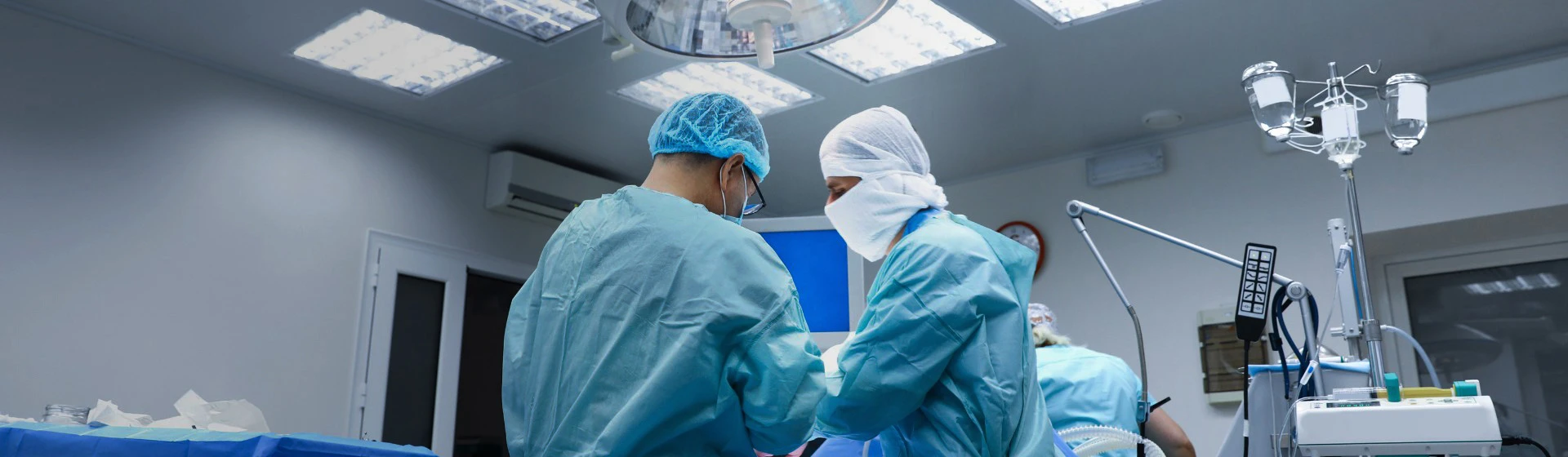
At Oxford Medical, interventions are performed by experienced surgeons in a modern inpatient facility with expert-class equipment. This allows the necessary manipulations to be performed precisely and ensures continuous monitoring of the patient's condition during the operation.

How liver cyst puncture is performed

After local anesthesia, the doctor inserts a thin needle or catheter into the cyst under ultrasound guidance and removes the fluid. Then a sclerosing agent is introduced into the cavity. It acts on the inner lining of the cyst, promotes the collapse and gradual adhesion of its walls, reducing the risk of fluid reaccumulation.

The agent is left in the cavity for a specified period of time, after which it is removed through the catheter. In the case of large cysts, the catheter is sometimes left in place for several days to ensure the drainage of residual fluid and, if necessary, repeat sclerotherapy.

How laparoscopic surgery is performed

Removal of a liver cyst using the laparoscopic method is performed through several small punctures in the abdominal wall. The surgeon inserts a laparoscope with a video camera and special instruments. Guided by the image on the monitor, the doctor opens the cyst, removes the fluid, and excises the accessible part of its wall. At the end, the doctor checks the surgical field, places a drain if necessary, and closes the puncture sites.

Features of open surgery

The surgeon makes an incision in the abdominal wall, gains access to the liver, and removes the cyst to the planned extent. If resection is necessary, part of the liver is excised along with the formation. After checking the surgical field, the doctor places a drain if necessary and applies sutures.

The duration of hospitalization depends on the method of intervention. After puncture, the patient usually remains under observation for several hours and can return home on the same day. After laparoscopic surgery, the hospital stay often lasts 1–2 days, after open surgery — approximately 5–7 days. The actual duration depends on the extent of the intervention and the course of recovery.

Recovery after liver cyst removal

The duration of recovery depends on the method of intervention and its extent. After puncture with sclerotherapy, the patient usually returns to usual activities within 1–2 days. After laparoscopic surgery, recovery takes approximately 2–4 weeks, and after open surgery, especially with resection of part of the liver, 6–8 weeks or longer. The timeframes may vary depending on the complexity of the operation and the state of health.

During the first few days after surgical intervention, moderate pain in the area of the punctures or incision, weakness, and abdominal bloating are possible. These manifestations usually gradually decrease. If necessary, the doctor prescribes painkillers.

Main recommendations for the recovery period:

  • keep postoperative wounds clean and dry, change dressings according to the surgeon's recommendations;

  • do not take a bath, visit a swimming pool or sauna until the wounds have healed;

  • start walking with the doctor's permission as early as the first day after surgery, gradually increasing activity;

  • avoid lifting heavy objects, intense training, and strain on the abdominal muscles for 4–6 weeks after surgery;

  • gradually resume eating after anesthesia and return to the usual diet in the absence of other restrictions.

After laparoscopic surgery, it is often possible to return to work that does not involve significant physical exertion after 1–2 weeks. After open surgery, this period is usually longer.

Doctors at Oxford Medical recommend not missing the follow-up examination after surgery. The surgeon checks wound healing and, if necessary, orders a follow-up ultrasound examination. If severe or increasing abdominal pain, high fever, jaundice, or discharge from the wound appears, it is necessary to seek medical assistance without waiting for the scheduled appointment.

How much does liver cyst removal surgery cost in Kyiv at the private clinic Oxford Medical

The cost of liver cyst removal depends on the chosen method, the complexity of the intervention, and its extent. The price of puncture with sclerotherapy, laparoscopic surgery, and open surgery differs. If resection of part of the liver is necessary, this also affects the cost of treatment.

You can review the prices for medical services in advance here. The surgeon can provide you with more precise information about the cost and explain the specific features of the upcoming intervention during a consultation. To book an appointment at Oxford Medical, use the online booking form on the website or contact the contact center.

The information is for informational purposes only and does not replace a doctor's consultation.

Sources:

Frequently asked questions

Does a liver cyst cause pain?

Small simple cysts usually do not cause pain. If the formation increases in size, dull pain, heaviness, or a feeling of pressure in the right upper quadrant may occur. Sudden severe pain sometimes indicates hemorrhage or rupture of the cyst and requires emergency medical attention.

Can a liver cyst disappear on its own?

Liver cysts usually do not disappear on their own, although their size may remain unchanged for many years. If the formation has a typical structure and does not cause symptoms, treatment is most often not necessary. However, the need for further observation or surgery is determined individually.

Can the growth of a liver cyst be stopped?

There are no proven methods that stop the growth of a cyst. If it increases in size and causes symptoms, the doctor may suggest puncture with sclerotherapy or surgical intervention.

Can a cyst in the liver be malignant or develop into cancer?

Ordinary simple cysts are benign and are not considered precancerous formations. However, some cystic liver tumors, particularly mucinous cystic neoplasms, may have malignant potential. If thickened walls, septa, or nodular components are detected during the examination, additional diagnostic testing is necessary to rule out liver cancer.

Can a liver cyst be treated without surgery?

An asymptomatic simple cyst in the liver usually does not require treatment at all. If it causes discomfort, puncture with sclerotherapy may sometimes be an alternative to surgical operation. However, this method is not suitable for all neoplasms, so the possibility of its use is determined after diagnosis.

( Rating: 4.81 , Votes: 27 )
Surgical ward

Advantages of the General Surgery Department at Oxford Medical in Kyiv

Modern equipment. The latest technology ensures accurate diagnostics and safe surgeries.

Experienced surgeons. Doctors with many years of practice use advanced treatment methods.

Minimally invasive techniques. Laparoscopic surgery reduces trauma and speeds up recovery.

Comfortable conditions. Rehabilitation takes place in modern wards under staff supervision.

Loyalty program. Special offers make surgical treatment more affordable for patients.

Comprehensive approach. Patients receive full care: diagnostics, surgery, and rehabilitation.

Our doctors

Lifshitz Yuriy Zinovyyovych - surgeon of the highest category, Doctor of Medical Sciences, private clinic Oxford Medical Kyiv
4.9
rating (48)
47+
Years of experience
Surgeon of the highest category, Doctor of Medical Sciences
47+ Years of experience
Make an appointment
Valetskyi Valeriy Leontiyovych - surgeon-oncologist of the highest category, candidate of medical sciences, private clinic Oxford Medical Kyiv
4.62
rating (26)
42+
Years of experience
Surgeon-oncologist of the highest category, Candidate of Medical Sciences
42+ Years of experience
Consultation 2100
Kyiv, st. Bereznyakivska, 30b

Make an appointment
Mudrievsky Bogdan Lyubomirovich
4.85
rating (20)
40+
Years of experience
Online consultation
Surgeon
40+ Years of experience
Consultation 1200
Kyiv, st. Bereznyakivska, 30b
Make an appointment
Kovalchuk Alexander Vasilyevich
4.95
rating (20)
43+
Years of experience
Surgeon of the highest category
Candidate of Medical Sciences
43+ Years of experience
Consultation 1200
Kyiv, st. Bereznyakivska, 30b
Make an appointment
All doctors
Reviews
Віктор 21.09.2026
Звернувся до Костянтина Вікторовича за другою думкою щодо необхідності операції на хребті. Лікар уважно переглянув усі знімки, провів огляд і детально пояснив можливі варіанти лікування. Сподобалося, що нічого не нав'язував, а аргументовано відповів на кожне запитання. Зараз дотримуюся його рекомендацій, самопочуття поступово покращується.
Star Star Star Star Star
Віктор 17.09.2026
Потрапив до Костянтина Вікторовича через біль у шиї та оніміння руки. На прийомі лікар детально розпитав про симптоми, перевірив результати обстежень і зрозуміло пояснив ситуацію. Пройшов призначене лікування, після якого оніміння зменшилося, а рухати шиєю стало набагато легше. Задоволений результатом.
Star Star Star Star Star
Current information
All Articles
Sign up
in the clinic
online
This site is protected by reCAPTCHA technology, and the Google Privacy Policy and Terms of Service apply.
Hello!
Let's take care
about your health:
Sign up via call center

We use cookies and other technologies to remember your preferences and find out exactly how you use and interact with the site.

By using our site, you also agree to the terms of the "User Agreement" and "Regulation on the processing and protection of personal data". By clicking "I AGREE", you consent to the processing of your data.