


multiple polyps of the colon that cannot be safely removed during colonoscopy;
Partial colectomy, or segmental intestinal resection, involves the removal of a specific section of the colon. The rest of the organ is preserved whenever possible.

 Adults Adults Adults Adults Adults Adults Adults Adults Adults
 Children Children Children Children


 Hotline:

 Adults Adults Adults Adults Adults Adults Adults Adults Adults Children Children Children Children

A loyalty program applies to surgical interventions in the inpatient department, making treatment even more affordable.
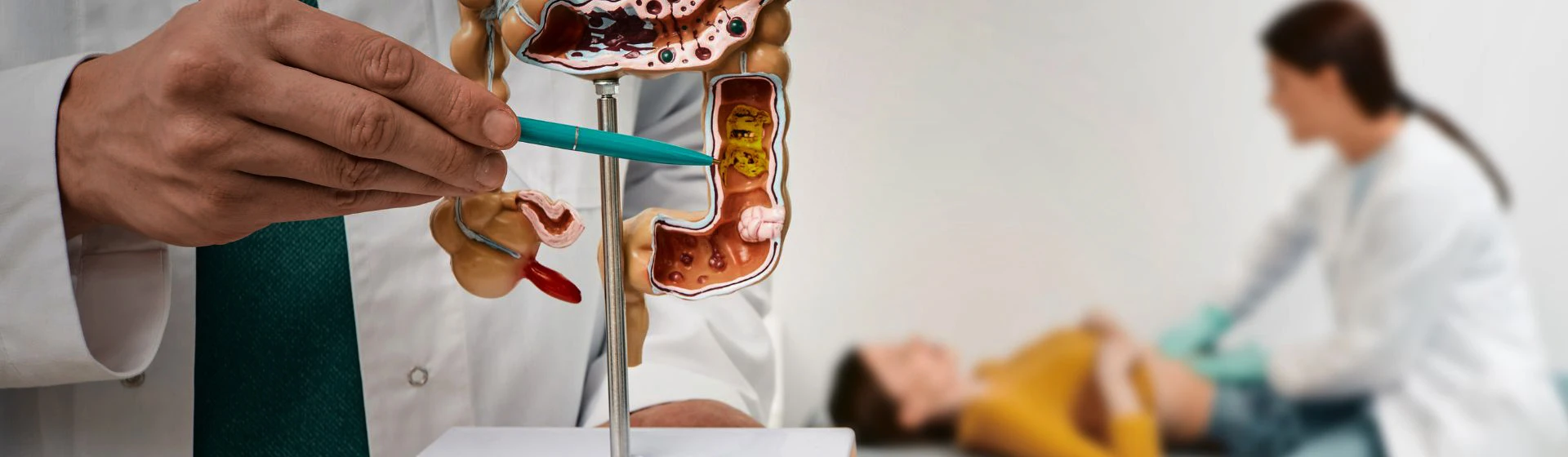
Colectomy is a surgical operation during which part or all of the large intestine is removed. The extent of the intervention depends on the nature of the disease, the extent of the pathological process, and the patient's general condition.
At the Oxford Medical medical center in Kyiv, operations on the large intestine are performed by highly qualified surgeons with many years of work experience. The surgical department is equipped with modern expert-class equipment, which makes it possible to perform complex surgical interventions.
To schedule a consultation with a surgeon at Oxford Medical, call the contact center or use the online appointment form on the website. Based on the examination results, the doctor will determine the indications for surgery and, if necessary, develop an individual surgical treatment plan.
One of the main indications is colon cancer. During the operation, the section
of the intestine affected by the tumor is removed, and, if indicated, the adjacent
lymph nodes are also removed.
In addition to oncological diseases, the operation may be prescribed for:


multiple polyps of the colon that cannot be safely removed during colonoscopy;
complicated diverticulitis, in particular with intestinal perforation, formation of fistulas or abscesses;
severe ulcerative colitis that does not respond to medical treatment or is accompanied by dangerous complications;
Crohn's disease with severe involvement of the colon, strictures or other complications;
disruption of the blood supply to the intestine, which led to the death of its tissues.

According to National Cancer Institute (NCI), there are several types of operations that differ in the extent of surgical intervention. The extent of intestinal resection depends on the nature of the disease, the location and extent of the pathological process.
Partial colectomy, or segmental intestinal resection, involves the removal of a specific section of the colon. The rest of the organ is preserved whenever possible.
Subtotal colectomy is the removal of a significant part of the colon while preserving one or more of its sections. Unlike partial resection, such an intervention involves the removal of most of the organ.
Hemicolectomy is an operation to remove the right or left part of the colon. In a right-sided hemicolectomy, the cecum, ascending colon, and part of the transverse colon are usually removed. In a left-sided hemicolectomy, the descending colon and adjacent sections of the colon are removed. The exact extent of the intervention depends on the location of the pathological process.
Total colectomy involves the removal of the entire colon while preserving the rectum. Such an intervention is performed in cases of extensive involvement of the organ when partial resection is insufficient. Whenever possible, the small intestine is connected to the rectum to preserve the natural route of bowel emptying.
Proctocolectomy is an operation during which the colon and rectum are completely removed. After such an intervention, the surgeon creates a new route for the elimination of intestinal contents. For this purpose, an ileostomy may be created — an opening in the anterior abdominal wall through which part of the small intestine is brought out. Another option is the formation of an internal reservoir from the small intestine and its connection to the anal canal.
Doctors at Oxford Medical explain that after partial resection of the colon, the preserved sections of the intestine are connected to each other whenever possible. Such a connection is called an anastomosis. If its formation is impossible or associated with a high risk of complications, a temporary or permanent stoma may be required — a special opening in the anterior abdominal wall through which intestinal contents are discharged into an ostomy bag.
Resection of the large intestine is performed using two main methods — laparoscopic or laparotomic (open). The choice of surgical approach depends on the diagnosis, the extent of the disease, and the presence of complications.
To perform the operation, the following methods are used:
Laparoscopic method. This is a minimally invasive intervention performed through several small incisions in the abdominal wall. Through them, the surgeon inserts a laparoscope with a video camera and special instruments. An enlarged image of the internal organs is transmitted to a monitor, allowing the doctor to perform the necessary manipulations precisely. To remove the affected section of the intestine, one of the incisions is usually enlarged.
Laparotomic method. This is an open operation during which the surgeon makes an incision in the abdominal wall for direct access to the intestine. This approach may be necessary in cases of extensive involvement of the organ, large neoplasms, or emergency conditions, particularly intestinal perforation and peritonitis.
According to Cleveland Clinic, the laparoscopic method is usually accompanied by less postoperative pain, a shorter hospital stay, and faster recovery compared with open surgery. At the same time, open access allows the surgeon to directly examine the abdominal organs and perform the necessary extent of intervention when the clinical situation requires it.
Before colectomy, the patient undergoes a comprehensive examination. It may include:
general and biochemical blood tests, a coagulogram, and other laboratory tests;
electrocardiography (ECG) to assess heart function;
colonoscopy with biopsy if indicated;
computed tomography (CT) of the abdominal and pelvic organs;
consultation with an anesthesiologist to assess risks and plan anesthesia.
Preparation for planned surgery may also involve a special diet and bowel cleansing. 2–3 days before the intervention, the doctor may recommend limiting foods high in fiber: raw vegetables, fruits with skin, legumes, nuts, seeds, and whole-grain products. During this period, white rice, pasta, eggs, lean meat, and fish can be consumed.
One day before the operation, it may be recommended to consume only clear drinks and liquid products without solid particles: water, tea without milk, clear strained broth. If necessary, special preparations for bowel cleansing and antibiotics are prescribed to reduce the risk of infectious complications.
Before anesthesia, it is usually necessary to abstain from solid food for at least 6 hours. Clear liquids, in the absence of contraindications, may be permitted up to 2 hours before the start of anesthesia. The exact regimen of eating, drinking, and bowel cleansing is determined by the doctor according to the planned operation.
Doctors at Oxford Medical note that it is necessary to inform the surgeon in advance about chronic diseases, allergic reactions, and all medications you are taking. It is especially important to report medications that affect blood clotting, as well as medications for controlling diabetes mellitus. If necessary, the doctor will adjust the regimen for taking them before the operation.
Colectomy is performed under general anesthesia, so during the intervention, the patient is asleep and does not feel pain. The duration of the operation depends on the extent of resection, the chosen surgical approach, and the complexity of the disease.
The main stages of the operation:
Surgical access. The doctor makes several small incisions during laparoscopic surgery or one larger incision during open surgery.
Removal of the affected section. The surgeon separates the necessary part of the intestine from the surrounding tissues, ligates the corresponding blood vessels, and removes it. In cases of oncological diseases, regional lymph nodes are sometimes removed along with the section of the intestine.
Restoration of intestinal continuity. If possible, the doctor connects the preserved sections of the intestine, forming an anastomosis. When such a connection is inadvisable or dangerous, the creation of a temporary or permanent stoma may be necessary — bringing the intestine out onto the anterior abdominal wall to divert intestinal contents.
Completion of the operation. The surgeon checks the condition of the operated tissues, makes sure there is no bleeding, and closes the surgical incisions. If indicated, a drain is placed.
After completion of the intervention, the patient is transferred to the postoperative observation ward, where medical staff monitor the patient's condition and recovery from anesthesia. With stable indicators, the patient continues recovery in comfortable single or double rooms of the surgical inpatient department.
For several hours after the operation, the patient remains in the postoperative ward. There, the heart rate, breathing, and other vital body functions are monitored. After that, if the patient's condition is stable, he is transferred to a single or double ward of a surgical hospital.
On the day of the operation, the patient is usually recommended to adhere to bed rest. You can get up only after the doctor's permission. From the 2nd-3rd day, moderate physical activity is recommended. It helps prevent the formation of adhesions and the development of postoperative pneumonia.
The duration of hospitalization depends on the complexity of the operation and the patient's well-being. On average, in the absence of complications, it is 3-7 days.
The recovery period after surgery is also purely individual. It may include drug therapy, recommendations on nutrition and physical activity.
Adhering to the recommended regimen and diet after rectal resection allows for normal healing, reduces the risk of postoperative complications, and supports the body in the recovery process.
On the day of surgery, the patient may be allowed to drink only clean, still water. Nutrition is provided parenterally - the body is supplied with nutrients through a dropper.
On the second day, it is possible to eat liquid dishes. It is important that they are warm, but not hot or cold.
On the 4th day, easily digestible dishes of a soft consistency are added. It is recommended to eat in small portions 5-6 times a day.
After 2 weeks after surgery, the menu is gradually expanded, and in the case of an anastomosis, over time, they are allowed to return to a full diet. At the same time, it should remain regular and balanced, and exclude foods that are harmful to health: fried, smoked, spicy, salty foods, spices, fresh milk, coffee, alcohol and foods that contribute to gas formation, constipation or diarrhea.
In the case of colostomy formation, nutritional recommendations may vary. In particular, the patient may be advised to eat foods with a mild laxative effect, minimize fat intake and drink up to 2 liters of water per day.
Violation of the recommended diet can provoke the development of complications.
Colectomy, like any surgical intervention, is associated with certain risks. The likelihood of complications depends on the extent of the operation, the patient's general condition, and the presence of concomitant diseases.
Possible complications include:
postoperative bleeding;
infection of the surgical wound;
anastomotic failure (loss of the integrity of the intestinal connection);
temporary impairment of intestinal motility;
formation of adhesions and intestinal obstruction;
thromboembolic complications.
At Oxford Medical clinic, special attention is paid to minimizing surgical risks. The surgeons' many years of experience, expert-class equipment, thorough preoperative preparation, and medical supervision in the inpatient department help reduce the likelihood of complications and ensure monitoring of the patient's condition during recovery.
One of the possible consequences of the operation is the formation of a stoma — a special opening in the anterior abdominal wall for the discharge of intestinal contents into an ostomy bag. If part of the large intestine is brought out, this is called a colostomy; if part of the small intestine is brought out, it is called an ileostomy. A stoma may be temporary, when restoration of the natural route of bowel emptying is planned later, or permanent, if such restoration is impossible.
The cost of colectomy at the Oxford Medical medical center depends on the complexity of the surgical intervention.
The price of the operation is influenced by:
the method of performing the operation — laparoscopic or open;
the extent of colon removal;
the need to remove regional lymph nodes;
the need to create a temporary or permanent stoma.
The doctor can determine the final cost of treatment after the examination and selection of the surgical approach. You can familiarize yourself with the prices for medical services in advance here.
To schedule a consultation with a surgeon at Oxford Medical, call the contact center or fill out the online appointment form on the website.
The information is for informational purposes only and does not replace a doctor's consultation.
Sources:
Colectomy usually lasts from 2 to 4 hours. The duration depends on the extent of resection, the method of surgical intervention, and the complexity of the disease. If it is necessary to create a stoma or perform additional manipulations, the operation may take longer.
After laparoscopic surgery, recovery of daily activity often takes 2–4 weeks, while after open surgery it takes 4–6 weeks or longer. The recovery time depends on the extent of the intervention, the presence of complications, and the patient's general condition.
If the natural route for the passage of intestinal contents is preserved after the operation, the patient empties the bowels through the anus. Initially, bowel movements may be more frequent and looser, but over time, intestinal function usually stabilizes. If a stoma has been created, intestinal contents pass into a special ostomy bag.
No, not all patients need a stoma. If the preserved sections of the intestine can be safely connected after removal of the affected section, a stoma is not created. In other cases, a temporary or permanent stoma may be required. This depends on the type of operation, the condition of the intestine, and the possibility of restoring its continuity.
Light physical activity, particularly walking, is usually recommended as early as the first days after surgery. Returning to intensive training and lifting heavy objects is most often permitted after 6–8 weeks, depending on the course of recovery. If a stoma has been created or the operation was complex, restrictions may last longer.


High professionalism of surgeons
Carrying out operations of any complexity
Using predominantly laparoscopic techniques
New equipment from leading brands
Availability of intensive care units with equipment for 24-hour monitoring and support of vital body functions
Comfortable single and double rooms
Possibility of comprehensive treatment of colon cancer with chemotherapy, targeted and immune therapy
Loyalty program for regular patients


 4.62
 42+
 42+ Years of experience
 Kyiv, st. Bereznyakivska, 30b






 in the clinic
 online
 Hello!


