


infection of the surgical wound
Lasts about six hours after the first symptoms appear. Accompanied by swelling of the mucous membrane of the appendix.

 Adults Adults Adults Adults Adults Adults Adults Adults Adults
  Children Children Children Children


 Hotline:
 Adults Adults Adults Adults Adults Adults Adults Adults Adults Children Children Children Children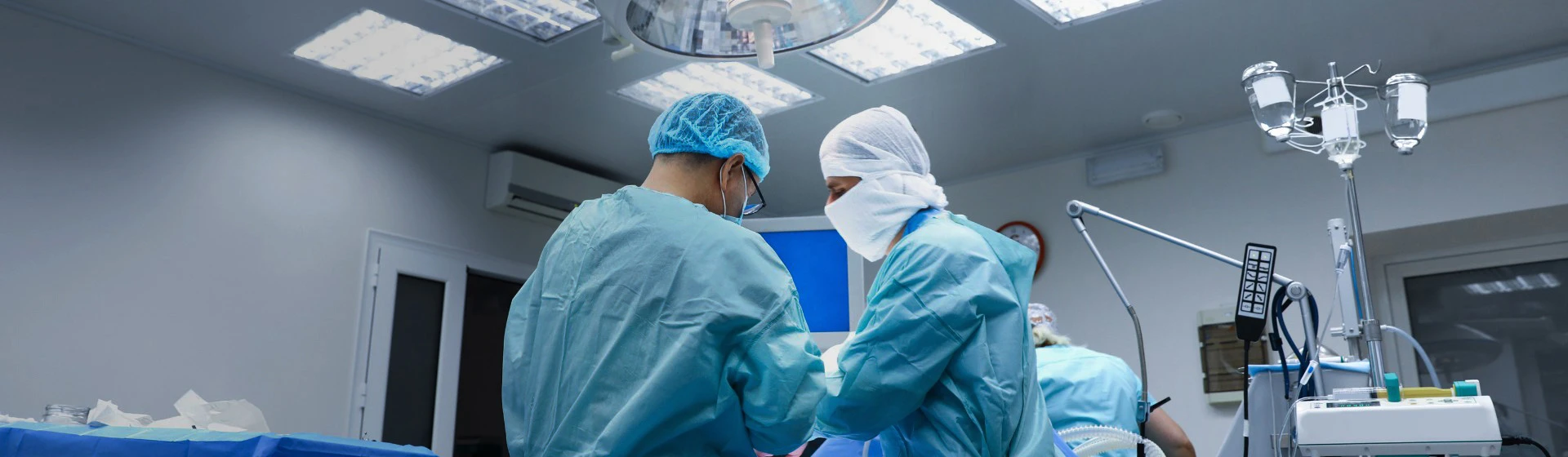

A loyalty program is available for surgical interventions in the hospital, which makes treatment even more affordable.
Appendicitis — this is inflammation of the appendix (a worm-like appendage of the cecum, the length of which can be from 5 to 15 cm, and the diameter is about 1 cm). The disease begins in an acute form and requires urgent surgical intervention. During an appendectomy, the appendix is removed. In the absence of timely treatment, it can lead to the development of complications or become chronic.
According to the National Institute of Diabetes and Digestive and Kidney Diseases, appendicitis may develop for various reasons, but inflammation is most often associated with blockage of the appendix lumen or infection. As a result, bacteria multiply inside the vermiform appendix, its walls swell, and the blood supply deteriorates.
Possible causes of appendicitis include:
fecaliths — dense accumulations of intestinal contents that may block the appendix lumen;
enlargement of lymphoid tissue in the wall of the vermiform appendix after an infection of the digestive system or another infectious disease;
inflammatory bowel diseases that may spread to the tissues of the appendix;
neoplasms that block the lumen of the vermiform appendix;
less commonly — parasitic infestations or a foreign body entering the appendix lumen.
Blockage of the appendix lumen causes the inflammatory process to develop rapidly. Without timely treatment, the wall of the vermiform appendix may rupture, so if characteristic symptoms occur, it is important to seek medical attention as quickly as possible.
Acute appendicitis — is inflammation of the vermiform appendix that progresses rapidly and requires emergency medical care. Its main manifestation is pain in the right side. It most often initially occurs around the navel or in the upper abdomen and moves to the lower right part after several hours.
Doctors at «Oxford Medical» explain: patients often ask, how to understand that appendicitis is causing the pain? Pain that gradually intensifies, moves to the lower right part of the abdomen, and becomes more noticeable when walking, coughing, or making sudden movements should be a cause for concern. However, the exact cause of the pain can only be determined after an examination and diagnostic testing.
The pain may be accompanied by the following symptoms:
The location and intensity of the pain may vary. If the appendix is positioned atypically, pain may be felt in the right upper abdomen, lower back, pelvic area, or above the pubic bone. In children, pregnant women, and older people, the symptoms are also often less typical.
Doctors at «Oxford Medical» warn: a sudden decrease in severe pain does not always indicate improvement. Sometimes this may be a sign of destruction of the appendix wall and the spread of inflammation to the peritoneum. Therefore, in case of abdominal pain that intensifies or is accompanied by fever, nausea, or vomiting, it is necessary to seek medical care urgently. You should not take painkillers independently, apply heat to the abdomen, or attempt to establish a diagnosis.
Appendicitis begins to develop in an acute form. Depending on the characteristics of the pathological process, 4 stages of the disease are distinguished:
Lasts about six hours after the first symptoms appear. Accompanied by swelling of the mucous membrane of the appendix.
It develops over a period of 6 to 24 hours. It is accompanied by the formation of pus and the spread of inflammation to the entire appendix.
It develops in the absence of timely treatment between 24 and 72 hours. It is accompanied by impaired microcirculation and tissue necrosis. At the same time, nerve endings die, which leads to a decrease in pain.
Without surgery, the appendix may rupture, spread of inflammation to the peritoneum and other abdominal organs, and develop peritonitis.
In some cases, appendicitis may progress to a chronic stage, characterized by mild symptoms.
If appendicitis is suspected, the patient is urgently hospitalized. The initial diagnosis can be made based on the results of the examination and assessment of symptoms, but a number of tests and instrumental examinations are performed to confirm it:
blood and urine tests;
Computed tomography;
Diagnostic laparoscopy
The symptoms of appendicitis are similar to the manifestations of other diseases, so it is important to exclude them at the diagnostic stage. This may require consultations with doctors of other specialties: gynecologist, urologist, proctologist, gastroenterologist.
The surgical hospital "Oxford Medical" has new equipment and a team of experienced specialists, which allows for a quick and high-quality examination and an accurate diagnosis.
Appendectomy is an operation to remove the appendix, or vermiform appendix. It is the main method of treating acute appendicitis, as it makes it possible to eliminate the source of inflammation and prevent the spread of infection in the abdominal cavity. The procedure is performed under general anaesthesia.
Depending on the clinical situation, the operation is performed using one of two methods:
This is a minimally invasive procedure performed through several small punctures in the abdominal wall. A laparoscope with a video camera and special instruments are inserted through them. An enlarged image of the surgical area is transmitted to a monitor, allowing the surgeon to examine the tissues accurately, separate and remove the inflamed appendix. Due to the small punctures, the surrounding tissues are injured less, and recovery after surgery is usually easier and faster than after open surgery.
The operation is performed through an incision in the lower right part of the abdomen. The surgeon gains direct access to the vermiform appendix, separates it from the surrounding tissues and removes it. After completing the procedure, the doctor checks the surgical area and sutures the incision.
After an appendectomy, the patient usually remains in the hospital for several days. On the day of surgery or the following day, if the condition allows, the patient may carefully get up and walk. After laparoscopic intervention, discharge and return to usual activities generally occur more quickly than after open surgery.
After discharge, it is recommended to:
keep the postoperative wound clean and dry, avoid removing the dressing unless necessary, and change it according to the surgeon’s recommendations;
take a shower no earlier than 24–48 hours after surgery: do not rub the puncture or incision area, and after washing, gently pat it dry with a clean towel;
not take a bath or visit a swimming pool, sauna, or steam bath until the wound has healed completely;
take the prescribed medications at the specified dosage and not discontinue the course independently;
walk every day, starting with short walks and gradually increasing their duration;
not lift objects weighing more than 3–5 kg during the first 2–4 weeks, and after open surgery — for up to 4–6 weeks;
not perform abdominal exercises, run, or engage in strength training until permitted by the surgeon;
attend a follow-up examination at the time scheduled by the doctor.
The timeframes may vary depending on the surgical method and the course of recovery, so upon discharge, the surgeon provides the patient with individual recommendations.
With timely surgery, complications rarely develop. Their risk increases in the case of
late diagnosis and/or non-compliance with medical recommendations after surgery.
Potential complications include:


infection of the surgical wound
bleeding
intestinal obstruction
postoperative hernia
abdominal adhesions
keloid scars
urinary retention

Doctors at «Oxford Medical» note: in most cases, the appendix is removed laparoscopically because this method is less traumatic and provides faster recovery. Open access is used if, due to pronounced inflammation, adhesions, or damage to the surrounding tissues, the surgeon cannot clearly isolate and remove the appendix through small punctures.
Regardless of the selected method, appendectomy includes the following main stages:
administration of general anesthesia;
creation of laparoscopic or open surgical access;
examination of the appendix and abdominal organs;
isolation and removal of the vermiform appendix;
cleaning of the abdominal cavity, if necessary;
inspection of the surgical area and closure of the punctures or surgical incision.
At «Oxford Medical», appendectomy is performed in a 24-hour surgical inpatient department, which makes it possible to quickly carry out the necessary diagnostics and begin treatment at any time without delay. Operations are performed by surgeons of the highest qualification category with many years of experience in treating urgent conditions. The inpatient department is equipped with modern expert-class diagnostic and surgical equipment. After the intervention, the patient remains under round-the-clock medical supervision in comfortable single or double hotel-style rooms.
After an appendectomy, it is important to gradually return to the usual diet so as not to overload the digestive system. During the first day after surgery, the amount of food and drinks is determined by the doctor depending on the patient’s well-being and the recovery of bowel function. The diet is then expanded gradually.
Nutrition after appendicitis removal during the first few days usually includes easily digestible dishes:
low-fat broths;
liquid or well-cooked porridges;
vegetable purees;
boiled or baked lean meat and fish;
steamed omelet;
fermented dairy products if well tolerated.
During the first 1–2 weeks, it is recommended to avoid fatty, fried, spicy, and smoked foods, alcohol, carbonated drinks, as well as foods that may cause intestinal bloating, including legumes, large amounts of fresh cabbage, and rich pastries. It is better to eat small portions 5–6 times a day and maintain an adequate drinking regimen.
Doctors at «Oxford Medical» explain: if no complications occur after surgery, most patients gradually return to their usual diet in approximately 2–3 weeks. If pronounced abdominal pain, nausea, vomiting, or prolonged bowel movement disturbances occur after eating, it is necessary to consult a doctor.
«Oxford Medical» has a 24-hour surgical hospital and an ambulance service. Patients who require urgent hospitalization can contact the clinic at any time.
The cost of appendix removal depends on:
You can find out the prices of operations at «Oxford Medical» here.
The information is for educational purposes only and does not replace a doctor’s consultation.
Sources:
Society of American Gastrointestinal and Endoscopic Surgeons
If you experience pain and other symptoms of appendicitis, you should seek medical attention as soon as possible. Appendicitis is treated only surgically. Without timely surgery, the appendix can rupture, which can lead to peritonitis and other dangerous complications.
Yes, in many cases it can be detected with an ultrasound. The examination helps identify an enlarged, inflamed appendix and signs of inflammation. If the result is not sufficiently informative, the doctor may recommend a computed tomography scan.
No, acute appendicitis requires surgical treatment. Without timely medical care, the inflamed appendix may rupture, leading to peritonitis and other dangerous complications.
During the first days after surgery, it is most comfortable to lie on your back or on the side opposite the postoperative wound. The main thing is to change your body position regularly, avoid remaining still for a long time and gradually increase physical activity according to the doctor’s recommendations.
In most people, the appendix is located on the right, so pain usually occurs in the lower right part of the abdomen. Pain on the left is possible due to rare anatomical features or an unusual position of the appendix, but such cases are uncommon.
The appendix is not removed as a preventive measure. Surgery is performed only in the presence of acute appendicitis or other medical indications.
Yes, in the early stages, body temperature may remain normal or rise slightly. Therefore, the absence of fever does not rule out the condition. If abdominal pain occurs, especially in the lower right part of the abdomen, a medical examination is necessary.


Availability of expert-grade diagnostic and surgical equipment
Performing laparoscopic and open surgeries depending on indications
Highly qualified surgeons
Comfortable wards with 24-hour medical supervision


 4.9
4.9  47+
47+  47+ Years of experience
 4.62 42+ 42+ Years of experience
  Kyiv, st. Bereznyakivska, 30b
  4.85 40+
 4.95 43+ 43+ Years of experience Kyiv, st. Bereznyakivska, 30b




 in the clinic
  online
  Hello!


