Sign up via call center
Department
Tubectomy (removal of the fallopian tube) at the private clinic Oxford Medical Kyiv

Tubectomy (removal of the fallopian tube)

Cost of services
Consultations
Consultation with an obstetrician-gynecologist
1100.00 ₴
Order
Consultation with a leading gynecologist-oncologist
1989.00 ₴
Sign up by the call center
Online consultation with an obstetrician-gynecologist
1100.00 ₴
Sign up by the call center
Consultation with a surgeon
1100.00 ₴
Order
Services
Laparoscopic removal of the fallopian tube (tubectomy)
17989.00 ₴
Sign up by the call center
Laparotomic removal of the fallopian tube (tubectomy)
17989.00 ₴
Sign up by the call center

The loyalty program applies to surgical interventions in the inpatient department, which makes treatment even more affordable.

Some diseases of the fallopian tubes cannot be treated with medication. In such cases, the doctor may recommend surgical intervention. It helps eliminate the source of the disease, prevent the development of complications and, if possible, preserve the woman’s reproductive health. In most cases, the operation is performed laparoscopically — through several small punctures of the abdominal wall.

At the «Oxford Medical» medical center, tubectomy is performed by experienced gynecologists in a modern inpatient department equipped with expert-class equipment. To find out whether surgical treatment is necessary specifically in your case, make an appointment for a consultation with a gynecologist by calling the contact center or through the online appointment form on the website.

What Is Tubectomy

Tubectomy — is an operation to remove one or both fallopian tubes. Another medical name for this intervention — salpingectomy. The operation is performed when it is impossible to preserve the tube or its removal is the safest method of treatment.

The fallopian tube — is a paired organ of the female reproductive system through which the egg, after ovulation, passes from the ovary into the uterine cavity. If only one fallopian tube is removed and the other remains healthy, a woman can become pregnant naturally.

Types of Tubectomy

Tubectomy can be unilateral, when one fallopian tube is removed, or bilateral — if both are removed.

By method of performance:

  • Laparoscopic tubectomy — a minimally invasive operation that is performed through 3–4 small punctures of the abdominal wall. Through them, the doctor inserts a laparoscope with a mini-camera and special surgical instruments, and controls all stages of the intervention on a monitor. After such treatment, recovery usually proceeds faster.

  • Laparotomic tubectomy — a classic open operation that is performed through an incision in the anterior abdominal wall. This access is used less often — mainly in cases of massive internal bleeding, a pronounced adhesive process, or if laparoscopic intervention is impossible.

According to Royal College of Obstetricians and Gynaecologists, in the surgical treatment of ectopic pregnancy, preference is given to laparoscopic access if the patient’s condition allows the operation to be performed in this way.

Doctors at «Oxford Medical» explain: in some cases, instead of complete removal, resection of the fallopian tubes is performed — an operation during which only the affected section of the tube is removed.

Indications for Fallopian Tube Removal

Most often, removal of the fallopian tube is performed when it is impossible to preserve it or
when preserving it will not make it possible to eliminate the problem and prevent complications.

The main indications are:

tubal ectopic pregnancy;

hydrosalpinx, especially before an IVF program;

severe fallopian tube obstruction;

torsion, necrosis, or neoplasm.

List of diseases

One of the causes of fallopian tube obstruction may be previous adnexitis — inflammation of the fallopian tubes and ovaries. The inflammatory process can lead to the formation of adhesions and scar changes, due to which the patency of the tube is impaired.

Removal of the uterine tubes is not required in every case. If it is possible and safe, the gynecologist prescribes conservative treatment. Surgery is recommended when it is impossible to preserve the fallopian tube.

Doctors at «Oxford Medical» explain: in some gynecological diseases, the scope of the operation may be greater and include amputation of the uterus with the tubes. Such an intervention may be performed, in particular, for malignant neoplasms, large fibroids, or widespread pathological processes, when removal of only the fallopian tubes is insufficient.

Contraindications to Planned Tubectomy

Before a planned operation, the doctor assesses the patient’s general health condition to make sure that the intervention can be performed safely. If diseases or conditions that increase the risk of surgery or the use of general anesthesia are detected, tubectomy is temporarily postponed.

The main contraindications include:

  • acute infectious diseases with an increase in body temperature;

  • severe blood clotting disorders;

  • decompensated heart or lung diseases;

  • uncontrolled arterial hypertension.

These contraindications apply only to planned interventions. In emergency conditions, in particular ectopic pregnancy with internal bleeding, the operation is performed urgently. According to American College of Obstetricians and Gynecologists, rupture of the fallopian tube can lead to massive internal bleeding and poses a threat to life, therefore requiring emergency surgical treatment.

Preparation for Tubectomy

Before a planned tubectomy, the patient undergoes a consultation with a gynecologist and a preoperative examination. The doctor clarifies the complaints, medical history, results of previous examinations, assesses the condition of the pelvic organs and determines whether there are any temporary contraindications to the operation.

Usually, preparation includes:

  • ultrasound of the pelvic organs;

  • complete blood count and urinalysis;

  • biochemical blood test;

  • coagulogram;

  • determination of blood group and Rh factor;

  • tests for HIV, syphilis, viral hepatitis B and C;

  • electrocardiogram;

  • consultation with an anesthesiologist.

If tubectomy is planned due to suspected ectopic pregnancy, transvaginal ultrasound is mandatory and the level of β-hCG in the blood is determined. In an emergency condition, the scope of diagnostics is reduced to the examinations that are needed for the safe performance of the operation.

Tubectomy is performed under general anesthesia, so on the eve of the operation it is important to follow the rules of preparation for anesthesia. Usually, eating is not allowed for 6-8 hours before the operation, and clear non-carbonated liquids are allowed no later than 2 hours beforehand.

Doctors at «Oxford Medical» recommend: inform the surgeon in advance about all medications that you take regularly. This especially applies to anticoagulants, antiplatelet agents, hormonal medications, medicines for diabetes and high blood pressure. Some of them must not be taken before the operation, so the doctor will explain in advance which medications and when need to be skipped.

How the Fallopian Tube Removal Operation Is Performed

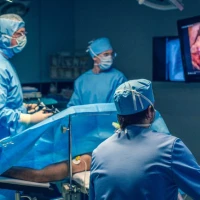
The operation to remove the uterine tube is performed under general anesthesia. In most cases, the laparoscopic method is used: the surgeon makes 3–4 small punctures in the abdomen, through which a laparoscope — a thin optical device with a camera and LED — and surgical instruments are inserted. The image from the camera is transmitted to the monitor in an enlarged view, so the doctor can clearly see the surgical field and perform all manipulations with high precision.

The main stages of the operation:

  1. Examination of the pelvic organs. The surgeon examines the uterus, ovaries, and fallopian tubes, assesses the condition of the affected tube, the presence of adhesions, and, in the case of ectopic pregnancy, blood in the abdominal cavity.

  2. Separation of the fallopian tube. The doctor closes off the blood vessels and gradually separates the tube from the adjacent tissues.

  3. Removal of the tube. The separated fallopian tube is placed in a special container and removed through one of the punctures. In bilateral tubectomy, both tubes are removed in the same way.

  4. Completion of the operation. The surgeon checks whether there is any bleeding, removes the instruments, and closes the punctures with small sutures or special adhesive strips.

If the laparoscopic method is not suitable, the operation to remove the fallopian tubes may be performed by laparotomy — through an incision in the anterior abdominal wall. Open access is used, in particular, in cases of significant internal bleeding, a pronounced adhesive process, or other complications. The surgeon may also switch to laparotomy during a laparoscopic operation if it is impossible to complete it safely through small punctures.

Rehabilitation After Tubectomy

After laparoscopic tubectomy, the patient usually remains in the hospital until the next day. Usually, it is possible to get up and walk carefully just a few hours after the operation, when the patient’s condition allows it. After open intervention, the stay in the hospital is longer — most often several days.

In the first days, there may be moderate pain in the area of the punctures or incision, pulling sensations in the lower abdomen, weakness, and slight bloody discharge from the genital tract. After laparoscopy, these symptoms usually gradually decrease over several days.

After discharge, it is recommended to:

  • take pain-relieving medications prescribed after the operation;

  • keep the postoperative wounds clean and dry;

  • not lift heavy objects or engage in sports for 1–2 weeks;

  • walk daily and gradually increase physical activity;

  • abstain from sexual intercourse until the bloody discharge and pain stop;

  • not drive a car while sudden movements and pressing the pedals cause pain or while you are taking medications that affect reaction speed.

According to Royal College of Obstetricians and Gynaecologists, after operative laparoscopy, many patients return to work after approximately 2–3 weeks. After laparotomy, full recovery may take about 4–6 weeks.

Doctors at «Oxford Medical» recommend: seek medical help if, after the operation, the temperature rises above 38 °C, abdominal pain becomes stronger, bloody discharge becomes heavy, or purulent discharge appears from the postoperative wound. Shortness of breath, sudden chest pain, as well as pain and swelling of one leg require urgent medical attention, as they may be signs of thrombosis or thromboembolism.

Consequences of Fallopian Tube Removal

Removal of one fallopian tube usually does not deprive a woman of the possibility of becoming pregnant naturally. If the second tube is healthy and patent, the egg can pass through it into the uterine cavity. Ovulation and the menstrual cycle are preserved after the operation.

After bilateral removal of the fallopian tubes, natural conception is no longer possible. If the ovaries and uterus are preserved, a woman can become pregnant with the help of IVF: the egg is fertilized outside the body, and the resulting embryo is transferred directly into the uterine cavity.

Tubectomy does not directly affect hormonal balance, since sex hormones are produced by the ovaries, not the fallopian tubes. Therefore, removal of the tubes does not cause menopause. A different situation is removal of the uterine appendages, in which the ovaries are removed together with the fallopian tubes. If both ovaries are removed, their hormonal function stops and surgical menopause occurs.

Doctors at «Oxford Medical» explain: if removal of both fallopian tubes is planned and the woman wants to have children in the future, the possibility of pregnancy and IVF should be discussed with a gynecologist before the operation.

How Much Does Tubectomy Cost in Kyiv at the Private Clinic «Oxford Medical»

The total cost of the operation depends on whether one or both fallopian tubes need to be removed, the method of surgical access, the type of anesthesia, and the duration of the hospital stay.

You can find out the price for fallopian tube removal here. The doctor will provide more details regarding the scope of the operation and the necessary medical services during the consultation. To make an appointment, call the contact center or use the online appointment form.

The information is for informational purposes and does not replace a consultation with a doctor.

Sources:

Frequently asked questions

Why Is the Fallopian Tube Removed?

Most often, the fallopian tube is removed in cases of ectopic pregnancy. Other causes may include severe hydrosalpinx, significant scarring and obstruction after inflammation, torsion or necrosis of the tube, as well as neoplasms.

What Happens If Both Fallopian Tubes Are Removed?

After both tubes are removed, natural conception is impossible, but the ovaries continue to function: eggs mature in them and sex hormones are produced. Therefore, the menstrual cycle is preserved. If the uterus and ovaries are preserved, pregnancy is possible with the help of IVF.

How Long Does Fallopian Tube Removal Surgery Take?

Laparoscopic tubectomy usually lasts about 30–60 minutes. More time may be required in cases of a pronounced adhesive process, internal bleeding, removal of both tubes, or when other surgical interventions are performed at the same time.

Is It Possible to Become Pregnant After Removal of One Fallopian Tube?

Yes, if the second fallopian tube is healthy and freely patent, natural pregnancy remains possible. Removal of one tube does not affect ovarian function or ovulation, so a woman can become pregnant naturally.

How Do Periods Occur After Fallopian Tube Removal?

After removal of one or both fallopian tubes, the menstrual cycle is usually preserved because the ovaries continue to produce sex hormones. The first menstruation after the operation may begin earlier or later than the usual time. Subsequently, the cycle, as a rule, returns to the pattern that is usual for the woman.

What Is the Difference Between Tubectomy and Tubotomy?

With tubectomy, the fallopian tube is removed completely. With tubotomy, or salpingotomy, the tube is incised, the gestational sac is removed, and the tube itself is preserved. This method may be used in cases of ectopic pregnancy when it is important to preserve the possibility of natural pregnancy, particularly if the second fallopian tube is obstructed or was previously removed.

( Rating: 4.98 , Votes: 45 )
Surgical ward

Advantages of performing gynecological surgeries at the Oxford Medical clinic

Modern equipment: operating rooms are equipped with innovative equipment from world brands

Professional medical staff: qualified gynecologists, anesthesiologists, nurses

Individual approach: selection of treatment methods, taking into account the needs of each patient

Comfortable conditions for postoperative stay: single and double wards with all the necessary conditions for comfort

Our doctors

Kochet Taras Mykhailovych - leading specialist of the gynecological hospital, obstetrician-gynecologist, gynecological oncologist, surgeon, candidate of medical sciences of the private clinic Oxford Medical Kyiv
4.82
rating (28)
29+
Years of experience
Leading specialist of the gynecological hospital, obstetrician-gynecologist, oncogynecologist, surgeon, Candidate of Medical Sciences
29+ Years of experience
Consultation 1100
Kyiv, st. Bereznyakivska, 30b
Make an appointment
All doctors
Reviews
Ольга 14.08.2026
Завдяки майстерності на рішучесті лікаря я досі жива і почуваю себе задовільно,я поступила до клініки після Черкаської онкології з норіцєю черевної порожнини і Валецькому пришлося 6 годин робити операцію щоби щоби убрати всю халтуру Черкаських онкологів, а потім вже "хімія" і ще потім відновлення кішківника і я зараз почуваюсь задовільно. Дякую Валецькому та всій клініці, за виконану роботу. Помічник хірурга в першей та другий операції був Мудрієвський Б.Л., особлива пошана анестезіологам яки тримали мене весь час операції.👍
Star Star Star Star Star
Сергій 07.08.2026
Звернувся до Іващенка Володимира Станіславовича з грижею, яка останнім часом почала сильно турбувати. Лікар провів огляд, пояснив, чому в моєму випадку потрібна операція та як вона проходитиме. Все пройшло добре, відновився без проблем. Дякую за професіоналізм.
Star Star Star Star Star
Current information
All Articles
Sign up via call center
in the clinic
online
This site is protected by reCAPTCHA technology, and the Google Privacy Policy and Terms of Service apply.
Hello!
Let's take care
about your health:
Sign up via call center

We use cookies and other technologies to remember your preferences and find out exactly how you use and interact with the site.

By using our site, you also agree to the terms of the "User Agreement" and "Regulation on the processing and protection of personal data". By clicking "I AGREE", you consent to the processing of your data.