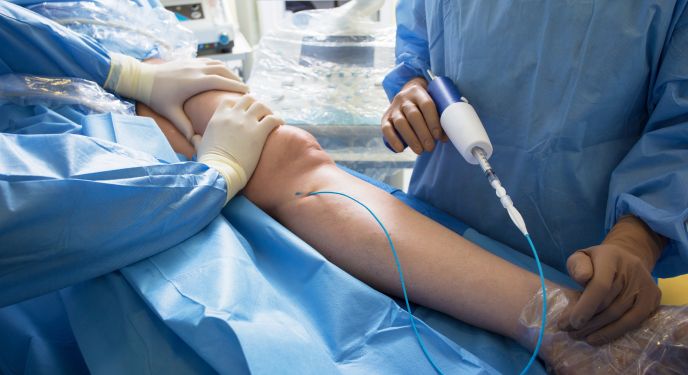
Angioplasty is performed endovascularly. This is a minimally invasive technique that involves performing all manipulations using a catheter and microsurgical instruments. They are inserted into the vessel through a small puncture.
The first stage is angiography - a diagnostic procedure that allows you to determine the exact location and degree of narrowing of the vessel. For better visualization, a contrast agent is injected through the catheter.
Then angioplasty is performed directly. The vessel is expanded using an inflated balloon or another method. If the cause of the narrowing is atherosclerosis, endarterectomy is also performed - removal of atherosclerotic plaques.
If necessary, to strengthen the walls of the vessel to prevent recurrence of the disease, a stent is installed in it - a thin mesh frame on a metal base.
After completing all manipulations, the surgeon checks the blood circulation, removes all instruments, sutures the wound and applies a sterile bandage.
The operation is performed mainly under local (spinal) or general (general) anesthesia. The choice of anesthesia method depends on the patient's health condition and the complexity of the upcoming operation.