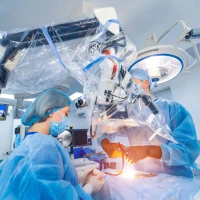
Angioplasty is usually performed under local anesthesia, but general anesthesia is also possible. It all depends on the patient's health.
The first stage of the operation is angiography. This is a diagnostic procedure that allows you to clarify the location and degree of stenosis or occlusion. It is performed using a catheter that is inserted into the vessel through a small puncture, most often in the groin area. A contrast agent is injected into the artery through the catheter, which provides better visualization.
After diagnosis, the surgeon proceeds to angioplasty. He inserts a catheter with a balloon into the artery, brings it to the site of narrowing and expands it. Thus, the lumen of the artery increases and blood flow is restored.
Often the next stage is stenting. To strengthen the walls of the vessel and prevent re-narrowing, a stent is installed. This is a thin metal mesh frame. In some cases, drug-coated stents are used that prevent the development of atherosclerotic deposits.
After the procedure, the surgeon checks blood flow and applies a tight bandage to the wound to prevent bleeding. The patient is soon transferred to the recovery room.