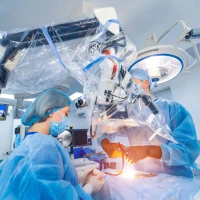
The essence of the operation is to create a bypass for blood flow. To install the shunt, the surgeon makes two small incisions above and below the affected area of the vessel. They can be located on the leg, in the groin or lower abdomen. This depends on the localization of the pathological process.
Having made the incisions, the surgeon installs clamps. After that, he fixes the shunt on the upper part of the vessel and passes it between the muscles and tendons to the place of the second incision. There he connects it to the healthy part of the vessel. After that, he removes the clamps and checks how the blood flow is. Then he sews up the incisions and applies sterile dressings.
Most often, shunting is performed under general anesthesia, but in the presence of contraindications, local anesthesia is sometimes used.
Depending on the complexity, the operation can last from 1 to 4 hours.