



stomach ache
The doctor explains the procedure and asks the patient to take a comfortable position on the examination couch. A special gel is applied to the body area to improve the transmission of ultrasound waves.

 Adults Adults Adults Adults Adults Adults Adults Adults Adults
  Children Children Children Children


 Hotline:
 Adults Adults Adults Adults Adults Adults Adults Adults Adults Children Children Children Children
 The ultrasound scan is the most reliable and safe method of non-invasive diagnostics of the diseases of internal organs. In addition, it is absolutely painless and cheapest method of examination.
In Oxford Medical clinic, there is a modern universal ultrasound diagnostic complex Philips ClearVue, which allows examining all internal organs of the patient for neoplasms, developmental abnormalities and disorders, injuries, caused as the result of disease or injuries.



The ultrasound scan is performed for detecting the condition and position of virtually all internal organs.
The ultrasound scan is most often performed for examining:


stomach ache
breast lump
pain, discomfort in the heart
swelling of the hands and feet
varicose veins
unsteady gait
subfebrile temperature
disorders of the reproductive system (gynecology, andrology), etc.


For 2–3 days before the procedure, exclude foods that cause gas formation (legumes, cabbage, carbonated drinks, pastries). The examination is performed on an empty stomach: the last meal should be 6–8 hours beforehand. This ensures high-quality visualization of the liver, gallbladder, pancreas, and spleen.
Yes. About 1–1.5 hours before the examination, drink 0.5–1 liter of still water and avoid urination. This allows the doctor to accurately assess the bladder and also examine the prostate in men and the uterus with appendages in women.
Kidney ultrasound is often combined with a bladder examination. Therefore, a full bladder is also necessary. Additionally, it is recommended to follow a low-gas diet for 2–3 days. This improves the accuracy and informativeness of the test.

No. These types of ultrasound require no special preparation. You can come in comfortable clothing at any time of day. It is important to bring previous results, if available, for comparison.
No special preparation is needed. Before echocardiography, it is advisable to avoid excessive physical exertion and stimulating drinks (coffee, energy drinks). For vascular ultrasound of the lower limbs, wear comfortable clothing that is easy to remove.
 All advices
 Ultrasound examination is a safe, painless, and informative method that allows the doctor to assess the condition of internal organs and tissues in real time. The procedure does not require anesthesia and can be performed on both adults and children. On average, the examination takes 10 to 30 minutes depending on the area studied.
The examination consists of several stages:
The doctor explains the procedure and asks the patient to take a comfortable position on the examination couch. A special gel is applied to the body area to improve the transmission of ultrasound waves.
The doctor moves the ultrasound probe over the skin above the area being examined. The device displays images of organs and tissues on the screen in real time, allowing detection of abnormalities.
During the procedure, the doctor analyzes the findings: shape, structure, and size of organs, presence of pathological changes, and blood flow disturbances. In some cases, Doppler or elastography is used for more detailed diagnostics.
After the examination, the doctor prepares a report with the results and, if necessary, recommends further steps: consultation with a specialist, additional tests, or a follow-up examination.


Expert-class equipment: GE HealthCare Versana Balance, GE Logiq P9 Ultrasound. Provides high image clarity and allows you to detect even minor changes in tissues.
Experienced doctors. Examinations are carried out by ultrasound diagnostic doctors with extensive clinical experience, who carefully analyze the results and provide clear explanations to patients.
Accurate and informative diagnostics. Modern ultrasound diagnostic capabilities allow a detailed assessment of the condition of the pelvic organs and help detect possible pathological changes at early stages.
Patient comfort. The examination is carried out in comfortable conditions of the medical center and takes little time, allowing patients to quickly receive diagnostic results.


 4.85
4.85  21+
21+  21+ Years of experience
 4.91 33+
  5 26+
5 26+ 




The ultrasound method is based on the fact that different tissues carry and reflect the ultrasound in different ways (sound waves with frequency of more than 20 kHz). The ultrasonic sensor emits ultrasound and perceives the reflected signal, which is displayed on the screen after being processed. Based on these data, the doctor gives characteristic to the condition of internal organs.
And though the ultrasound is relatively young diagnostic method (it is used in medicine for about 60 years), it is widely used in gynecology, urology, obstetrics, gastroenterology, endocrinology, nephrology, mammology and other fields of medicine.
The ultrasound scan is performed for detecting the condition and position of virtually all internal organs.
The ultrasound scan is most often performed for examining:
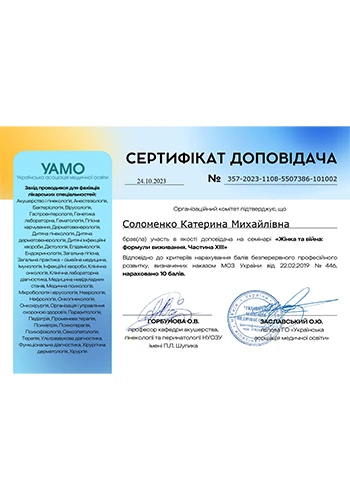
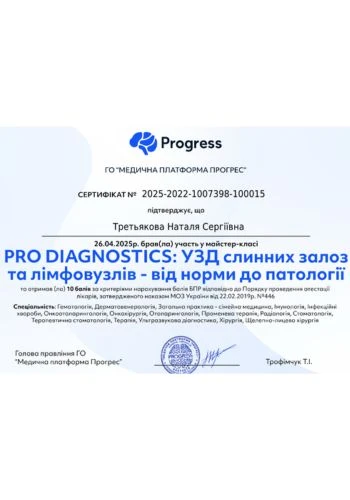
The Diagnostic Department of the clinic uses the universal diagnostic complex Toshiba Nemio XG, which allows performing all above-listed types of examinations. The diagnosticians of Oxford Medical clinic are highly qualified and completed special training in order to use all capacities of this diagnostic complex. The respective certificates prove their professionalism in establishing the correct diagnosis.
The ultrasound results are interpreted by an ultrasound doctor. During the study, he immediately notes key parameters, such as the location, size, shape of the organs, etc. After that, he carefully evaluates the data obtained and writes a conclusion based on them.
It is worth remembering that the ultrasound doctor does not make a diagnosis. He describes the condition of the internal organs and/or soft tissues. Some changes may be detected in various diseases. Only a doctor can correctly determine the cause of the malaise, assessing the general condition of the patient, the results of the ultrasound and, if necessary, other examinations.
We offer a wide range of locations for ultrasound. You can choose a convenient place near your home or work:
Left Bank:
Right Bank:
There are 14 Oxford Medical clinics in Kyiv, located in different areas of the city, so everyone can choose the most convenient location for themselves. If you are looking for an ultrasound on Grigorenko or an ultrasound on Gmyra, you can make an appointment at the clinic near the city of "Poznyakai". You need to do an ultrasound on Antonovich or an ultrasound on Konovalets, make an appointment at the clinic near the city of "Palace of Ukraine".
Call us, and our administrators will be happy to help you choose a convenient place and time for your visit! In our clinics, modern equipment, accurate diagnostics and care for your health await you.
In Kyiv, you can get an ultrasound at the Oxford Medical medical center. For your convenience, there are 13 clinics in different districts of the city, including Podilskyi, Svyatoshynskyi, Solomyanskyi, Pecherskyi, Dniprovskyi, Obolonskyi and Darnytskyi, as well as in Irpin. They are equipped with the latest Philips ClearVue and Toshiba Nemio XG devices, which ensure maximum accuracy of the examination.
An ultrasound scan is performed by a diagnostician, a specialist in ultrasound diagnostics. He has the appropriate education and experience working with ultrasound machines, which allows him to accurately assess the condition of internal organs, blood vessels, and soft tissues.
Ultrasound can be done as many times as needed to diagnose and monitor your health. It is a safe procedure that does not have any harmful effects on the body.
Ultrasound is a safe diagnostic method. It does not use ionizing radiation, so it does not have a harmful effect on the body. It can be used without restrictions even in children and pregnant women.
An ultrasound examination usually lasts from 15 to 30 minutes, depending on the scope of the examination and the area of the body being examined.
 in the clinic
  online
  Hello!