

 Adults Adults Adults Adults Adults Adults Adults Adults Adults
  Children Children Children Children


 Hotline:
 Adults Adults Adults Adults Adults Adults Adults Adults Adults Children Children Children Children



Epilepsy treatment
Epilepsy treatment in Kyiv
Epilepsy is a chronic disease of the central nervous system that develops due to damage to areas of the cerebral cortex. It manifests as periodic seizures that cause convulsions and disturbances of other autonomic and cognitive functions.
Modern medicine makes it possible to control the course of the disease. According to the WHO, in 70% of patients, the frequency of seizures can be minimized with appropriate therapy.
At Oxford Medical, epilepsy is treated by highly qualified neurologists with many years of experience. They develop an individual treatment program for each patient, based on the principles of evidence-based medicine and international guidelines.
Causes of epilepsy
The main factor in the development of epilepsy is hereditary predisposition. According to statistics, more than 40% of patients have a family history, meaning the disease has been diagnosed in close relatives.
In addition, the pathology can be triggered by:
-
complications during the prenatal period and childbirth;
-
traumatic brain injuries;
-
stroke;
-
meningitis, encephalitis, and other infectious brain diseases;
-
neoplasms;
-
autoimmune disorders;
-
hereditary metabolic diseases;
-
exposure to toxic substances, etc.
In most cases, it is not possible to determine the exact cause of epilepsy. Patients often have several risk factors simultaneously.
Main symptoms of epilepsy
Epilepsy causes short-term seizures. They appear suddenly and usually last from 30 seconds to several minutes. The symptoms that develop depend on which part of the brain the abnormal activity occurs in and how far it spreads.
The main symptoms of epilepsy include:
-
seizures and convulsions;
-
foaming at the mouth;
-
loss of consciousness;
-
speech disturbances;
-
uncontrollable movements;
-
involuntary urination and defecation;
-
mental disorders.
Although seizures are one of the most common manifestations of epilepsy, some patients experience episodes without this symptom. This is especially typical in children and adolescents.
Based on the nature of the symptoms, epileptic seizures can be:
- Focal – abnormal activity develops in only one area of the brain. During a seizure, convulsions and numbness may occur in the arms, legs, or other parts of the body. Sometimes there may also be speech, hearing, and vision disturbances, up to hallucinations. These seizures usually last up to 30 seconds.
- Generalized – abnormal activity spreads simultaneously to both hemispheres of the brain. These seizures may occur with or without convulsions. Their duration is about 5 minutes. Patients may remain conscious or lose consciousness, fall asleep quickly after the seizure, and wake up with no memory of the episode.
Generalized seizures have several phases. Initially, there is strong muscle tension (10 to 40 seconds), followed by alternating spasms and relaxation, which may result in involuntary urination and defecation (this phase lasts up to 5 minutes). After that, symptoms subside, but the patient feels fatigued and needs rest.
Differences between an epileptic seizure, a fainting episode, and a hysterical attack
These three conditions have completely different pathological causes, although at first glance their symptoms may seem similar.
During fainting, the patient usually complains of increasing weakness, narrowing of the visual field, ringing in the ears, and sweating. Seizures and other typical symptoms of epilepsy do not occur. Additionally, the patient regains consciousness more quickly.
As for hysterical attacks, they are typically triggered by a specific event – fear, emotional stress, etc.
If any symptoms of the disease appear, it is important to consult a doctor. Only a specialist can make the correct diagnosis, based on both complaints and examination results.
Epilepsy diagnosis
To determine the exact diagnosis, the doctor may order:
-
electroencephalography (EEG);
-
computed tomography (CT) of the brain;
-
magnetic resonance imaging (MRI);
-
positron emission tomography (PET);
-
laboratory tests and other studies as indicated.
For differential diagnosis, consultations with doctors of other specialties and additional tests may also be required.
Methods of epilepsy treatment
Medication therapy plays a key role in epilepsy treatment. Patients are prescribed antiepileptic drugs that, with the proper selection of active substance and dosage, help minimize the frequency and regularity of seizures.
Physiotherapy, therapeutic diet, and lifestyle modifications to eliminate external triggers that provoke seizures are also very important.
For most patients, this approach helps control the disease and ensures a high quality of life.
In severe forms of epilepsy accompanied by frequent generalized seizures, patients may be recommended surgical removal of the affected brain area or implantation of a vagus nerve stimulator.


Advantages of the neurology department at «Oxford Medical» in Kyiv

Experienced doctors. All neurologists have extensive clinical experience and continually improve their qualifications.
Modern diagnostics. We use precise diagnostic methods to establish diagnoses.
Comprehensive approach. Consultations with related specialists and required examinations are available in the clinic.
Day hospital treatment option. Patients can receive infusions and monitoring on-site if needed.

Our doctors
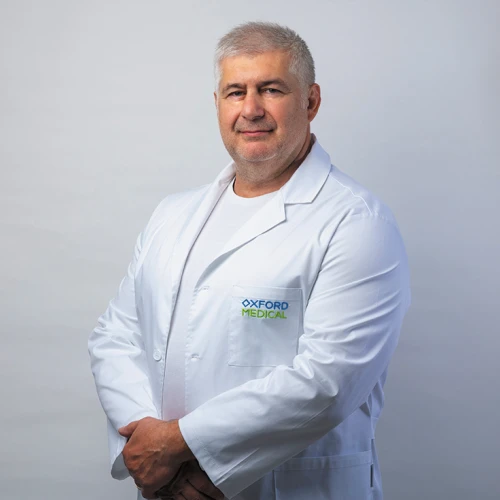
 4.91
4.91  26+
26+ 
 26+ Years of experience
  Kyiv, Hlybochytska St., 40x Kyiv, Vasyl Lypkivskoho St., 38
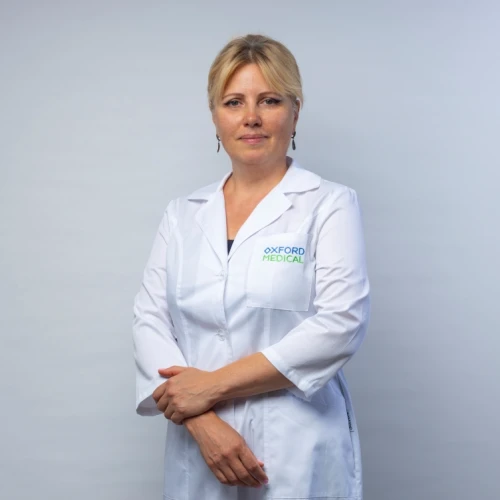 4.83 28+
 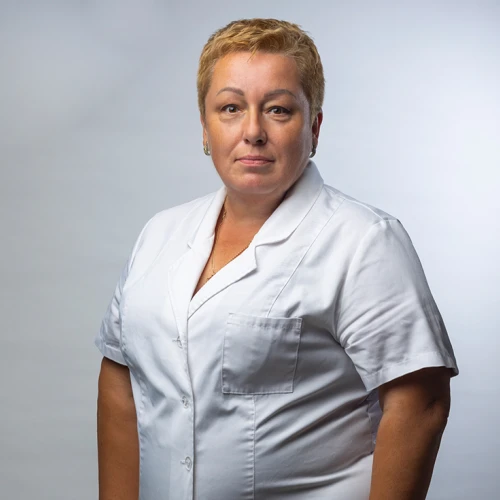 4.88 26+
 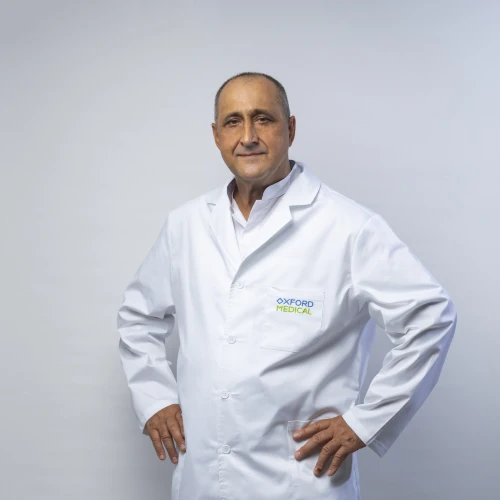 4.94 34+ 34+ Years of experience Kyiv, Hlybochytska St., 40x





 in the clinic
  online

 Hello!
Let's take care
about your health:

