

 Adults Adults Adults Adults Adults Adults Adults Adults Adults
  Children Children Children Children


 Hotline:
 Adults Adults Adults Adults Adults Adults Adults Adults Adults Children Children Children Children



Herniated disc treatment
Herniated Disc Treatment
A herniated disc is not an independent disease, but a result of a widely known condition — spinal osteochondrosis. It occurs when part of the intervertebral disc (which provides flexible connection between the vertebrae) is pushed into the spinal canal through a tear in the fibrous ring and compresses the spinal nerve.
How Does a Herniated Disc of the Lumbar and Cervical Spine Occur?
As previously mentioned, it is a consequence of osteochondrosis — degenerative changes in the cartilage of the spine. The nutrition of intervertebral discs is disrupted, making them less able to recover from injuries and overload. In such a state, a herniated disc may develop. Most often, herniated discs are diagnosed in the lumbar spine. Hernias in the thoracic and cervical spine are much rarer and are usually the result of trauma. The majority of patients with herniated discs are between 30 and 50 years old.
Symptoms of a Herniated Disc
A hernia may manifest in the following ways:
-
Back pain that may radiate to the arm or leg. The pain can range from mild to severe, sharp to aching;
-
Muscle weakness;
-
Sensory disturbances in the limbs (burning, tingling, numbness, or hypersensitivity);
-
In rare cases, there may be urinary disturbances or even paralysis.
Diagnosis of a Herniated Disc
Accurate diagnosis is crucial for choosing the optimal treatment method for a herniated disc. It is important to determine between which vertebrae the hernia is located, how much it protrudes, and the condition of the surrounding soft tissues.
Diagnosis of a herniated disc consists of several stages:
-
Doctor’s examination – during the consultation, the specialist asks when and what symptoms appeared, whether there were injuries, and if there are chronic illnesses;
-
Assessment of sensitivity and mobility – the doctor examines the spine, palpates it, and asks the patient to perform simple movements (bend, extend the back, etc.);
-
Instrumental diagnostics – the doctor may prescribe an X-ray, CT scan, or MRI.
During the appointment, the doctor interviews the patient to collect all symptoms and form a clinical picture. Then, they conduct a physical exam, palpation, and basic functional tests. For an accurate diagnosis, the doctor prescribes instrumental tests, which may include X-ray, CT, or MRI. The most informative test is chosen individually.
Non-Surgical Treatment of a Herniated Disc at Oxford Medical
Herniated disc treatment is a long, multi-step process. It may include:
-
Intensive therapy – used to relieve inflammation and pain;
-
Medication therapy – painkillers, muscle relaxants to relieve muscle spasms, and chondroprotectors to restore cartilage tissue;
-
Manual therapy – involves hands-on techniques on the spine and discs (performed by top-category neurologists);
-
Therapeutic massage – the specialist works on soft tissues to improve circulation and relieve muscle spasms;
-
Physical therapy – a set of exercises is prescribed to improve motor function, increase circulation and nourish the soft tissues around the discs;
-
Surgical intervention – performed for large hernias when other methods are ineffective (in 15–20% of cases).
In most cases, conservative methods are used to treat herniated discs: medication, manual therapy, massage, and physical therapy. This treatment may take several months. If conservative therapy is ineffective or the hernia is large, surgery may be required.
Surgical Treatment of Herniated Intervertebral Discs
There are three main types of surgery for herniated discs. The safest is endoscopic disc removal. This is a minimally invasive procedure, after which the patient can walk on the same day. It carries a low risk of complications and a relatively short recovery period.
Sometimes laminectomy is performed — an open surgery during which a portion of the vertebral arch compressing the nerve root is removed. The most complex procedure is traditional discectomy — removal of the intervertebral disc and vertebral process. It used to be the main treatment method for herniated discs but is now rarely performed due to high trauma risk, complications, and long recovery.
Doctors at Oxford Medical select the optimal treatment method for each patient, prioritizing conservative treatment whenever possible. This approach is effective in 80–85% of cases.
Advantages of Herniated Disc Treatment at Oxford Medical
Oxford Medical employs experienced doctors from various specialties and is equipped with high-class diagnostic and treatment equipment for herniated discs.
Advantages of choosing Oxford Medical include:
-
High qualification of doctors;
-
New, modern equipment;
-
Ability to complete all examinations at one clinic;
-
Use of advanced treatment methods;
-
Availability of a high-tech surgical ward for minimally invasive operations;
-
Loyalty program for all patients.
To schedule a consultation with a doctor, call our contact center or message us in the chat on the website.


Advantages of the neurology department at «Oxford Medical» in Kyiv

Experienced doctors. All neurologists have extensive clinical experience and continually improve their qualifications.
Modern diagnostics. We use precise diagnostic methods to establish diagnoses.
Comprehensive approach. Consultations with related specialists and required examinations are available in the clinic.
Day hospital treatment option. Patients can receive infusions and monitoring on-site if needed.

Our doctors
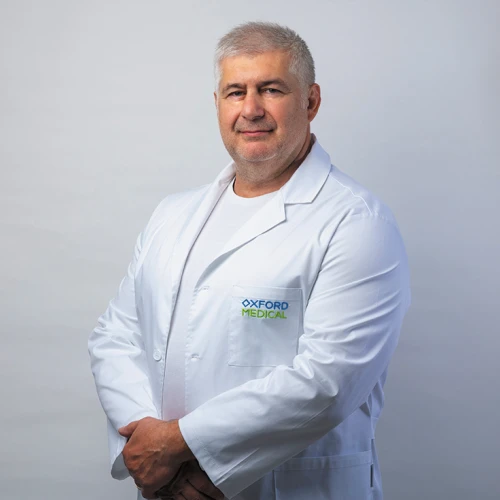
 4.91
4.91  26+
26+ 
 26+ Years of experience
  Kyiv, Vasyl Lypkivskoho St., 38 Kyiv, Hlybochytska St., 40x
 4.83 28+
 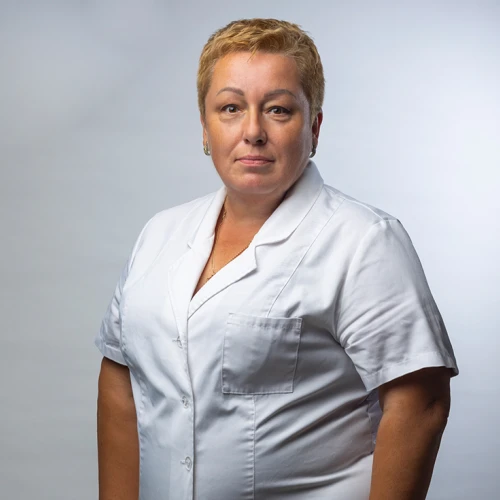 4.88 26+
 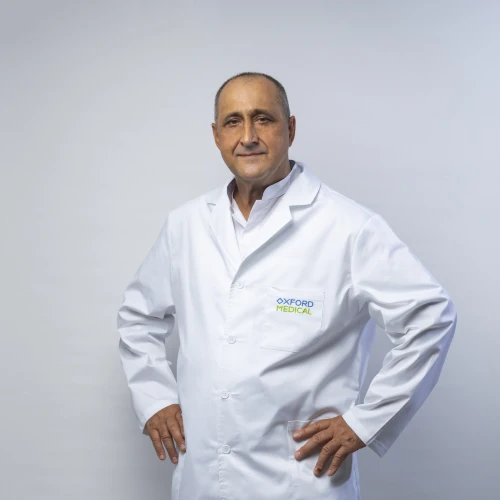 4.94 34+ 34+ Years of experience Kyiv, Hlybochytska St., 40x





 in the clinic
  online

 Hello!
Let's take care
about your health:

