

 Adults Adults Adults Adults Adults Adults Adults Adults Adults
  Children Children Children Children


 Hotline:
 Adults Adults Adults Adults Adults Adults Adults Adults Adults Children Children Children Children



Manual therapy
Manual Therapy
Nowadays, many diseases are affecting people at an increasingly younger age, making it difficult to find someone over 25 years old without a clear or hidden chronic health issue. One of the most common causes of various illnesses is chronic oxygen deficiency in internal organs. Most often, this is caused by impaired blood outflow and pinched nerves due to a sedentary lifestyle and spinal curvature. In such cases, manual therapy is an effective solution.
Manual therapy (“treatment with hands”) is a long-known method of non-surgical treatment for many diseases. When people say “manual therapy,” they often refer to a method of alternative medicine. However, not everyone knows that it is also effectively used in neurology, orthopedics, neurophysiology, and sports medicine. Initially, manual therapy focused on treating the musculoskeletal system (manipulative therapy), but over time, physicians learned to influence internal organs (visceral osteopathy) and the head (craniosacral therapy).
When should you see a manual therapist?
A consultation with a manual therapist is recommended:
-
if you spend a lot of time driving;
-
if you lifted a heavy load;
-
if you made a sudden turn;
-
if you carry heavy objects for prolonged periods;
-
if you experience numbness in your hands;
-
if you have a sedentary job;
-
if you suffer from depression, stiffness, isolation, or irritability;
-
if you are overweight;
-
if you feel morning muscle stiffness;
-
if your work is associated with stress;
-
if you go to the gym and experience back pain or other discomfort after training.
Indications for manual therapy
Manual therapy is used to treat:
-
back pain and discomfort;
-
high or low blood pressure;
-
headaches;
-
insomnia;
-
chronic fatigue;
-
dizziness;
-
numbness and weakness in the limbs.
What conditions does a manual therapist treat?
A manual therapist treats the following conditions:
-
osteochondrosis;
-
manifestations of osteochondrosis, such as heart pain, headaches, dizziness, and functional disorders of internal organs;
-
intervertebral disc displacement;
-
herniated intervertebral discs;
-
radiculitis;
-
back and spinal pain;
-
cervical lumbago;
-
limited mobility in the neck and spine;
-
tailbone pain;
-
scoliosis in children;
-
headaches;
-
intercostal neuralgia;
-
neurosis;
-
neurasthenia;
-
impaired vision;
-
neurocirculatory dystonia.
Manual therapy treatment methods
The physician uses a personalized treatment method. Its versatility lies in the comprehensive approach to the patient, which allows for achieving positive results in a short time.
The main focus of the doctor as a neurologist and manual therapist is the specialized treatment of neurological manifestations of spinal and joint osteochondrosis, as well as rehabilitation.
The doctor applies methods such as:
-
manual diagnostics;
-
manual therapy of the spine and joints (shoulders, elbows, etc.);
-
acupuncture (reflex therapy);
-
PIR (post-isometric relaxation);
-
MET (muscle energy techniques);
-
integrated Hatha yoga exercises;
-
physical therapy and a special exercise program.
How is manual therapy different from massage?
Manual therapy is often mistaken for a type of massage, but they are fundamentally different. Massage affects soft tissues, while manual therapy targets the spine, intervertebral discs, and bones. Massage is generally aimed at relieving pain caused by spinal curvature, whereas manual therapy slows down or halts the development of these disorders. Therefore, manual therapy has a more significant impact on the body.
For this reason, only an experienced physician can determine the appropriateness and necessity of manual therapy after collecting medical history and examining the patient.
Contraindications to manual therapy
This treatment method is not recommended in the following cases:
-
mental illness during an exacerbation;
-
malignant tumors;
-
infectious processes in the joints;
-
spinal cord inflammation;
-
recent spinal injuries;
-
acute spinal circulation disorders.
Most manual therapy techniques are completely painless and well-tolerated by patients, provided that procedures are performed by a qualified and experienced physician.
Advantages of manual therapy treatment at Oxford Medical Clinic
At Oxford Medical, manual therapy is performed by a top-category neurologist and manual therapist with over 30 years of experience. He applies a proprietary technique that allows for the most effective, personalized therapy for each patient.
The advantages of consulting a manual therapist at Oxford Medical include:
-
treatment performed by a qualified neurologist and manual therapist with 30 years of experience;
-
therapy based on the doctor’s proprietary method with proven high efficiency;
-
a comprehensive approach to disease treatment;
-
a comfortable atmosphere at the clinic;
-
a loyalty program for regular patients.
To schedule an appointment, call our contact center or submit a request through the website.


Advantages of the neurology department at «Oxford Medical» in Kyiv

Experienced doctors. All neurologists have extensive clinical experience and continually improve their qualifications.
Modern diagnostics. We use precise diagnostic methods to establish diagnoses.
Comprehensive approach. Consultations with related specialists and required examinations are available in the clinic.
Day hospital treatment option. Patients can receive infusions and monitoring on-site if needed.

Our doctors
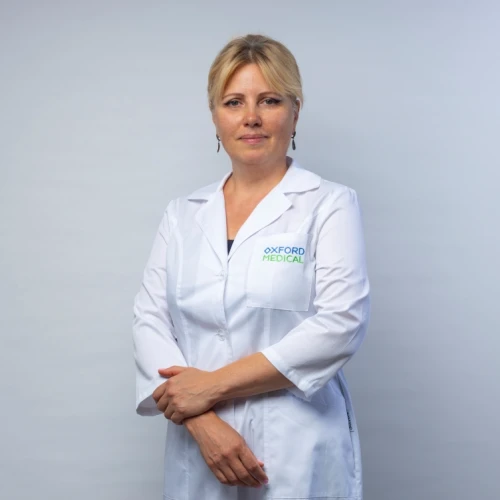
 4.83
4.83  28+
28+ 
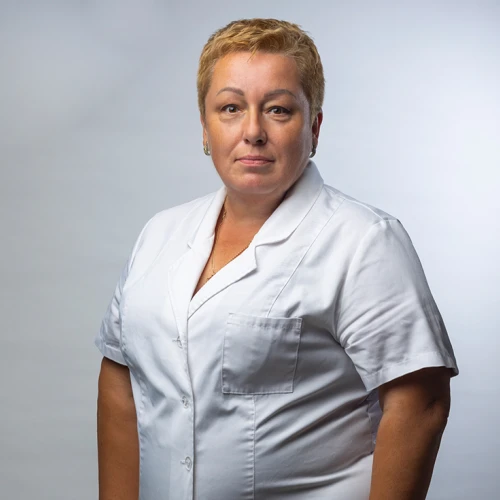 4.88 26+
 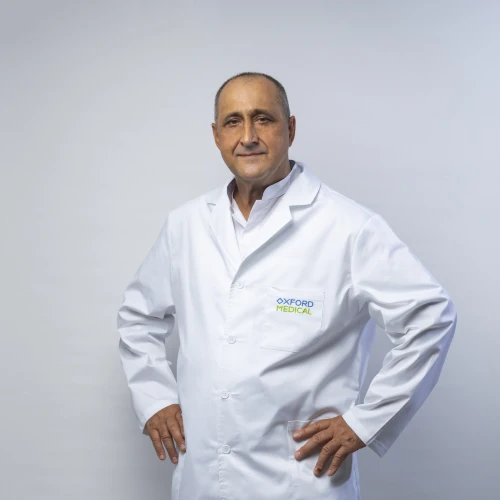 4.94 34+
  34+ Years of experience
  Kyiv, Hlybochytska St., 40x
 5 9+ 9+ Years of experience Kyiv, Predslavynska St. 29 Kyiv, Knyaziv Ostrozkyh St., 46/2




 in the clinic
  online

 Hello!
Let's take care
about your health:

