


Treatment of impotence begins with a comprehensive diagnosis to determine the cause of erectile dysfunction. Depending on the identified factors, drug therapy, physiotherapy, psychotherapy, lifestyle changes or surgical methods are used. It is important to consult a qualified doctor.
Sign up via call center 
 Adults Adults Adults Adults Adults Adults Adults Adults Adults
  Children Children Children Children
Department
Adults Outpatient department
Adults Outpatient department
Inpatient department
Adults Inpatient department
Aesthetic medicine
Adults Aesthetic medicine
Dentistry
Adults Dentistry
Plastic surgery
Adults Plastic surgery
Diagnostics
Adults Diagnostics
Analyzes
Adults Analyzes
Outbound services
Adults Outbound services
Children Outpatient department
Children Outpatient department
Dentistry
Children Dentistry
Diagnostics
Children Diagnostics

Kyiv


 Hotline:
 Request a call:


Department
Adults Outpatient department
Adults Outpatient department
Inpatient department
Adults Inpatient department
Aesthetic medicine
Adults Aesthetic medicine
Dentistry
Adults Dentistry
Plastic surgery
Adults Plastic surgery
Diagnostics
Adults Diagnostics
Analyzes
Adults Analyzes
Outbound services
Adults Outbound services
Children Outpatient department
Children Outpatient department
Dentistry
Children Dentistry
Diagnostics
Children Diagnostics

Treatment of erectile dysfunction
Erectile dysfunction is the inability to achieve or maintain an erection sufficient for satisfying sexual activity. Importantly, impotence usually does not interfere with the ability to ejaculate or reach orgasm.
Causes of Erectile Dysfunction
An erection occurs due to increased blood flow to the penis. This process depends on several factors. First, there must be an unobstructed flow of arterial blood. Second, the nerve endings in the penis must function properly. And third, these processes must be correctly regulated by the brain. If there is a failure in any of these links, erectile dysfunction develops. There can be many reasons for this.
Risk factors for impotence include:
-
Congenital abnormalities of the genital organs;
-
Cardiovascular diseases;
-
History of stroke;
-
High cholesterol levels;
-
Neurological disorders;
-
Endocrine disorders, particularly low testosterone levels;
-
Urogenital infections;
-
Genital injuries;
-
Obesity;
-
Depression;
-
Severe stress;
-
Chronic sleep deprivation;
-
Excessive physical exertion;
-
Sedentary lifestyle;
-
Prolonged use of certain medications;
-
Alcohol abuse.
In some cases, impotence is associated with psychological causes, such as depression, stress, or extreme physical exhaustion. After sufficient rest and emotional recovery, the problem may resolve. If it doesn’t, it is best not to delay a visit to the doctor. Diagnostics should be performed even if the quality of erection has only slightly declined or it becomes difficult to achieve periodically.
Complications of the Condition
The development of impotence is not only a physical problem. It also affects psychological well-being and personal relationships. Men often experience:
-
Stress;
-
Dissatisfaction with their sex life;
-
Irritability;
-
Lowered self-esteem;
-
Apathy and depression.
Specialists recommend not ignoring problems with potency and seeking medical help as soon as possible. In most cases, timely diagnosis and proper treatment can restore male sexual function.
Diagnosis of Erectile Dysfunction
If you are experiencing problems with potency, you should see an andrologist. After reviewing your complaints and medical history, the doctor will perform an examination and prescribe tests. Comprehensive diagnostics are important to identify the exact cause of the problem.
In cases of erectile dysfunction, the following tests may be performed:
-
General urine and blood tests;
-
Blood biochemistry;
-
Tests for infections;
-
Ultrasound of the abdominal organs and prostate;
-
Vascular Doppler ultrasound;
-
CT or MRI of the abdominal organs and central nervous system.
The scope of testing is determined individually by the doctor, depending on the patient’s symptoms and specific characteristics. Impotence can develop due to various diseases, so the patient may also need consultations with other medical specialists.
Treatment of Impotence
When treating impotence, it is crucial to identify and address the underlying cause, rather than simply masking the symptoms. Therefore, thorough diagnostics are carried out first, after which the doctor creates an individualized treatment plan. In some cases, consultation with other specialists is required to develop a comprehensive approach.
Treatment options for erectile dysfunction include:
-
Medication therapy;
-
Physiotherapy procedures;
-
Psychotherapeutic techniques;
-
Surgical intervention (in case of anatomical abnormalities).
In most cases, properly selected treatment significantly improves erection quality and restores a normal sex life.
If the problem arises, it is important to seek professional help and avoid self-medication. There are many causes of erectile dysfunction, and some medications used to enhance potency are contraindicated in certain cardiovascular and other conditions.
Prevention of Impotence
To prevent erectile dysfunction, it is recommended to:
-
Lead a healthy lifestyle;
-
Avoid smoking and alcohol consumption;
-
Maintain a balanced diet;
-
Exercise regularly;
-
Keep body weight within the normal range;
-
Sleep at least 8 hours a night;
-
Maintain regular sexual activity;
-
Rest adequately;
-
Manage stress levels.
Advantages of Erectile Dysfunction
Treatment at Oxford Medical
At Oxford Medical, experienced urologists and andrologists are available to see patients at a convenient time, with full confidentiality guaranteed. The clinic is equipped with modern diagnostic equipment from leading manufacturers, enabling thorough examination. You can also undergo laboratory tests and, if necessary, receive consultations from other specialists at any branch.
To book an appointment, call the Oxford Medical contact center or write to the chat on our website.
Questions and answers
How to treat impotence?
Can impotence be cured?
In most cases, impotence in men is effectively treated. Timely consultation with a doctor, correct diagnosis and individually selected therapy can significantly improve or completely restore erectile function. It is important to follow the recommendations of a specialist.
How to treat erectile dysfunction?
Treatment of erectile dysfunction involves a comprehensive approach: eliminating the underlying cause, medication support, physiotherapy, working with a psychologist, and changing lifestyle. The treatment program is selected individually, and the independent use of drugs without consulting a doctor can be dangerous.
How to cure impotence?
To fully restore erectile function, the cause of impotence must be identified and treated. Treatment may include medication, physical therapy, psychotherapy, and lifestyle changes. In severe cases, surgery may be necessary. Early diagnosis is important.
What is impotence in men?
Impotence in men is a persistent erectile dysfunction in which a man cannot achieve or maintain an erection necessary for full sexual intercourse. The causes may be physiological, psychological, or mixed factors. Timely consultation with a doctor allows you to solve this problem.

Our services
Consultations

Consultation with a leading urologist
1989.00 ₴
Add Added 
Consultation with a urologist
1100.00 ₴
Add Added
Online consultation with a urologist
1100.00 ₴
Add Added
Urology services
Instillation of medication into the bladder (excluding the cost of medication)
749.00 ₴
Sign up by the call center
Vasoactive test
1099.00 ₴
Sign up by the call center
Uroflowmetry
849.00 ₴
Sign up by the call center
Transrectal multifocal trephine biopsy of the prostate gland under ultrasound guidance
11889.00 ₴
Sign up by the call center

Advantages of the Urology Department "Oxford Medical" in Kyiv

Experienced doctors. Urologists with many years of practice who constantly improve their qualifications.
Modern diagnostic equipment. The latest ultrasound machines, endoscopic studies, expert-level laboratory.
Individualized approach to treatment. Treatment programs are developed taking into account all the patient's individual characteristics.
High-tech surgical inpatient facility. Minimally invasive surgeries are performed in the comfortable conditions of a modern inpatient facility.
Show more 
Our doctors

 4.85
4.85  23+
23+ Urologist-andrologist, sexologist, genital surgeon, candidate of medical sciences, leading specialist of the Oxford Medical clinic
 23+ Years of experience
 Consultation 1100
 Kyiv, st. Bereznyakivska, 30b
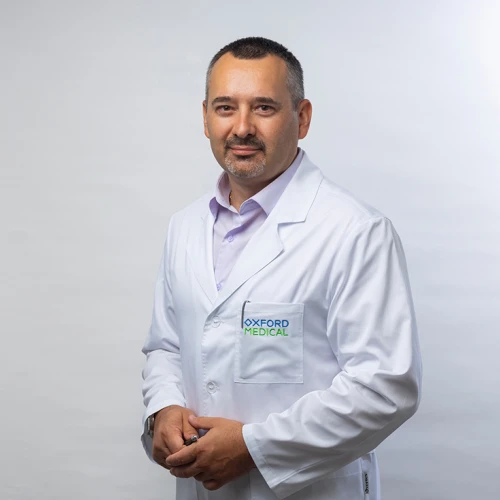 4.9 20+
 Urologist-andrologist of the highest category, Candidate of Medical Sciences
20+ Years of experience Consultation 1100
Kyiv, Sribnokilska St. 20  4.87 31+
Urologist of the highest category
31+ Years of experience Consultation 1100
Kyiv, Mykhayla Hryshka St., 1  4.88 27+
 Leading specialist of the urological hospital, Oncologist, Urologist of the highest category, Candidate of Medical Sciences
27+ Years of experience Consultation 1989
Kyiv, st. Bereznyakivska, 30b 
Reviews
Анонімний користувач 20.01.2026
Пообіцяв залишити відгук, якщо все буде добре. Довго замислювався над проведенням вазектомії. Ті хто в темі, ті зрозуміють. Лікаря порекомендували наші друзі, які вже через це пройшли. Операція тривала хвилин 15. Як для мене, зовсім безболісно. Під час операції, Павло Валерійович попереджав, що буде робити, і коли буде неприємно, а саме коли будуть уколи зі знеболюючим. Після операції нічого не боліло, не турбувало, сам доїхав до дому за кермом. Лікар підтримував весь час, та надавав всі необхідні поради. Десь тиждень, дружина обробляла шви. На сьогоднішній день взагалі не помітно де була операція. Через місяць здав сперматограму, і там все як я хотів. Хто ще вагається з вибором лікаря для вазектомії, рекомендую Аксьонова Павла Валерійовича, це дійсно фахівець в цій справі.

Андрій 22.12.2025
Дуже вдячний Волошину Володимиру Вікторовичу за коректне та уважне ставлення! Лікар одразу викликає довіру. Обстеження пройшло комфортно, без поспіху. Після прийому зрозумів свою ситуацію і подальші кроки лікування. Рекомендую як досвідченого уролога.
Current information

04 March 2026
How to understand that your kidneys hurt
11 February 2026
Re-endophalloprosthetics – repeated endophalloprosthetics to correct errors after an unsuccessful operation or prosthesis failure
11 February 2026
Phimosis Treatment: Why Circumcision Is the Best Solution
27 February 2025
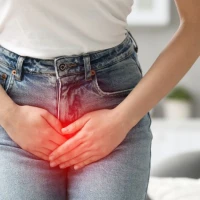
Cystitis and its complications: what are the dangers of self-treatment and what to do in...
Sign up
 in the clinic
  online

 Hello!
Let's take care
about your health:
Sign up via call center 
