Contents:
- What are uterine polyps
- What do uterine polyps look like
- Why do uterine polyps appear
- How to treat uterine polyps
- What happens if uterine polyps are not removed
In some women, uterine polyps may not cause any symptoms for a long time. In others, they manifest as heavy or irregular menstruation, bloody discharge between periods, or lower abdominal pain. Polyps may also be one of the causes of difficulties with conception. In such cases, it is not advisable to postpone a consultation with a gynecologist, because timely examination helps determine the cause of symptoms and define the further treatment approach.
In this article, we will explain what polyps are, why uterine polyps grow, and how they may manifest. We will also describe which modern treatment methods are used and in which cases a doctor recommends polyp removal.
What are uterine polyps
Uterine polyps are benign neoplasms that occur as a result of excessive growth of the uterine lining, called the endometrium. They may be single or multiple and differ in size and structure.
Although polyps are benign, in some cases it is impossible to accurately determine the type of neoplasm without additional examination. According to the American College of Obstetricians and Gynecologists (ACOG), in a small proportion of women, precancerous or malignant changes are found during histological examination after polyp removal.
Doctors at «Oxford Medical» recommend: do not regard a polyp as a «safe finding». Even if there are no complaints, it is important to undergo an examination to assess its features and determine whether treatment is needed.
What do uterine polyps look like
.jpg)
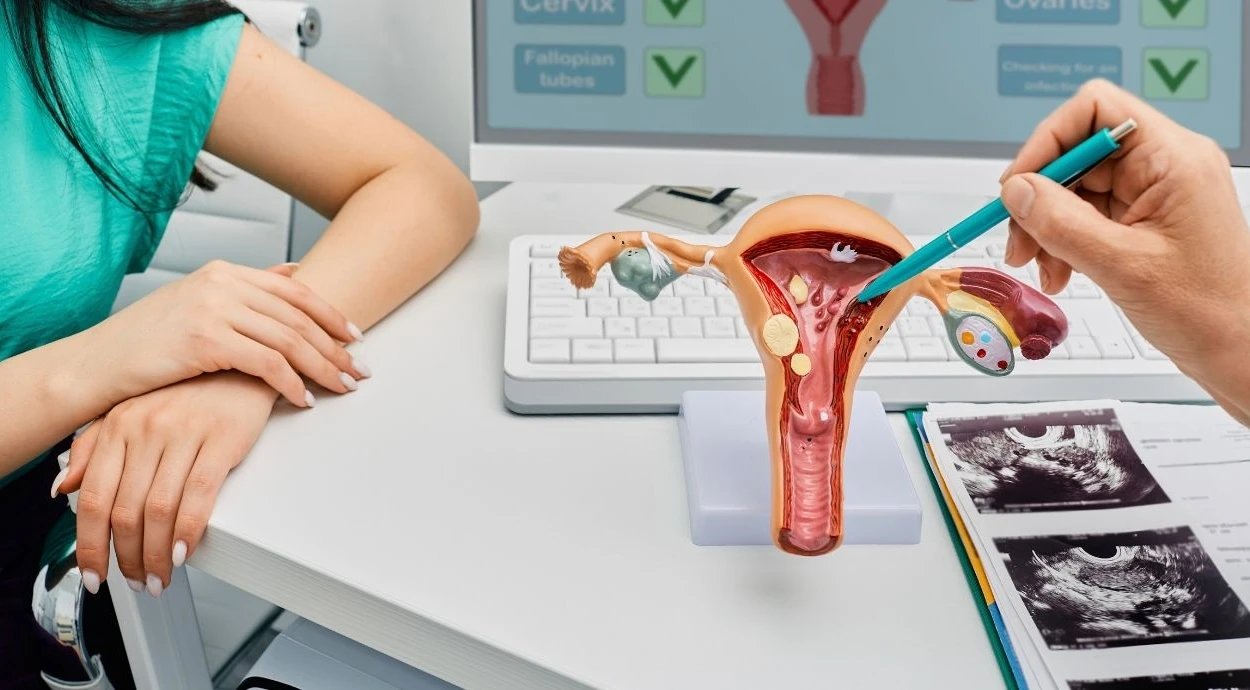
Polyps may have a round, oval, or elongated shape. Some of them attach to the mucous membrane with a broad base, while others attach with a thin stalk, which allows them to shift within the uterine cavity. The size of polyps may also vary, from a few millimeters to several centimeters.
Polyps are located in the uterine cavity, so their presence can be confirmed only with instrumental diagnostic methods. Most often, they are detected during an ultrasound examination of the pelvic organs. If it is necessary to examine the neoplasm in detail or remove it immediately, hysteroscopy is performed. This is an endoscopic diagnostic and therapeutic procedure that allows the doctor to examine the uterine cavity and, if necessary, immediately perform surgical manipulations or carry out a biopsy, which means taking a tissue sample for histological analysis.
Why do uterine polyps appear
It is impossible to give a definite answer as to where uterine polyps come from. Their development is believed to be associated with the combined effect of several factors, primarily hormonal changes that affect the development of the uterine lining. As noted by Mayo Clinic, the risk of developing polyps increases in women during the premenopausal and menopausal periods.
Factors that may contribute to the development of polyps include:
- hormonal disorders, in particular prolonged exposure of the endometrium to estrogens;
- age over 40 and the period before menopause;
- obesity, which affects hormonal balance;
- arterial hypertension;
- taking medications for the treatment of breast cancer.
The presence of one or even several risk factors does not mean that polyps will necessarily appear. At the same time, their combination may increase the likelihood of developing endometrial neoplasms.
How to treat uterine polyps
The treatment approach depends on the number of polyps, their size and location, the presence of symptoms, the woman’s age, and reproductive plans. After the examination, the doctor determines whether observation is sufficient or treatment is necessary.
Polyp removal is usually recommended in the following cases:
- the polyp causes heavy or irregular menstruation, bloody discharge, or other symptoms;
- the neoplasm is large or grows rapidly;
- the polyp is detected in a woman in menopause;
- there are difficulties with conception or infertility;
- there is suspicion of precancerous changes.
Most often, removal is performed using therapeutic hysteroscopy — a minimally invasive endoscopic procedure during which the doctor examines the uterine cavity using a thin optical instrument and removes the polyp immediately. After this, the neoplasm is sent for histological examination.
Today, curettage of the uterine cavity is rarely used for removing endometrial polyps. In most cases, hysteroscopy is preferred because it is a more precise and gentle method. The doctor sees the polyp directly during the procedure, can remove it in a targeted way, and preserve healthy endometrium as much as possible.
In some cases, after polyp removal, the doctor may recommend medication treatment. In particular, in cases of hormonal disorders, hormone therapy is prescribed to correct the hormonal background and reduce the risk of recurrent polyp formation.
.jpg)
What happens if uterine polyps are not removed
Not all endometrial polyps require immediate removal. If the neoplasm is small, does not cause symptoms, and has no signs of precancerous or malignant changes, the doctor may recommend dynamic observation. However, if the polyp causes complaints or carries a high risk of complications, treatment should not be postponed.
Without timely treatment, polyps may lead to:
- heavy or prolonged menstruation;
- bloody discharge between periods or after menopause;
- chronic blood loss and the development of iron deficiency anemia;
- difficulties with conception or infertility;
- an increased risk of precancerous or malignant changes in the polyp.
As noted by The American Society for Reproductive Medicine (ASRM), pathological changes in the uterine cavity, including polyps and fibroids, may negatively affect the onset of pregnancy and its course. That is why for women who are planning pregnancy or undergoing infertility treatment, a doctor may recommend polyp removal.
Doctors at «Oxford Medical» recommend: do not refuse treatment if the doctor recommends uterine polyp removal. Timely treatment helps eliminate symptoms, prevent possible complications, and confirm the benign nature of the neoplasm based on the results of histological examination.
The information in this article is provided for informational purposes and is not an instruction for self-diagnosis or treatment. If symptoms of the disease appear, you should consult a doctor.
Sources:
American College of Obstetricians and Gynecologists