Contents:
- What Is the Feeling of Incomplete Bowel Emptying
- Incomplete Bowel Emptying: Causes
- Associated Symptoms
- Diagnosis and Treatment of the Feeling of Incomplete Emptying
Many people have at least once faced a situation when, after visiting the toilet, they still feel that the bowel has not emptied completely. At first, this symptom may seem insignificant, but its regular occurrence requires attention. In some cases, the problem is related to dietary habits, insufficient physical activity, or other lifestyle factors, while in others it requires a medical examination to determine its origin.
This condition is not a separate disease, but it may indicate various disorders of bowel function. In this article, we will explain why the feeling of incomplete bowel emptying occurs, what symptoms may accompany it, and when it is necessary to see a doctor.
What Is the Feeling of Incomplete Bowel Emptying
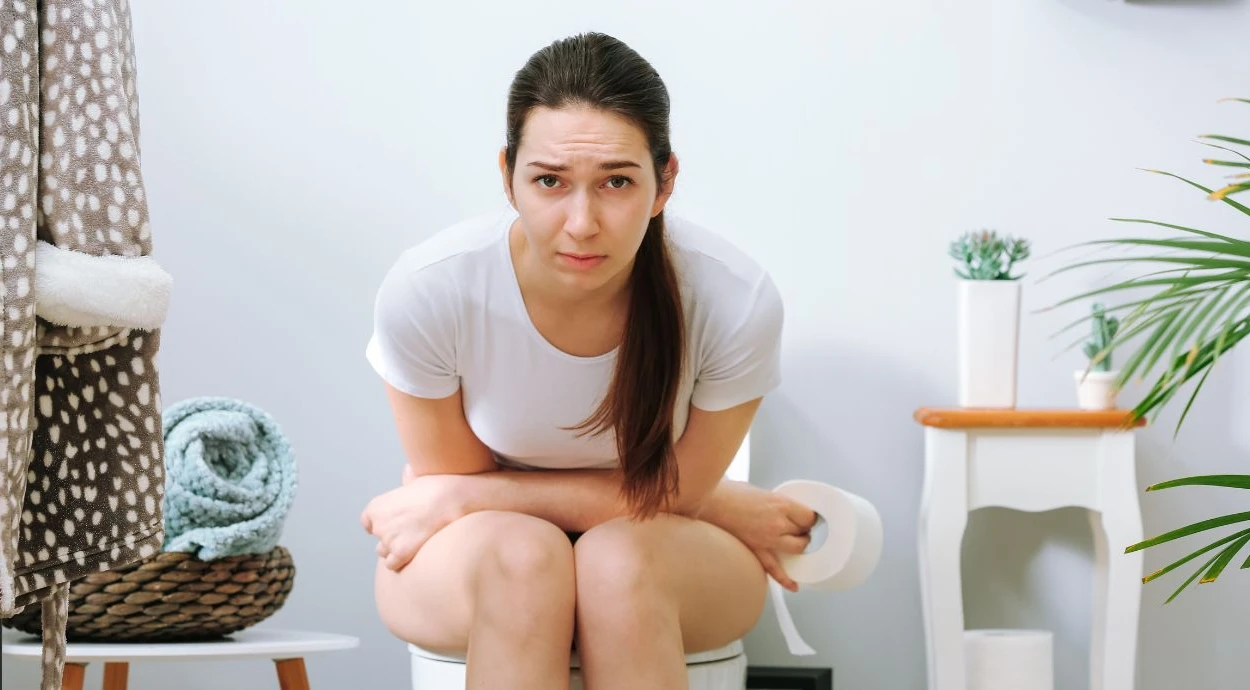
Incomplete bowel emptying is a condition in which, after defecation, a person still feels that the bowel has not emptied completely. A person may feel residual discomfort in the rectum and the need to visit the toilet again.
According to US National Library of Medicine, the feeling of incomplete bowel emptying is one of the common symptoms that may accompany both functional bowel disorders and organic diseases of the colon and rectum. This symptom alone does not allow an exact diagnosis to be made. To determine the cause, it is important to take into account other complaints, the duration of the disorder, and the results of examinations. That is why, when the problem occurs regularly, it is recommended to see a doctor.
Incomplete Bowel Emptying: Causes
.jpg)
The causes of the feeling of incomplete bowel emptying may vary. In some cases, the symptom is temporary and disappears after dietary or lifestyle correction. However, sometimes it may occur against the background of diseases of the colon or rectum and require a medical examination.
Functional Causes
One of the most common causes of the feeling of incomplete emptying is functional bowel disorders. In such cases, no significant structural changes are detected during examination, but the person continues to feel discomfort after defecation and the desire to visit the toilet again.
Functional causes include:
- irritable bowel syndrome;
- impaired colon motility;
- chronic stress and anxiety;
- insufficient physical activity;
- irregular eating habits;
- the habit of suppressing urges to defecate.
One of the most common functional causes is irritable bowel syndrome. Patients may be concerned about abdominal bloating, pain, changes in stool frequency, and the feeling that the bowel has not emptied completely. That is why treatment of irritable bowel syndrome is often aimed not only at normalizing bowel movements but also at relieving accompanying discomfort.
Doctors at Oxford Medical note that functional disorders often worsen under the influence of stress, changes in daily routine, or eating habits. Therefore, it is important to assess not only the symptoms but also the factors that may affect bowel function.
Diseases That Cause the Symptom
In some cases, incomplete bowel emptying is associated with diseases of the colon or rectum. In this case, the symptom is usually not the only complaint and may be accompanied by pain, mucus discharge, bleeding, or changes in stool frequency.
Possible causes include:
- hemorrhoids;
- proctitis;
- inflammatory bowel diseases;
- polyps of the colon or rectum;
- anal fissures;
- benign and malignant neoplasms;
- consequences of previous bowel surgery.
If the symptom persists for a long time or is combined with other alarming signs, it is important not to postpone examination. The earlier the cause of the disorder is identified, the more effective treatment usually is.
Associated Symptoms
.jpg)
The feeling of incomplete bowel emptying rarely occurs on its own. Depending on the cause of the disorder, it may be accompanied by other symptoms involving the digestive system or the anorectal area.
Most often, patients complain of:
- repeated urges to defecate shortly after visiting the toilet;
- a feeling of residual contents in the rectum;
- the need for additional straining;
- pain or discomfort in the lower abdomen;
- abdominal bloating;
- increased gas formation;
- constipation or, conversely, frequent stools;
- mucus discharge from the rectum.
In some cases, relief does not occur after defecation or lasts only for a short time. A person may feel pressure, fullness, or discomfort in the rectal area, which causes the desire to visit the toilet again.
If the feeling of incomplete emptying is associated with diseases of the rectum or anal canal, additional symptoms may appear:
- pain during defecation;
- itching or burning in the anal area;
- blood in the stool or on toilet paper;
- a feeling of a foreign body in the rectum;
- discomfort while sitting.
Doctors at Oxford Medical recommend seeing a specialist if symptoms persist for several weeks, gradually worsen, or are accompanied by bleeding, pain, unexplained weight loss, or a change in usual stool patterns. Such signs require examination to determine the exact cause of the disorder.
Diagnosis and Treatment of the Feeling of Incomplete Emptying
If the feeling of incomplete bowel emptying occurs regularly or is accompanied by other symptoms, a proctologist consultation is necessary. The cause of this condition cannot always be determined by complaints alone, so in many cases an additional examination is required.
During the consultation, the doctor clarifies the nature of the symptoms, stool frequency, dietary habits, the presence of concomitant diseases, and other factors that may affect bowel function. The duration of symptoms and the presence of additional complaints, such as pain, abdominal bloating, mucus, or blood in the stool, are also important.
To clarify the cause, the following may be prescribed:
- laboratory tests — help detect signs of inflammation, anemia, and other disorders;
- stool tests — make it possible to assess bowel function and exclude some diseases of the digestive system;
- anoscopy — examination of the anal canal and the lower part of the rectum;
- sigmoidoscopy — examination of the rectum and the lower part of the sigmoid colon;
- colonoscopy — an endoscopic examination of the colon that allows inflammatory changes, polyps, and other pathologies to be detected;
- other examinations according to indications.
Doctors at Oxford Medical note that the feeling of incomplete bowel emptying may have different causes, so the scope of diagnostics is selected individually. Timely examination makes it possible to identify the source of the problem and choose the most effective treatment
.jpg)
Treatment of the feeling of incomplete bowel emptying depends on the cause of the symptom. It may occur with functional disorders, irritable bowel syndrome, rectal diseases, or other pathologies of the digestive system, so there is no universal treatment regimen.
Doctors at Oxford Medical explain that in some cases, lifestyle correction is enough to improve the condition. The doctor may recommend changing the diet, increasing physical activity, normalizing the drinking regimen, and establishing a regular defecation routine.
If the symptom is associated with irritable bowel syndrome, stress, or impaired bowel motility, treatment may be aimed at:
- normalizing bowel movements;
- reducing bloating and discomfort;
- dietary correction;
- eliminating factors that trigger exacerbation;
- restoring regular bowel function.
If the cause is a bowel disease or a disease of the anorectal area, therapy is selected after examination. Approaches for hemorrhoids, anal fissures, proctitis, polyps, colitis, and other conditions differ. Therefore, treatment of colitis, like treatment of other bowel diseases, is prescribed only after the diagnosis has been established.
Depending on the cause, the following may be used:
- medication therapy;
- dietary correction;
- physiotherapeutic methods;
- minimally invasive proctological procedures;
- surgical treatment according to indications.
Self-administration of laxatives or remedies for normalizing bowel movements does not always eliminate the cause of the problem. In some cases, such methods only temporarily reduce symptoms and may delay diagnosis. The earlier the cause of the feeling of incomplete bowel emptying is identified, the easier it is to choose effective treatment and reduce the risk of symptom recurrence.
The information in this article is provided for informational purposes and is not an instruction for self-diagnosis or self-treatment. If symptoms of a disease appear, a doctor should be consulted.
Sources:
US National Library of Medicine