Sign up via call center
Department
Treatment of intestinal and colon dyskinesia at the private clinic Oxford Medical Kyiv

Treatment of irritable bowel syndrome

Abdominal pain, bloating, alternating constipation and diarrhea are symptoms that may occur from time to time and do not always cause serious concern. Many people attribute them to stress, dietary indiscretions, or a “sensitive stomach.” However, if such manifestations recur regularly, it is worth paying attention to the condition of the digestive system.

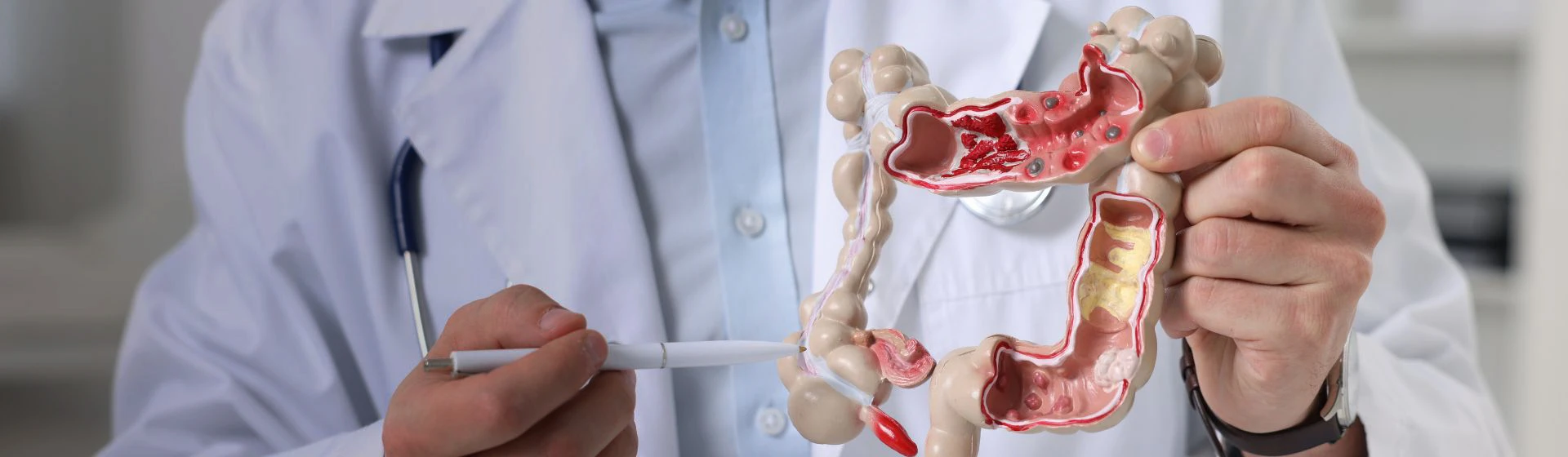
One of the possible causes is irritable bowel syndrome — a functional disorder in which bowel function changes without visible organic lesions. At the same time, the irritated bowel may react even to things that are usual for a person — a change in diet, nervous tension, disruption of the eating or sleep schedule. As a result, discomfort appears, digestion is disturbed, and the nature of bowel movements changes.

Although this condition does not lead to irreversible changes in the intestines, it can significantly affect quality of life. That is why it is important not to ignore the symptoms, to undergo an examination, and to determine their cause. Properly selected IBS treatment helps control the manifestations of the disease, reduce discomfort, and gradually restore normal bowel function.

Causes of irritable bowel syndrome

It is not always possible to determine the exact cause of the development of IBS, since this functional disorder is formed under the influence of several factors at the same time. Most often, the irritated bowel reacts to a combination of changes in the functioning of the nervous system, dietary features, and increased sensitivity of the intestines.

The main causes include:

  • motility disorders — accelerated or slowed movement of the contents, which may lead to constipation or, conversely, to diarrhea;
  • increased sensitivity — even slight stretching of the walls causes pain or discomfort;
  • stress and emotional tension — affect the interaction between the brain and the intestines and may intensify the manifestations of the disease;
  • dietary features — irregular meals, overeating, an excess of fatty or heavy food;
  • previous intestinal infections — after them, the intestinal reaction to usual irritants may change;
  • changes in microflora — in some patients, dysbiosis plays an important role.

In some cases, the symptoms intensify against the background of other diseases of the digestive system, in particular gastritis or functional disorders. That is why it is important to consider each situation individually and take into account all the factors that may affect bowel function.

Irritable bowel syndrome (IBS):
symptoms

Signs of IBS may differ in different patients and change over time.

Main symptoms of IBS:

pain or spasms in the abdomen, which often decrease after a bowel movement;

bloating and a feeling of fullness;

stool disturbances — diarrhea, constipation, or their alternation;

feeling of incomplete bowel emptying.

List of diseases

Individual variants of the course have their own features. In particular, IBS with diarrhea is manifested by frequent urges to have a bowel movement and loose stools, whereas other forms are more often accompanied by constipation. In general, the course has a wave-like character: periods of exacerbation may be replaced by an improvement in well-being. If such signs persist for a long time or intensify, it is important to consult a doctor to clarify the diagnosis and select treatment.

Diagnosis of irritable bowel syndrome

The diagnosis of IBS is aimed primarily at distinguishing functional disorders from organic diseases of the digestive system. This is important because similar symptoms may occur in various pathologies.

The examination begins with a doctor's consultation. During the appointment, the complaints, their duration, nature, as well as the connection with nutrition, stress level, and lifestyle are assessed. To clarify the diagnosis, the following may be prescribed:

  • laboratory blood tests — help identify signs of inflammation, anemia, or deficiency conditions;
  • stool analysis — makes it possible to exclude infectious causes and other digestive disorders;
  • Abdominal ultrasound — is used to assess the condition of the organs of the digestive system;
  • if necessary — endoscopic examinations (in particular colonoscopy) to exclude organic changes in the intestines.

In some cases, additional examinations may be needed if there is suspicion of other diseases of the digestive system, in particular inflammatory processes or atrophic gastritis. The scope of diagnostics is determined individually, depending on the symptoms and the general condition of the patient. This approach makes it possible to exclude serious pathologies, confirm the diagnosis of IBS, and select the optimal treatment strategy.

Methods of treating irritable bowel syndrome

Treatment of irritable bowel syndrome is aimed at reducing symptoms, normalizing bowel function, and improving quality of life. Since the manifestations and triggers of this condition may differ, treatment of irritable bowel syndrome is selected individually — taking into account the predominant complaints, the duration of symptoms, and the factors that provoke them.

The main treatment approaches include:

  1. Diet correction — one of the key directions of therapy, because nutrition in irritable bowel syndrome directly affects the frequency and severity of symptoms. The patient is recommended a regular meal schedule, restriction of products that worsen well-being, as well as keeping a food diary. If necessary, the doctor may recommend a special diet for IBS.
  2. Drug therapy — the use of medications to reduce spasms, normalize intestinal motility, correct constipation or diarrhea, and reduce bloating.
  3. Support of microflora — in some patients, probiotics or other means to support the balance of the intestinal microbiota and eliminate dysbiosis are included in the treatment regimen.
  4. Lifestyle correction and work with stress — normalization of sleep, rest schedule, and reduction of psycho-emotional load, since nervous tension often intensifies the manifestations of the disease.

In most cases, IBS treatment has a comprehensive character and requires time. Consistent adherence to the doctor's recommendations helps better control symptoms, reduce discomfort, and achieve a stable improvement in well-being.

Possible complications

Irritable bowel syndrome belongs to functional disorders and is not accompanied by organic damage to the intestines. At the same time, in the absence of symptom control, it may significantly affect well-being and everyday life.

Most often, complications are associated not so much with the disease itself as with its prolonged manifestations:

  • deterioration in quality of life — constant discomfort, pain, bloating, and stool disturbances limit everyday activity and affect work capacity;
  • nutritional disorders — because of the fear of symptoms appearing, people may significantly restrict their diet, which over time leads to a deficiency of nutrients;
  • emotional exhaustion — prolonged persistence of symptoms is often accompanied by anxiety, irritability, and sleep disturbances;
  • exacerbation of concomitant conditions — manifestations of other diseases of the digestive system, in particular colitis or functional disorders, may intensify.

Timely consultation with a doctor and adherence to recommendations help control symptoms, prevent deterioration of the condition, and maintain stable well-being.

Prevention of irritable bowel syndrome

Prevention of IBS is aimed at reducing the influence of factors that provoke symptoms and maintaining stable functioning of the digestive system. Since this condition often has a chronic course, daily habits and lifestyle play an important role.

To reduce the risk of exacerbation, it is worth:

  • following a regular meal schedule — avoiding long breaks and overeating;
  • taking into account the individual reaction to foods and gradually adjusting the diet;
  • following the recommendations that a diet for irritable bowel syndrome предусматривает, especially when symptoms appear;
  • limiting foods that may provoke bloating, discomfort, or stool disturbances;
  • maintaining a normal sleep schedule and reducing the level of stress.

It is also important to respond in a timely manner to the first manifestations of disturbances and not ignore the symptoms. Control of lifestyle, nutrition, and emotional state helps reduce the frequency of exacerbations and maintain stable bowel function.

Cost of IBS treatment in Kyiv at the private clinic “Oxford Medical”

The cost of treatment for irritable bowel syndrome depends on the scope of examinations and the necessary therapy. You can review the prices for doctors’ consultations here in advance. The doctor will provide more detailed guidance on the options, program, and cost during the initial consultation. You can book an appointment at a convenient time for you and receive all the necessary medical services in one place.

Frequently asked questions

Can irritable bowel syndrome be treated?

Irritable bowel syndrome has a chronic course, however, its manifestations can be effectively controlled. Treatment is aimed at reducing symptoms, normalizing bowel function, and eliminating provoking factors. Provided that the doctor’s recommendations are followed and nutrition and lifestyle are adjusted, it is possible to achieve a long-term improvement in well-being.

Which doctor treats irritable bowel syndrome?

Diagnosis and treatment of irritable bowel syndrome are carried out by a gastroenterologist. The doctor evaluates the symptoms, prescribes examinations to exclude other diseases, and selects an individual therapy strategy. If necessary, other specialists may also be involved, in particular a neurologist or psychotherapist.

Where does it hurt in irritable bowel syndrome?

Pain in IBS is most often localized in the lower parts of the abdomen or along the course of the large intestine. It may be cramping or aching, change in intensity throughout the day, and often decreases after a bowel movement. The localization of the pain may differ, so it is important to assess it together with other symptoms.

What can you eat with irritable bowel syndrome?

The diet is selected individually, taking into account the body's reaction to different foods. A gentle diet is usually recommended, with restriction of food that causes bloating or intensifies symptoms. The basis of the diet may consist of cereals, lean meat, fish, as well as vegetables after heat treatment. It is important to follow a regular meal schedule and track individual triggers.

( Rating: 4.96 , Votes: 91 )
Our services
Consultations
Consultation with a gastroenterologist
1100.00 ₴
Add Added
Consultation with a leading gastroenterologist
1989.00 ₴
Add Added
Online consultation with a gastroenterologist
1100.00 ₴
Add Added

Advantages of IBS treatment at Oxford Medical Clinic

Qualified doctors. Appointments are conducted by gastroenterologists who work according to modern clinical guidelines and have experience in managing patients with functional bowel disorders.

Modern diagnostics. All necessary examinations are available, in particular ultrasound and endoscopic examinations, which are performed using expert-class equipment.

Individual approach. Therapy is selected taking into account the leading symptoms, the features of the course of the disease, and the factors that provoke them.

Convenience for the patient. The opportunity to have a consultation, undergo an examination, and receive recommendations in one place by choosing a comfortable time for the visit.
 

Our doctors

Cheverda Tatyana Leonidovna
5
rating (30)
22+
Years of experience
Online consultation
Gastroenterologist of the 1st category, Candidate of Medical Sciences, Doctor of Philosophy in Medicine (PhD)
22+ Years of experience
Consultation 1989
Kyiv, Hlybochytska St., 40x
Make an appointment
Tyupa Larisa Petrovna
4.93
rating (29)
22+
Years of experience
Online consultation
Gastroenterologist of the Highest Category
22+ Years of experience
Consultation 1100
Make an appointment
Hnylytska Aelita Rubikivna
4.94
rating (18)
8+
Years of experience
Online consultation
Gastroenterologist, family doctor of the II category
8+ Years of experience
Consultation 1100
m. Irpin vul. University, 2/1, building 3
Make an appointment
Kovchun Oleksandr Yuriyovych
4.91
rating (23)
13+
Years of experience
Gastroenterologist
13+ Years of experience
Consultation 1989
Kyiv, Mykhayla Hryshka St., 1
Make an appointment
All doctors
Reviews
Юрій 14.04.2026
Дуже-дуже вдячні Олесі Сергіївна за професіональну та вичерпну консультацію. Рекомендуємо. Це - прекрасний лікар і чудова людина.
Star Star Star Star Star
Єлізавета 02.04.2026
Дуже вдячні лікарю за допомогу в лікуванні! Все пройшло максимально комфортно , швидкий результат та дієві рекомендації! Візитом задоволені🌺
Star Star Star Star Star
Current information
Sign up via call center
in the clinic
online
This site is protected by reCAPTCHA technology, and the Google Privacy Policy and Terms of Service apply.
Hello!
Let's take care
about your health:
Sign up via call center

We use cookies and other technologies to remember your preferences and find out exactly how you use and interact with the site.

By using our site, you also agree to the terms of the "User Agreement" and "Regulation on the processing and protection of personal data". By clicking "I AGREE", you consent to the processing of your data.