Sign up via call center
Department
Treatment of gastric and duodenal ulcers at the Oxford Medical Kyiv private clinic

Treatment of esophagitis

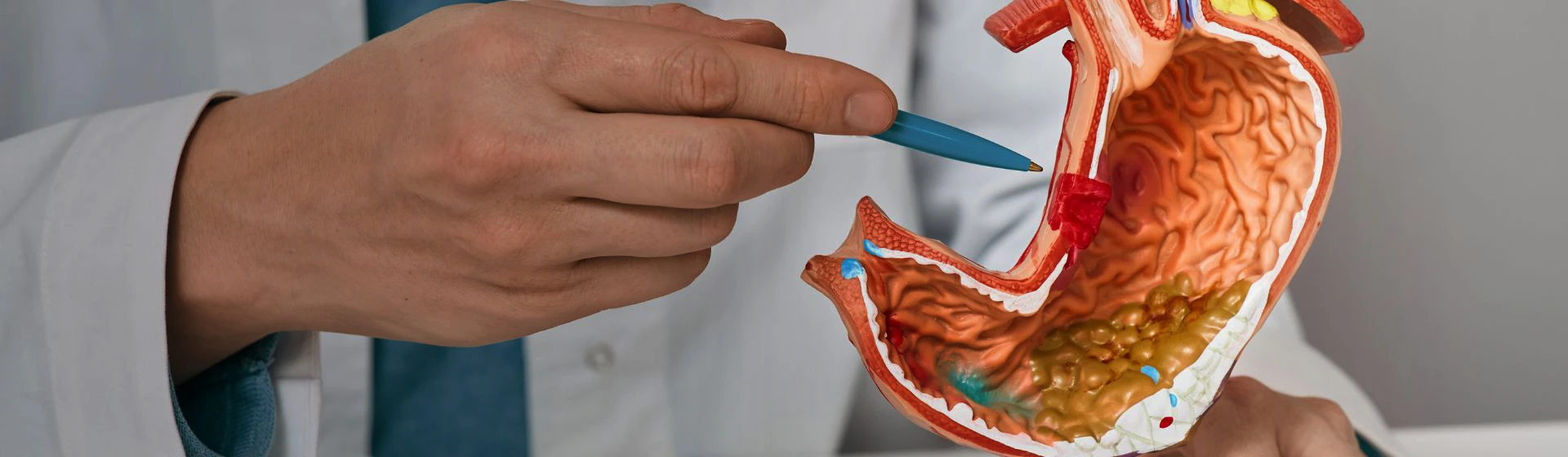
Esophagitis is an inflammation of the esophagus that develops when its mucous membrane is subjected to prolonged irritation. Most often, people notice heartburn, discomfort, or a burning sensation behind the sternum that intensifies after eating or while lying down.

At first, these manifestations may occur periodically and not cause significant concern. However, without proper treatment, the symptoms gradually intensify, become regular, and affect quality of life. That is why it is important not to ignore the early signs of the disease and to consult a doctor in a timely manner to clarify the diagnosis.

Causes of esophagitis

In most cases, inflammation develops gradually — under the influence of one or several factors. The most common cause is the reflux of acidic stomach contents into the esophagus in GERD (gastroesophageal reflux disease). In this condition, the acidic contents of the stomach regularly reflux into the esophagus and irritate its mucous membrane. Prolonged or frequent reflux leads to the development of inflammation and the appearance of unpleasant symptoms.

The development of esophagitis can also be provoked by:

  • infections (bacterial, viral, or fungal), especially with reduced immunity;
  • long-term use of certain medications, if the tablets are retained in the esophagus or irritate the mucous membrane;
  • very hot, excessively spicy, or coarse food;
  • accidental swallowing of aggressive substances;
  • disorders of esophageal function, due to which food or acid remains in contact with the mucous membrane for longer.

In some cases, inflammation develops against the background of general weakening of the body or concomitant diseases of the digestive system. That is why, for effective treatment, it is important to establish the cause that maintains the inflammatory process.

Types and stages of esophagitis

Esophagitis is classified according to its course, the cause of development, and the nature of damage to the mucous membrane. This division makes it possible to assess the severity of the process and choose the optimal treatment tactics.

According to the course, the following are distinguished:

  • acute — develops suddenly and is most often associated with abrupt irritation of the mucous membrane or an infectious process;
  • chronic — has a prolonged course with periods of exacerbation and remission, usually develops against the background of prolonged reflux.

According to the cause of development, the following are distinguished:

  • reflux esophagitis — occurs as a result of regular reflux of acidic stomach contents into the esophagus;
  • infectious — caused by bacteria, viruses, or fungal flora;
  • medication-induced — associated with taking medications that irritate the mucous membrane;
  • allergic (eosinophilic) — develops against the background of allergic reactions;
  • traumatic — develops after mechanical or thermal damage.

According to the nature of damage to the mucous membrane, the following are distinguished:

  • catarrhal — superficial inflammation without defects of the mucous membrane;
  • erosive — with the formation of superficial lesions (erosions);
  • ulcerative — with deeper defects of the mucous membrane;
  • hemorrhagic — with an increased tendency to bleeding.

The severity of reflux esophagitis is determined by the results of an endoscopic examination. Several degrees are distinguished — from minimal inflammatory changes to deep erosive defects with widespread damage to the mucous membrane. The higher the stage of the process, the greater the risk of complications and the need for longer treatment.

Esophagitis: symptoms of the disease

Manifestations depend on the form of inflammation and the depth of damage to the mucous
membrane. At first, they may be moderate and appear periodically, and over time intensify.

The most common symptoms of esophagitis:

heartburn that intensifies after eating or while lying down;

discomfort or a burning sensation behind the sternum;

difficulty swallowing or a sensation of food “getting stuck”;

sour belching or an unpleasant taste in the mouth.

List of diseases

It is also worth noting pain in esophagitis, which may have a burning or aching nature and sometimes radiate to the neck or interscapular area. In an acute course, the symptoms may intensify after each meal, and in some cases, temperature in esophagitis also appears if the inflammatory process is pronounced or has an infectious nature. If the symptoms recur or persist for a long time, it is important to consult a doctor to clarify the diagnosis and begin treatment.

Complications of esophagitis

If inflammation of the esophagus remains untreated for a long time or occurs with frequent exacerbations, the mucous membrane is gradually damaged more deeply. This increases the risk of developing structural changes and functional disorders.

Possible complications include:

  • formation of erosions and ulcerative defects of the mucous membrane;
  • bleeding from the esophagus;
  • cicatricial narrowing (stricture), which leads to difficulty swallowing;
  • changes in the mucous membrane with an increased risk of precancerous conditions (in particular Barrett’s esophagus).

The risk of complications increases with a prolonged course of the disease, especially if esophagitis is associated with constant reflux. That is why it is important to undergo examination in a timely manner and begin treatment without waiting for the symptoms to intensify.

Diagnosis of esophagitis

Comprehensive examination is necessary to confirm the disease. After instrumental and laboratory studies are performed, the doctor establishes the diagnosis of esophagitis and determines its form and the degree of damage to the mucous membrane.

The main diagnostic method is esophagogastroduodenoscopy — an endoscopic examination during which the doctor examines the mucous membrane of the esophagus, stomach, and duodenum using a flexible device with a camera. The procedure makes it possible to assess the degree of inflammation, detect erosions, ulcers, or cicatricial changes. If necessary, a biopsy may be performed — taking a small tissue sample for laboratory analysis.

Additionally, the following may be prescribed:

  • blood tests — to assess signs of inflammation and the general condition of the body;
  • 24-hour pH monitoring — to determine how often and for how long acid enters the esophagus;
  • esophageal manometry — to assess its motility and muscle function;
  • laboratory tests (of blood or swabs from the mucous membrane) — if there is suspicion of infectious esophagitis caused by viruses, bacteria, or fungal flora.

Comprehensive diagnostics make it possible to determine the form of the disease, the degree of damage to the mucous membrane, and to select effective treatment tactics.

Treatment of esophagitis of the esophagus

Treatment of esophagitis of the esophagus depends on the cause of the inflammation, the degree of damage to the mucous membrane, and the duration of the course of the disease. In most cases, drug therapy is used, which may include:

  • proton pump inhibitors — to reduce acidity and lessen the aggressive effect of gastric contents;
  • antacids or alginates — to neutralize acid and reduce heartburn;
  • prokinetics — to improve motility and reduce reflux;
  • antibacterial or antifungal agents — in infectious esophagitis.

If esophagitis is associated with reflux, an important stage is reducing the acidity of gastric contents and correcting lifestyle. In most patients, properly selected therapy makes it possible to reduce symptoms within the first weeks.

In an erosive or complicated form, treatment may be longer and require repeated endoscopic monitoring. In rare cases, when drug therapy does not produce results or serious complications arise, surgical treatment aimed at eliminating the constant reflux of acid from the stomach into the esophagus may be considered.

Rehabilitation and diet in esophagitis

After the acute manifestations of inflammation decrease, it is important to create conditions for the restoration of the mucous membrane of the esophagus and to prevent recurrent exacerbations. Rehabilitation involves not only continuing therapy according to the doctor's recommendation, but also changing daily habits.

The basis of recovery is nutrition in esophagitis, which helps reduce irritation of the mucous membrane and the frequency of reflux. It is recommended to:

  • eat small portions 4–5 times a day;
  • avoid overeating;
  • give up spicy, sour, fried, and very hot dishes;
  • limit coffee, carbonated drinks, and alcohol;
  • not lie down immediately after eating.

Dishes should be warm, soft in consistency, and should not irritate the mucous membrane. During an exacerbation period, it is sometimes recommended to temporarily exclude products that increase acidity.

In addition to diet, in esophagitis it is important to control body weight, avoid tight clothing that compresses the abdomen, and sleep with the head of the bed slightly elevated. Following these recommendations makes it possible to reduce the frequency of symptoms and maintain a stable condition of the mucous membrane of the esophagus.

Disease prevention

Prevention of esophagitis is aimed at reducing factors that irritate the mucous membrane of the esophagus and controlling conditions that may cause reflux. Even after successful treatment, it is important to follow certain recommendations in order to reduce the risk of recurrent inflammation.

Main preventive measures:

  • regular and moderate meals without overeating;
  • limiting spicy, fatty, and overly acidic food;
  • giving up smoking and excessive alcohol consumption;
  • body weight control;
  • avoiding a lying position immediately after eating;
  • taking medications only on a doctor’s recommendation.

If there is a tendency to reflux or chronic esophagitis has already been diagnosed, it is important to periodically undergo an examination by a gastroenterologist. Timely lifestyle correction and symptom control help maintain a stable condition and prevent complications.

Cost of esophagitis treatment in Kyiv at the private Oxford Medical clinic

The cost of esophagitis treatment depends on the form of the disease and the severity of the inflammation. In some cases, a consultation and basic therapy are sufficient, while in others, extended diagnostics and a longer course of treatment are needed.

The examination plan and treatment tactics are determined individually during the doctor's appointment. You can ознакомиться with the cost of doctors' consultations in advance here.

The modern gastroenterology clinic Oxford Medical in Kyiv gives patients the opportunity to receive a gastroenterologist’s consultation, undergo the necessary examinations, and use a full range of medical services in one place. To make an appointment, contact the contact center or use the online appointment form on the website.

Frequently asked questions

Why is esophagitis dangerous?

Without treatment, inflammation can lead to the formation of erosions and ulcers of the mucous membrane of the esophagus. A prolonged course increases the risk of bleeding, cicatricial narrowing, and swallowing disorders. In severe cases, changes in the mucous membrane with an increased risk of complications are possible. That is why, in case of regular heartburn or pain behind the sternum, it is important to consult a doctor in a timely manner.


Can esophagitis be cured?

In most cases, esophagitis responds well to treatment provided there is timely consultation and properly selected therapy. The doctor determines the cause of the inflammation and prescribes medications to reduce acidity and create conditions for healing of the mucous membrane. In a chronic course, it is important to control risk factors in order to achieve stable remission.

How long is esophagitis treated?

The duration of treatment depends on the form of the disease and the degree of damage to the mucous membrane. In a mild course, improvement may occur within 2–4 weeks. Erosive or chronic forms require longer therapy and, if necessary, endoscopic monitoring. It is important to follow the doctor’s recommendations even after the symptoms disappear.

( Rating: 4.96 , Votes: 78 )
Our services
Consultations
Consultation with a gastroenterologist
1100.00 ₴
Add Added
Consultation with a leading gastroenterologist
1989.00 ₴
Add Added
Online consultation with a gastroenterologist
1100.00 ₴
Add Added

Advantages of esophagitis treatment at Oxford Medical Clinic

Experienced gastroenterologists. Appointments are conducted by doctors with many years of experience who work according to modern clinical guidelines.

Accurate diagnosis. The clinic offers tests, ultrasound, gastroscopy, and other examination methods that make it possible to establish an accurate diagnosis.

Individual approach to treatment. The therapy regimen is formed taking into account the form of esophagitis, the presence of GERD, concomitant diseases, and the patient’s lifestyle.

Comprehensiveness of medical services. Consultation, diagnostics, and further treatment are carried out in one medical center without the need to contact other institutions.

Our doctors

Cheverda Tatyana Leonidovna
5
rating (30)
22+
Years of experience
Online consultation
Gastroenterologist of the 1st category, Candidate of Medical Sciences, Doctor of Philosophy in Medicine (PhD)
22+ Years of experience
Consultation 1989
Kyiv, Hlybochytska St., 40x
Make an appointment
Tyupa Larisa Petrovna
4.93
rating (29)
22+
Years of experience
Online consultation
Gastroenterologist of the Highest Category
22+ Years of experience
Consultation 1100
Kyiv, 9 Ivana Kramskoho Street
Make an appointment
Hnylytska Aelita Rubikivna
4.94
rating (18)
8+
Years of experience
Online consultation
Gastroenterologist, family doctor of the II category
8+ Years of experience
Consultation 1100
m. Irpin vul. University, 2/1, building 3
Make an appointment
Kovchun Oleksandr Yuriyovych
4.91
rating (23)
13+
Years of experience
Gastroenterologist
13+ Years of experience
Consultation 1989
Kyiv, Mykhayla Hryshka St., 1
Make an appointment
All doctors
Reviews
Юрій 14.04.2026
Дуже-дуже вдячні Олесі Сергіївна за професіональну та вичерпну консультацію. Рекомендуємо. Це - прекрасний лікар і чудова людина.
Star Star Star Star Star
Єлізавета 02.04.2026
Дуже вдячні лікарю за допомогу в лікуванні! Все пройшло максимально комфортно , швидкий результат та дієві рекомендації! Візитом задоволені🌺
Star Star Star Star Star
Current information
All Articles
Sign up via call center
in the clinic
online
This site is protected by reCAPTCHA technology, and the Google Privacy Policy and Terms of Service apply.
Hello!
Let's take care
about your health:
Sign up via call center

We use cookies and other technologies to remember your preferences and find out exactly how you use and interact with the site.

By using our site, you also agree to the terms of the "User Agreement" and "Regulation on the processing and protection of personal data". By clicking "I AGREE", you consent to the processing of your data.