Sign up via call center
Department
Treatment of intestinal and colon dyskinesia at the private clinic Oxford Medical Kyiv

Treatment of nonspecific ulcerative colitis (UC)

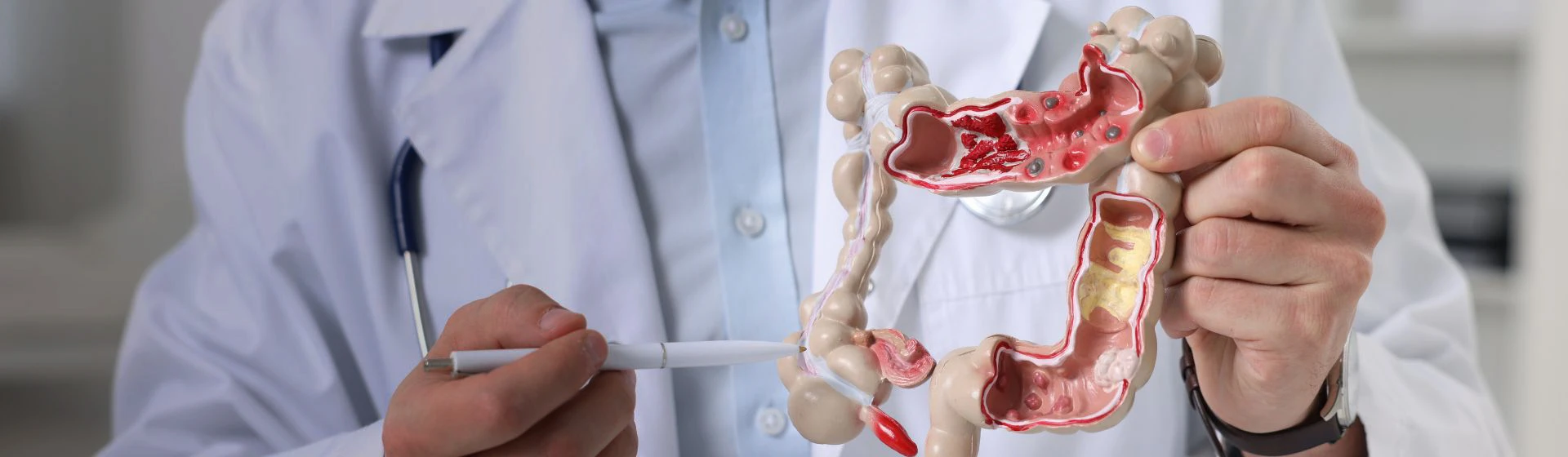
Nonspecific ulcerative colitis — is a chronic inflammation of the mucous membrane of the large intestine, which has a wave-like course and requires regular medical control. Ulcerative colitis of the intestine usually begins with mildly expressed symptoms: periodic discomfort in the abdomen, stool disorders and general weakness. Over time, the manifestations may intensify and become more pronounced. That is why it is important not to wait until the symptoms of ulcerative colitis worsen, but to consult a doctor in a timely manner.

Modern diagnostics allows to determine an accurate diagnosis, assess the распространенность inflammatory process and select treatment that will help achieve remission. In the clinic «Oxford Medical» you can sign up for an appointment with a gastroenterologist, undergo the necessary examinations and receive a substantiated treatment program. Early consultation helps to control the disease and reduce the risk of complications.

Causes of ulcerative colitis

The exact mechanism of the development of the disease has not been fully clarified. Today, it is believed that the cause of ulcerative colitis lies not in one factor, but in a combination of several factors that trigger and maintain a chronic inflammatory process in the mucous membrane of the large intestine.

Most often, it is a matter of a disruption in the functioning of the immune system. Under certain conditions, it begins to react excessively actively and damage the intestine’s own tissues. As a result, prolonged inflammation characteristic of UC is formed.

The factors that may play a role in the development of the disease include:

  • hereditary predisposition — the risk is higher if close relatives have chronic inflammatory bowel diseases;
  • dysbacteriosis — an imbalance between “beneficial” and opportunistic bacteria may affect the condition of the mucous membrane;
  • previous intestinal infections;
  • prolonged psycho-emotional stress;
  • peculiarities of diet and lifestyle.

It is important to understand that ulcerative colitis does not arise suddenly without prerequisites. As a rule, the disease develops gradually, against the background of already existing changes in the functioning of the immune system and the intestinal mucous membrane.

Nonspecific ulcerative colitis:
symptoms

The symptoms of ulcerative colitis may differ depending on the activity of the process,
the extent of the lesion, and the individual characteristics of the body.

The most characteristic signs of ulcerative colitis:

frequent bowel movements, sometimes with mucus or blood;

lower abdominal pain, which may worsen before defecation;

feeling of incomplete emptying, bloating and abdominal discomfort;

general weakness and fatigue.

List of diseases

It is worth considering that the symptoms of ulcerative colitis in adults are not always limited only to intestinal manifestations. In some cases, joint pain, skin rashes, or eye irritation are possible. Such changes are also related to the characteristics of the immune response.

If the symptoms recur or persist for a long time, it is important not to postpone consulting a doctor. Early diagnosis makes it possible to assess the activity of the inflammatory process and begin treatment in a timely manner.

Nonspecific ulcerative colitis: diagnosis

The first stage is a consultation with a gastroenterologist. During the examination, the nature of the complaints, their duration, the frequency of exacerbations, previous infections, the use of medications, and the presence of concomitant diseases are clarified.

Since nonspecific colitis has a chronic course and may resemble other pathologies of the large intestine, the examination must be comprehensive. The main methods include:

  • blood tests — make it possible to detect signs of inflammation, anemia, and assess the general condition of the body;
  • stool tests — are used to exclude infectious causes and determine the activity of the inflammatory process;
  • colonoscopy — a key method that makes it possible to visually assess the condition of the mucous membrane of the large intestine, determine the nature and extent of the lesion and, if necessary, perform a biopsy for further histological analysis.

In most cases, it is recommended to have a colonoscopy, since this examination is what makes it possible to confirm ulcerative colitis of the intestine, determine the degree of inflammatory activity, and exclude other diseases, in particular Crohn’s disease.

According to indications, ultrasound examination (ultrasound), CT, or MRI may be prescribed to assess the condition of adjacent structures and identify possible complications.

Treatment of ulcerative colitis

The basis of treatment is drug therapy. Depending on the clinical situation, anti-inflammatory drugs, agents that affect the immune system, as well as symptomatic drugs to reduce pain, normalize stool, and correct concomitant disorders are used. The regimen is selected individually, taking into account the severity of the course and the body's response to treatment.

An important component is the correction of lifestyle and diet. Nutrition in ulcerative colitis is selected depending on the activity of the inflammatory process. During the period of exacerbation, it is recommended to limit products that may mechanically or chemically irritate the mucous membrane: fresh vegetables with coarse fiber, fried and fatty dishes, smoked foods, spicy seasonings, alcohol, carbonated drinks. Preference is given to boiled or baked dishes, lean meat and fish, porridges, mucous soups. Meals should be fractional — in small portions 5–6 times a day. During remission, the diet is gradually expanded; however, new products are introduced step by step, assessing the body's reaction. The main task is to reduce the load on the intestine and not provoke a repeated exacerbation.

In most cases, conservative therapy makes it possible to control ulcerative colitis of the intestine and maintain long-term remission. However, in some patients, the disease may have a severe or complicated course.

Surgical intervention is considered in the following situations:

  • lack of effect from drug therapy;
  • frequent and severe exacerbations that significantly reduce quality of life;
  • massive intestinal bleeding;
  • toxic dilation of the large intestine;
  • suspicion of malignant changes.

The extent of the operation is determined individually. In some cases, removal of the entire large intestine is performed, since the inflammatory process in UC usually has a widespread character. In certain clinical situations, resection of part of the intestine may be considered. The decision is made after a comprehensive examination and risk assessment, when drug treatment does not give the necessary result.

Possible complications of ulcerative colitis

With a prolonged course or in the absence of proper control of the inflammatory process, the disease may lead to the development of complications. Their risk depends on the activity of the disease, the extent of the lesion, and the regularity of observation.

The most significant complications include:

  • dehydration and disturbance of electrolyte balance with frequent bowel movements;
  • intestinal bleeding — may manifest as blood impurities in the stool or significant blood loss with the development of anemia;
  • toxic dilation of the large intestine (toxic megacolon) — a rare but dangerous complication in which the intestinal wall loses tone and dilates;
  • intestinal perforation — a violation of the integrity of the wall that requires emergency medical care;
  • an increased risk of developing colorectal cancer in the prolonged course of the disease.

In addition to intestinal manifestations, so-called extraintestinal complications are possible. They are related to the characteristics of the immune response and may manifest as damage to the joints, skin, eyes, or liver.

Prevention of the occurrence of UC

Prevention of ulcerative colitis is aimed at reducing the risk of exacerbations, maintaining remission, and lowering the likelihood of complications. It is based on a systematic approach to lifestyle and regular medical control.

Main recommendations:

  • regularly undergo an examination by a gastroenterologist even in the absence of symptoms;
  • do not stop maintenance therapy on your own, even if your well-being has improved;
  • follow an individually selected diet and avoid products that previously provoked exacerbations;
  • eat regularly, in small portions, without long breaks between meals;
  • limit alcohol consumption and give up smoking;
  • avoid uncontrolled intake of antibiotics and nonsteroidal anti-inflammatory drugs;
  • control the level of stress, ensure sufficient sleep and physical activity according to the state of health;
  • timely treat infections and other diseases of the digestive system;
  • if new symptoms appear or existing symptoms intensify, do not postpone consulting a doctor.

Following these recommendations helps maintain a stable course of UC, reduce the frequency of exacerbations, and improve quality of life.

Price of treatment of nonspecific ulcerative colitis in Kyiv at the private clinic «Oxford Medical»

The cost of treatment depends on the scope of the necessary diagnostics and the type of therapy. In each case, the examination and treatment plan is selected individually after a doctor's consultation.

You can preliminarily ознакомиться with the prices of doctors' consultations here. To make an appointment and receive the necessary medical services, choose a convenient time and contact the contact center or use the online appointment form on the website.

Frequently asked questions

Can ulcerative colitis be cured?

Ulcerative colitis belongs to chronic inflammatory diseases, therefore it is impossible to completely eliminate it with medication. However, modern therapy makes it possible to achieve stable remission — a period without symptoms or with minimal manifestations. Under the condition of regular medical monitoring and compliance with the doctor’s recommendations, most patients can live a full life without frequent exacerbations.

How long is ulcerative colitis treated?

The duration of treatment depends on the activity of the disease. During an exacerbation, intensive therapy may last several weeks, after which they switch to maintenance treatment. Since the disease has a chronic course, it requires prolonged medical monitoring — sometimes for years. Regular therapy helps reduce the risk of repeated exacerbations and complications.

What can be eaten with ulcerative colitis?

The diet is selected individually depending on the phase of the disease. During the period of exacerbation, easily digestible dishes are recommended: boiled or baked meat, lean fish, porridges, mucous soups, fermented milk products with low fat content. It is worth avoiding coarse fiber, fried and spicy dishes. During remission, the diet is gradually expanded, assessing the tolerance of products.

What are the differences between ulcerative colitis and Crohn’s disease?

Ulcerative colitis affects only the large intestine and mainly the superficial layers of its mucous membrane. Crohn’s disease can affect any part of the digestive tract — from the oral cavity to the rectum — and spread to all layers of the intestinal wall. The nature of inflammation, possible complications, and approaches to treatment also differ.

Can alcohol be consumed with ulcerative colitis?

Alcohol may irritate the intestinal mucous membrane and intensify inflammation, especially during the period of exacerbation. Even small doses sometimes provoke an intensification of symptoms. Therefore, during the active phase of the disease, alcohol is recommended to be excluded. During remission, the possibility of its consumption should be discussed with a doctor individually.

Can one smoke with ulcerative colitis?

Smoking negatively affects the condition of the body and may complicate the course of chronic inflammatory diseases. It worsens microcirculation, affects the immune response, and increases the risk of complications. Despite various studies, doctors recommend giving up smoking to reduce the risk of exacerbations and maintain stable remission.

( Rating: 4.97 , Votes: 68 )
Our services
Consultations
Consultation with a gastroenterologist
1100.00 ₴
Add Added
Consultation with a leading gastroenterologist
1989.00 ₴
Add Added
Online consultation with a gastroenterologist
1100.00 ₴
Add Added

Advantages of treatment at the Oxford Medical clinic

Comprehensive approach. Patients can have a consultation, undergo the necessary diagnostics, and begin treatment in one medical center.

Experienced gastroenterologists. Appointments are conducted by highly qualified doctors who work in accordance with modern clinical guidelines.

Modern diagnostics. At the clinic, you can have tests done, undergo an ultrasound, CT, or MRI, as well as have a colonoscopy, which makes it possible to determine the diagnosis accurately.

Individual treatment strategy. The therapy plan is formed taking into account the form and activity of the disease, the frequency of exacerbations, and the general condition of the patient.

Reviews
Юрій 14.04.2026
Дуже-дуже вдячні Олесі Сергіївна за професіональну та вичерпну консультацію. Рекомендуємо. Це - прекрасний лікар і чудова людина.
Star Star Star Star Star
Єлізавета 02.04.2026
Дуже вдячні лікарю за допомогу в лікуванні! Все пройшло максимально комфортно , швидкий результат та дієві рекомендації! Візитом задоволені🌺
Star Star Star Star Star
Current information
All Articles
Sign up via call center
in the clinic
online
This site is protected by reCAPTCHA technology, and the Google Privacy Policy and Terms of Service apply.
Hello!
Let's take care
about your health:
Sign up via call center

We use cookies and other technologies to remember your preferences and find out exactly how you use and interact with the site.

By using our site, you also agree to the terms of the "User Agreement" and "Regulation on the processing and protection of personal data". By clicking "I AGREE", you consent to the processing of your data.