


skin dryness and paleness
Sign up via call center 
 Adults Adults Adults Adults Adults Adults Adults Adults Adults
  Children Children Children Children
Department
Adults Outpatient department
Adults Outpatient department
Inpatient department
Adults Inpatient department
Aesthetic medicine
Adults Aesthetic medicine
Dentistry
Adults Dentistry
Plastic surgery
Adults Plastic surgery
Diagnostics
Adults Diagnostics
Analyzes
Adults Analyzes
Outbound services
Adults Outbound services
Children Outpatient department
Children Outpatient department
Dentistry
Children Dentistry
Diagnostics
Children Diagnostics

Kyiv


 Hotline:
 Request a call:


Department
Adults Outpatient department
Adults Outpatient department
Inpatient department
Adults Inpatient department
Aesthetic medicine
Adults Aesthetic medicine
Dentistry
Adults Dentistry
Plastic surgery
Adults Plastic surgery
Diagnostics
Adults Diagnostics
Analyzes
Adults Analyzes
Outbound services
Adults Outbound services
Children Outpatient department
Children Outpatient department
Dentistry
Children Dentistry
Diagnostics
Children Diagnostics

Anemia treatment
Anemia treatment
An anemia is the decreased level of hemoglobin in the blood (protein, responsible for oxygen supply in the organism). The decreased level of hemoglobin in the blood is a symptom, but not an independent disease.
Causes of anemia
The anemia occurs due to the deficiency of necessary elements in the blood, in most cases –iron deficiency. The anemias, caused by the deficiency of vitamin B12 or folic acid, are encountered more rarely.
In most cases, the anemia is caused by the unbalanced diet, as the result of which the organism suffers from the deficiency of necessary substances. The latent, chronic infections are the widespread cause of the anemia. The anemia can also occur as the result of blood loss, for example, due to the hemorrhoid, profuse menstruations, after surgical operation or blood transfusions.
The decreased level of hemoglobin is often caused by the helminthic invasions, as the nutrients are not fully absorbed in the intestine, affected by the parasites. The tumor is the most dangerous cause of anemia.
Complications of anemia
Anemia leads to oxygen deprivation in tissues. If it persists for a long time, hypoxia intensifies, and internal organs and systems begin to suffer. In moderate to severe anemia, metabolic processes may be disrupted, toxins may accumulate, and the load on the liver and kidneys may increase. Oxygen deprivation also increases the load on the lungs and heart.
In addition, anemia weakens the immune system. A person becomes more susceptible to various infections and gets sick more often. Children may lag behind their peers in development and growth.
Symptoms of anemia
The general weakness, to which people usually do not pay attention,
is the first and main sign that you have insufficient level of hemoglobin in the blood.
Such condition can be caused by simple fatigue or lack of sleep,
but if the weakness does not pass off for long time and is supplemented by other symptoms,
it can be indicative of the anemia.
The signs of the decreased level of the hemoglobin:


nail brittleness
dullness, fragility and loss of hair
drowsiness
hypotension
shortness of breath after physical exercises
rapid heart palpitations
small fissures in the corners of the mouth

Diagnosis and treatment of anemia
In case of suspicion of the decreased level of hemoglobin, the patient takes blood test, which allows checking its concentration. The normal levels of hemoglobin is not less than 130 g/l for men and 120 g/l for women. For the pregnant women, the normal level is considered to be 110 g/l. For the people with congenital high level of hemoglobin, its sharp decrease is also the worrisome sign.
Though, at first sight, the anemia does not seem to be a serious problem, it can be indicative of the presence of serious diseases. The treatment of anemia consists in detecting and eliminating its prime cause.
If it is caused by the insufficient supply of nutrients, the doctor will prescribe the preparations, which will replete and compose the correct diet. If the anemia is caused by the chronic disease, it is eliminated. If it is caused by the tumor (for example, polyps in the stomach, intestine or uterus), then it is surgically removed.
The self-medication of anemia is not recommended, because you cannot establish the cause of the disease on your own, without examination. And if you do not know the cause, you cannot self-medicate it.
You can make appointment with the family doctor by calling us or filling in the form on our website.
Prevention of anemia
To prevent anemia, experts recommend eating a balanced diet, leading an active lifestyle, engaging in physical activity, spending more time outdoors, and treating all illnesses in a timely manner.
To maintain normal hemoglobin levels in the blood, it is recommended to regularly include the following foods in your diet:
- meat (beef, chicken, turkey);
- liver (chicken, beef, pork);
- fish;
- egg yolks;
- buckwheat;
- oatmeal;
- beans, peas, lentils;
- carrots, tomatoes, corn;
- green vegetables and herbs;
- prunes;
- black currants;
- rose hips;
- pomegranates and pomegranate juice;
- plum juice;
- apples, viburnum, strawberries;
- almonds.
You can make an appointment with a family doctor by phone or by filling out the form on the website.

Our services
Consultations

Consultation with a general practitioner or family doctor
1100.00 ₴
Add Added 

Advantages of the family medicine department at Oxford Medical in Kyiv

Comprehensive care in one place. The clinic offers lab tests, ultrasound, X-ray, and specialist consultations in one location.
Doctor home visits. The family doctor can visit patients within Kyiv and nearby suburbs (up to 30 km from the city).
Clinics in various districts. Branches operate in Pozniaky, Osokorky, Obolon, Pechersk, Podil, Solomianskyi, and other areas.
Convenient appointment schedule without queues. You can book a visit at a convenient time, including evenings and weekends.
Show more 
Our doctors
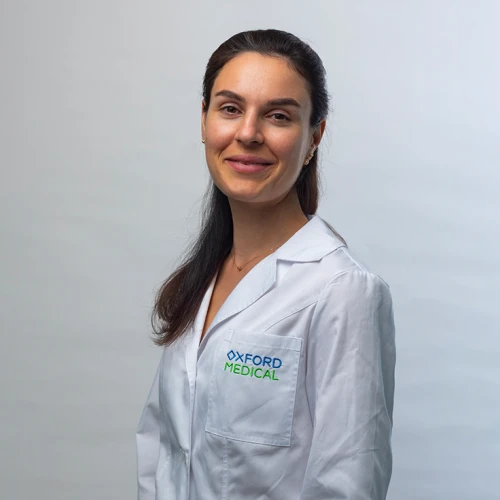
 4.94
4.94  8+
8+ 
Gastroenterologist, family doctor of the II category
 8+ Years of experience
 Consultation 1100
 m. Irpin vul. University, 2/1, building 3
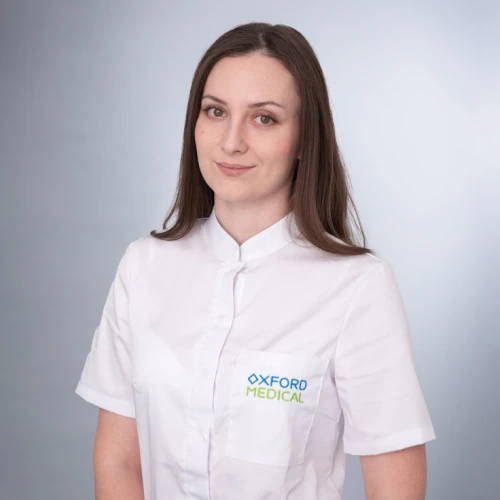 4.72 5+
 Therapist, Ultrasound Diagnostics Specialist
5+ Years of experience Consultation 1100
Kyiv, Yevgen Malanyuk Street, 101 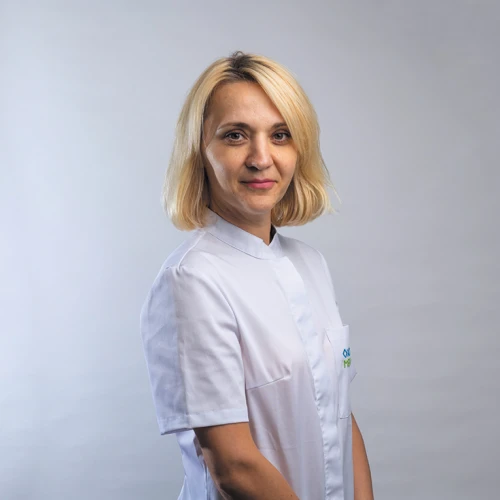 5 10+
5 10+ Physician, endocrinologist
10+ Years of experience Consultation 1100
Kyiv, Knyaziv Ostrozkyh St., 46/2  4.57 18+
 Therapist. Head of the therapeutic department of the inpatient clinic
18+ Years of experience Consultation 1989
Kyiv, st. Bereznyakivska, 30b Reviews
Марія 16.03.2026
Я щиро вдячна долі за те, що колись потрапила саме до Любові Миколаївни Нікуровської. Це той рідкісний випадок, коли лікар — не просто спеціаліст, а людина, якій по-справжньому довіряєш. Вона дуже уважна, чуйна і завжди відчуваєш, що їй не байдуже, як ти себе почуваєш. Пані Любов завжди не лише слухає, а й чує мене, а також запитує про ті симптоми, які я забуваю озвучити або вважаю несуттєвими (а вони виявляються важливими). Вона пояснює все спокійно й зрозуміло, підтримує і знаходить саме ті рішення, які справді працюють для мене. Вона постійно розвивається, слідкує за новими дослідженнями й підбирає сучасне, продумане лікування. Після кожного прийому виходжу з відчуттям спокою і впевненості, що я в надійних руках. Я дуже ціную її професіоналізм, теплоту і людяність. Люблю свою лікарку і щиро рекомендую усім, хто шукає найкращого лікаря-терапевта у Києві.

Дмитро 05.01.2026
Для мене сімейний лікар — це той, до кого можна прийти без страху і зайвого напруження. Саме таке враження залишила Вікторія Олексіївна. Спілкування просте й відкрите, без формальностей. Отримав чіткі відповіді на свої запитання і зрозумів, як діяти далі. Дуже комфортний лікар для постійного спостереження.
Current information

19 March 2026
Who is a hematologist and what does he treat?
18 March 2026
How to properly give an injection in the buttock: doctor’s advice
12 March 2026
Which Doctor Treats the Liver

09 March 2026
Causes of shortness of breath: what to do when it is hard to breathe
Sign up
 in the clinic
  online

 Hello!
Let's take care
about your health:
Sign up via call center 
