

 Adults Adults Adults Adults Adults Adults Adults Adults Adults
  Children Children Children Children


 Hotline:
 Adults Adults Adults Adults Adults Adults Adults Adults Adults Children Children Children Children


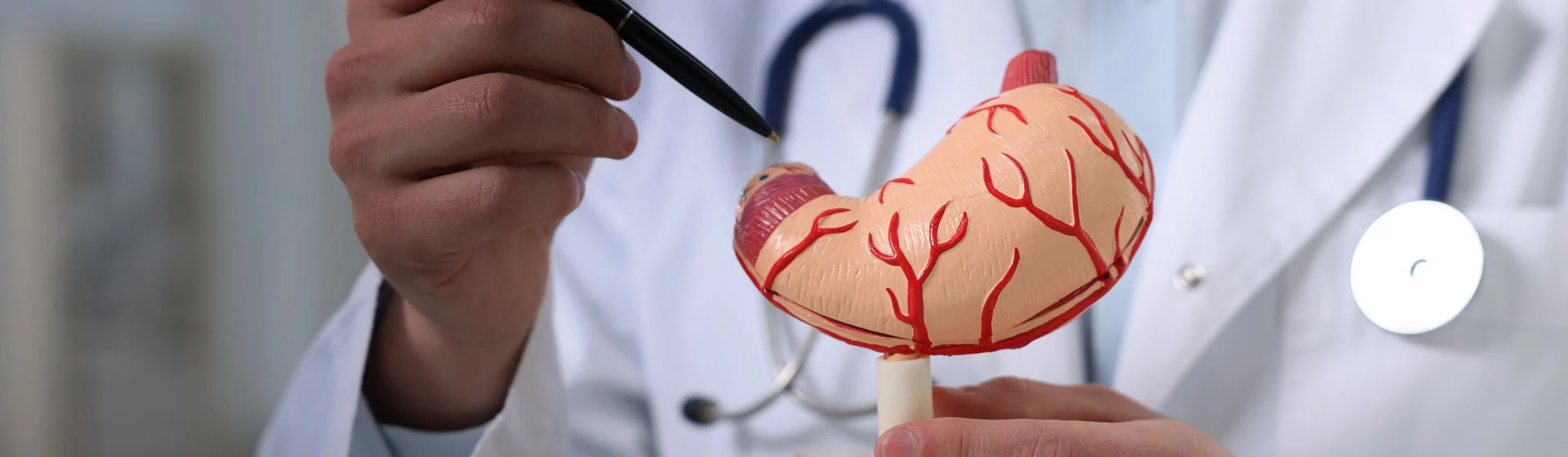
Treatment of gallstone
disease
Gallstone Disease Treatment
Gallstone disease (calculous cholecystitis, GSD) is a condition that leads to the formation of stones in the bile ducts and gallbladder due to impaired metabolism of bilirubin and/or cholesterol in the body. Among the common causes of GSD development are lipid metabolism disorders, an improper diet and eating pattern, liver dysfunction, gallbladder inflammation, bile stasis, and a sedentary and unhealthy lifestyle.
Causes of Gallstones
The causes leading to the disease can generally be divided into modifiable and non-modifiable factors. Modifiable (changeable) factors include:
-
Diet (foods high in cholesterol and refined carbohydrates provoke an increase in cholesterol levels in bile);
-
Obesity (triggers increased excretion and synthesis of cholesterol);
-
Low-calorie diets (in 25% of cases lead to the production of sludge-like bile and the formation of stones);
-
Fasting;
-
Intestinal diseases;
-
Dependence on geographic location;
-
Use of estrogens and fibrates (increases the lithogenic properties of bile);
-
Pregnancy.
Non-modifiable causes of calculous cholecystitis include:
-
Gender (women suffer from the disease 3–4 times more often than men);
-
Age (after the age of 60–70, cholesterol levels in bile increase rapidly, and the probability of stone formation reaches 30–40%);
-
Heredity (if relatives had GSD, the risk of development and progression of the disease is 2–4 times higher, indicating the presence of a human lithogenic gene);
-
Ethnic characteristics.
Symptoms of Gallstones in the Gallbladder and Ducts
In most cases, the disease develops asymptomatically. Probable symptoms, if they do appear, include complaints of discomfort and pain in the right upper abdomen, associated with dietary errors and accompanied by a bitter taste in the mouth in the morning.
In 60–80% of potential patients, gallstones do not cause significant discomfort. When present, clinical symptoms may be absent for many years.
Diagnostics of Gallstones
Timely consultation with a gastroenterologist is often delayed by the fact that, after the first biliary colic, the risk of recurrence within the next year is only about 50%.
In the early stages, the disease can be diagnosed by detecting bile heterogeneity during an echographic examination (ultrasound).
To establish an accurate diagnosis, the patient may also be prescribed:
-
Blood and urine tests;
-
X-ray with contrast of the bile ducts;
-
Computed tomography (CT);
-
Magnetic resonance cholangiopancreatography (MRCP);
-
Endoscopic retrograde cholangiography (ERCP).
Methods of Gallstone Disease Treatment
Depending on the disease stage, the patient may be prescribed:
-
Diet;
-
Gradual weight loss;
-
Medication therapy.
The goals of treating clinically evident gallstone disease include:
-
Relief of biliary colic;
-
Prevention of complications in asymptomatic GSD cases;
-
Timely surgical intervention and removal of the gallbladder and stones in case of recurrent biliary colic;
-
Prevention of biliary colic recurrence after the first attack.
To relieve a biliary colic attack, antispasmodic medications may be used. If the patient's condition does not improve within 5 hours, hospitalization in a surgical department is required.
Advantages of Gallstone Treatment at "Oxford Medical" Clinic
Diagnosis and treatment of gallstone disease, pancreatitis, biliary dyskinesia, and other gastrointestinal disorders at "Oxford Medical Kyiv" clinic are carried out under the supervision of experienced certified specialists using the latest equipment.
Competent prevention and timely consultation with a specialist will allow you to avoid many unpleasant consequences and, in most cases, eliminate the need for surgery.
To book an appointment, call our contact center or leave a request on the website.


Advantages of the Department of Gastroenterology at Oxford Medical

The latest diagnostic technologies that allow you to obtain the most accurate results;
Appointment of a course of modern drug therapy using high-quality drugs;
Performing minimally invasive or endoscopic surgery using advanced technology (if necessary);
Individual selection of a comprehensive treatment course for each patient.

Our doctors

 5
5  22+
22+ 
 22+ Years of experience
  Kyiv, Hlybochytska St., 40x
 4.93 22+ 22+ Years of experience Kyiv, 9 Ivana Kramskoho Street
  4.94 8+ 8+ Years of experience m. Irpin vul. University, 2/1, building 3
  4.91 13+ 13+ Years of experience Kyiv, Mykhayla Hryshka St., 1



 in the clinic
  online

 Hello!
Let's take care
about your health:

