

 Adults Adults Adults Adults Adults Adults Adults Adults Adults
  Children Children Children Children


 Hotline:
 Adults Adults Adults Adults Adults Adults Adults Adults Adults Children Children Children Children


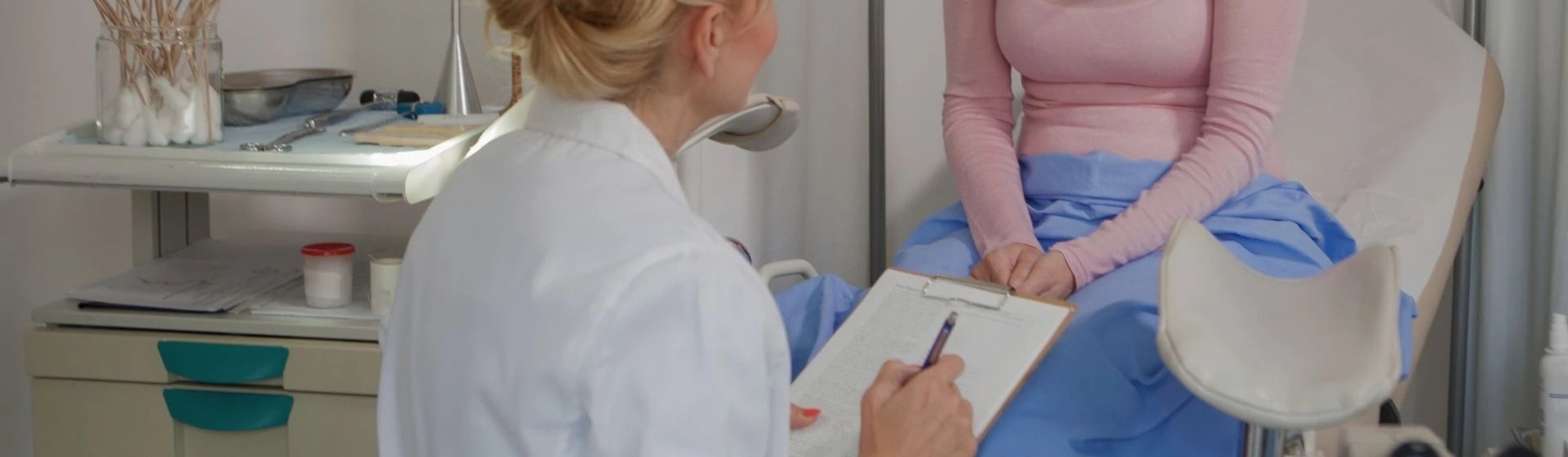
Treatment of Bartholinitis
Bartholinitis refers to the inflammation of the Bartholin's glands — a pair of glands located on either side of the vaginal opening, between the labia minora and labia majora. The Bartholin's glands are round in shape, with a diameter not exceeding 1 cm, and the length of their ducts, through which moisturizing secretion is released, ranges from 1.5 to 2.5 cm.
The condition develops as a result of infection. Most often, the infection first enters the ducts, causing inflammation, and then ascends to affect the glands. At an early stage, the disease responds well to conservative treatment. If left untreated, the ducts may become blocked, leading to abscess formation. In such cases, surgical treatment is required.
Primary diagnosis of the condition is carried out by a gynecologist based on external signs, since immediate initiation of therapy is critically important.
At Oxford Medical, you can receive a consultation and examination by an experienced gynecologist, undergo tests, and receive the necessary medical care. Our specialists use both conservative and surgical methods to treat bartholinitis.
Symptoms of Bartholinitis
Symptoms may vary depending on the form and stage of the disease. The most common signs of acute inflammation of the Bartholin's glands include:
-
Swelling and redness of one or both labia;
-
Palpable lump;
-
Pain and vulvar itching;
-
Increased pain during intercourse, walking, or sitting;
-
Enlarged inguinal lymph nodes;
-
Fever and general weakness.
In chronic bartholinitis, patients may experience alternating periods of exacerbation, characterized by acute inflammation symptoms, and remission, during which symptoms either disappear or are very mild.
Signs of chronic bartholinitis may include:
-
Swelling of the labia;
-
Moderate pain;
-
Discomfort after intercourse;
-
Symptom flare-ups after menstruation, hypothermia, or overheating.
The above symptoms can also be present in other gynecological conditions. To make an accurate diagnosis, a gynecologist's examination, laboratory tests, and other diagnostic procedures are necessary.
Types and Stages of Bartholinitis
Depending on the stage of the inflammatory process, several types of bartholinitis are distinguished.
The disease begins with acute canaliculitis — inflammation of the Bartholin's gland duct. This is accompanied by secretion stagnation, which gradually leads to infection spreading to the gland itself.
Next, inflammatory exudate and pus accumulate in the glandular tissue. This condition is called a false abscess, since there is still a possibility for secretions to drain.
When the duct becomes blocked, a true abscess develops, and a cyst may form. These are the most severe forms of bartholinitis and require surgical treatment.
If treatment is not started in a timely manner or proves ineffective, bartholinitis can become chronic, characterized by sluggish inflammation with periods of exacerbation and remission.
Diagnosis of Bartholin's Gland Inflammation
Bartholinitis has clear visual signs such as redness and swelling of the glands and their ducts. An experienced gynecologist can diagnose the disease during a physical examination with palpation. However, to identify the infectious agent and select effective treatment, laboratory tests are required: bacteriological culture of urogenital secretions, PCR tests to detect sexually transmitted infections (including gonorrhea in women), as well as blood and urine tests. If a cyst is present, a biopsy may be prescribed, followed by cytological and histological analysis of the biopsy sample.
At Oxford Medical, you can undergo a gynecological examination and complete all tests in a single visit. The clinic has its own laboratory, allowing for fast diagnostics and high accuracy of results.
Treatment of Bartholinitis
In its early stages, acute bartholinitis can be treated with medication. Patients are prescribed local treatments (ointments, sitz baths, etc.) and, if indicated, anti-inflammatory and pain-relieving drugs. Antibiotic therapy is prescribed only in cases of bacterial etiology confirmed by test results.
Surgical treatment is indicated for true abscesses or cysts of the Bartholin's gland.
In the first case, the abscess is incised, and the cavity is cleaned of purulent exudate and necrotic tissues. An artificial duct is then formed to allow secretion drainage. If this method is ineffective, the gland is removed.
A cyst is a complication of purulent bartholinitis. With prolonged disease, the tissues around the abscess become dense, forming a capsule. Treatment involves either cyst incision or gland removal.
Advantages of Bartholinitis Treatment at Oxford Medical
At Oxford Medical, surgical treatment of bartholinitis is performed using modern minimally invasive techniques. A surgical laser is also used, which allows for highly precise procedures, minimizes damage to healthy tissues, and shortens the duration of hospitalization and recovery.
Advantages of bartholinitis treatment at Oxford Medical include:
-
Surgeries performed by gynecologist-surgeons with over 20 years of experience;
-
Use of minimally invasive techniques;
-
Use of expert-level equipment;
-
Comfortable inpatient conditions with single and double rooms.
Cost of Bartholinitis Treatment at Oxford Medical
The cost of bartholinitis treatment may vary significantly. It depends on the stage and form of the disease. If the patient has acute bartholinitis, early-stage treatment is conservative, whereas complications may require surgery. In the first case, the cost of therapy is lower. The price of surgical intervention increases according to the complexity of the procedure. You can check the treatment prices at Oxford Medical [here]. For a more accurate estimate, the gynecologist will advise you during the consultation. Schedule an appointment at a time convenient for you.


Advantages of gynecology at Oxford Medical in Kyiv

Experienced gynecologists. Doctors with extensive clinical experience who regularly complete professional development courses.
Modern diagnostics. Ultrasound, colposcopy, hysteroscopy, laboratory tests.
Comprehensive approach to women’s health. Treatment tailored to age and comorbid conditions.
Surgical capabilities. From minimally invasive to open surgeries performed in a modern surgical facility.
Convenient clinic locations. Departments are available throughout Kyiv — on both the right and left banks.
Comfort at every stage. Attentive care, modern facilities, and a welcoming atmosphere.

Our doctors

 4.97
4.97  20+
20+ 
 20+ Years of experience
  Kyiv, 9 Ivana Kramskoho Street
 4.98 26+ 26+ Years of experience Kyiv, Hlybochytska St., 40x
  4.94 27+ 27+ Years of experience Kyiv, Mykhayla Hryshka St., 1
  4.82 29+ 29+ Years of experience Kyiv, st. Bereznyakivska, 30b





 in the clinic
  online

 Hello!
Let's take care
about your health:

