Sign up via call center
Department
Removable dentures

Partial denture

The loss of part of the teeth does not mean that you have to put up with discomfort while eating, changes in speech, or insecurity in your smile. Modern prosthetic dentistry offers solutions that help restore chewing function and stabilize the bite while preserving healthy abutment teeth. One of such options is clasp prosthetics, which combines structural reliability and an adequate level of comfort.

What Is a Clasp Denture

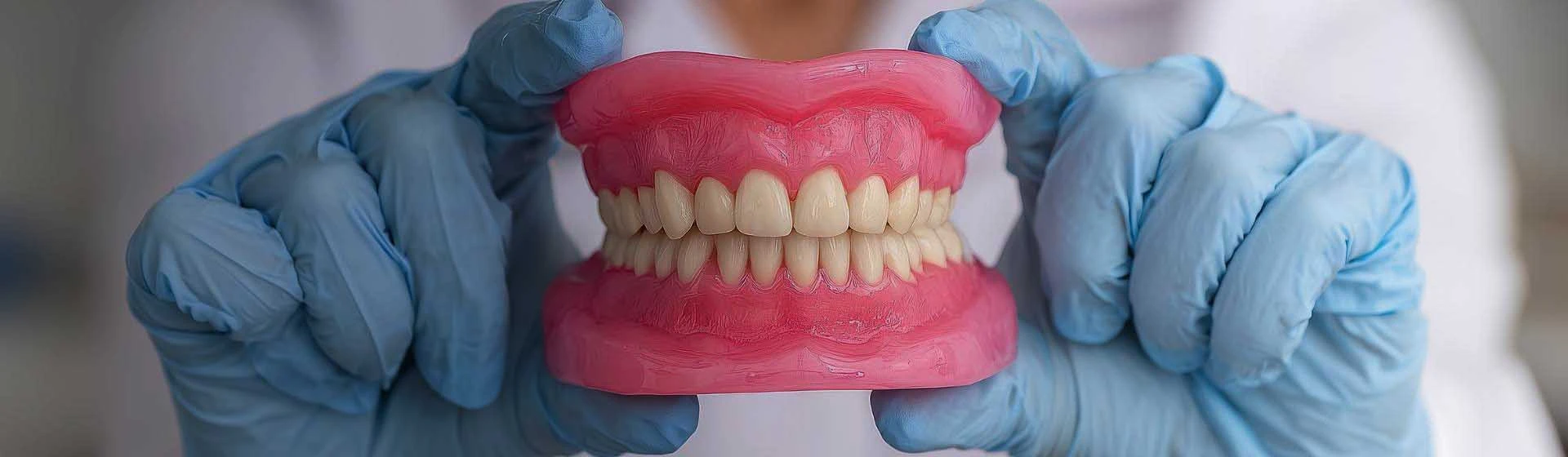
A clasp denture is a type of partial denture with a metal arch (framework) that connects the elements of the structure into a single system. Artificial teeth and a base that imitates the gum in the area of the defect are fixed to the framework. Due to the arch-shaped base, the load during chewing is distributed more evenly: partly to the abutment teeth and partly to the mucous membrane, which, with proper fabrication of the structure, reduces the risk of overloading individual areas.

Clasp constructions can be a good option when it is necessary to restore several teeth in different segments of the jaw or when it is important to preserve the abutment teeth and ensure the stability of the denture. Such constructions are often chosen as an alternative to other removable solutions when better fixation and less bulkiness are required.

Types of Clasp Dentures

In modern dentistry, different types of clasp dentures are used. The choice depends on the clinical situation and the patient’s expectations regarding comfort and aesthetics.

Clasp dentures differ in the method of attachment and the material of the framework. This is what affects ease of use, aesthetics, and stability during chewing.

By Type of Attachment:

  • with clasps — retained with the help of metal hooks that embrace the abutment teeth;

  • with attachments — fixed through locking elements that provide less visible retention and a tighter fit;

  • with telescopic crowns — use double crowns: one is placed on the tooth, the other is integrated into the denture and ensures stability when putting it on.

By Framework Material:

  • metal — made of dental alloys that provide strength and a long service life;

  • metal-free (acetal) — may be used in cases of increased aesthetic requirements or sensitivity to metals.

The choice of construction is always individual and depends on the clinical situation, the condition of the abutment teeth, and the patient’s wishes.

Types of Clasp Dentures

How a Clasp Denture Is Attached

Fixation depends on the selected type of construction and the condition of the abutment teeth. In most cases, attachment is carried out in one of the following ways:

Clasp Retention

Clasps are metal hooks that embrace the abutment tooth in a specific area and provide mechanical retention of the denture. This option may be appropriate when the abutment teeth have sufficient crown height and a stable periodontium (gum tissues). At the same time, clasps may be visible if they are located in the smile zone.

Attachment Retention (Attachments)

An attachment is a locking mechanism that consists of two parts: one is integrated into a crown or another prosthetic construction on the abutment tooth, and the other is integrated into the denture. This provides a more aesthetic fixation without visible hooks and often creates a feeling of a “tighter fit.” This option usually requires prior preparation of the abutment teeth.

Telescopic Retention

The telescopic system involves double crowns: the inner crown is fixed on the abutment tooth, and the outer crown is integrated into the denture. When putting on the denture, the crowns fit into each other, ensuring stability. This option requires very precise fabrication and is suitable only when the abutment teeth are sufficiently strong. As a result, the denture usually holds securely, and the chewing load is distributed more evenly.

Combined Options

In some clinical situations, it is advisable to combine different elements of fixation and support in order to obtain a stable and predictable result.

Features of Clasp Prosthetics

Clasp prosthetics differs from other partial constructions in the principle of support and the way the load is transmitted. Its main feature is the presence of a metal framework that unites all elements of the denture into a single system and ensures stability during chewing and speaking.

Main clinical features:

  • Even load distribution. The construction is supported not only by the mucous membrane but also by the abutment teeth. This allows for a more physiological distribution of chewing pressure and reduces overload on individual areas.

  • Less bulky base. Due to the arch-shaped framework, the denture occupies less volume in the oral cavity than many plate-type solutions. This usually facilitates adaptation and has less impact on speech.

  • Dependence on the condition of abutment teeth. For reliable fixation of the denture, the abutment teeth must be sufficiently strong, without pronounced mobility and significant destruction. In some cases, they are prepared before prosthetics — for example, through treatment, reinforcement, or fabrication of crowns for the installation of attachments or a telescopic system.

That is why it is important to undergo an examination and diagnostics before prosthetics: the doctor will assess the condition of the oral cavity and advise which construction will be convenient specifically in your case. Based on the consultation results, the specialist may recommend a clasp denture or alternative options, including nylon dentures or other removable or fixed prosthetic constructions.

Clasp Dentures: Indications for Placement

Clasp prosthetics of teeth is usually recommended when it is necessary
to quickly restore missing teeth without surgical interventions.

The most common indications:

several teeth are missing, and chewing function needs to be restored;

there is a defect in the lateral sections (missing chewing teeth on one or both sides);

it is necessary to distribute the chewing load more evenly in order not to overload individual abutment teeth;

other restoration options (for example, implantation) are temporarily unsuitable or need to be postponed.

List of diseases

Contraindications to Clasp Prosthetics

Like any orthopedic treatment, clasp constructions have limitations. Contraindications may be absolute or temporary (when treatment is required first, and only then — prosthetics).

Common contraindications include:

  • active inflammatory processes in the oral cavity (acute gingivitis, periodontitis in the exacerbation stage) until the condition is stabilized;

  • untreated caries and its complications that may affect the abutment teeth;

  • pronounced mobility of abutment teeth, significant crown defects without the possibility of reliable restoration;

  • bite disorders that require prior correction if they may lead to overload of the denture or abutment teeth;

  • a low level of oral hygiene and lack of readiness for regular care and follow-up examinations, as this increases the risk of gum inflammation and complications.

The final decision is always made after diagnostics: the doctor assesses the condition of the teeth, gums, and bite and determines whether the construction will be effective and predictable specifically in your case.

Clasp Dentures: Stages of Fabrication

For clasp dentures to be comfortable, stable, and long-lasting, the treatment is carried out in stages.

Consultation and Examination

The doctor examines the teeth and gums, evaluates the bite and the condition of the abutment teeth, and, if necessary, prescribes an X-ray. This is required to determine whether this type of prosthetics is suitable and how to properly plan the construction.

Preparation of Teeth and Gums

Before placing the denture, it is important to eliminate caries, gum inflammation, and other problems. Healthy abutment teeth are the key to the stability of the future construction.

Planning of the Denture

The doctor determines which teeth will support the denture, which type of fixation is most appropriate, and how to distribute the load. At this stage, the patient’s aesthetic wishes are also taken into account.

Taking Impressions or Digital Scanning

Accurate data on the shape of the jaw and teeth are obtained. This is necessary for manufacturing an individual construction in the laboratory so that it fits tightly and does not cause irritation.

Fitting of the Construction

The doctor checks the accuracy of the framework fit to the teeth and gums, the correctness of jaw closure, and the overall comfort for the patient. This makes it possible to ensure that the denture distributes the load evenly, does not create pressure, and will be comfortable for daily use. If necessary, adjustments are made to achieve maximum accuracy of fit.

How Long a Clasp Denture Lasts

The service life depends on the materials, type of fixation, condition of the abutment teeth, bite, and care. On average, clasp constructions can last for many years, but it is important to understand that this is not a “once and for all” solution. Over time, the tissues of the denture-bearing area and the condition of the gums may change, and there may be a need to adjust the fit, replace certain fixation elements, or reline the denture.

To extend the service life of the construction, it is important to:

  • clean the denture daily and maintain oral hygiene;

  • remove the denture for thorough cleaning according to the doctor’s recommendations;

  • attend follow-up examinations to perform timely adjustments and prevent gum inflammation;

  • not ignore discomfort, rubbing, or changes in fixation — this is a reason to seek an examination.

Regular care and scheduled visits to the dentist help maintain the stability of the construction and comfort during use.

Private Clinic Services: How Much Does a Clasp Denture Cost at Oxford Medical

The cost of clasp dentures depends on the type of construction (clasp-retained, attachment-retained, telescopic), the scope of preparatory procedures, and other individual factors. You can предварительно view the prices for medical services in Kyiv at the dentistry department of Oxford Medical here. The doctor will provide detailed information about prosthetic options and their cost during the initial consultation. 

You can undergo a consultation and prosthetic treatment in a district of the city that is convenient for you: the dentistry department in Pozniaky, Pechersk, Obolon, as well as in the city center on Pavlivska Street. You can book an appointment at a time convenient for you by phone or through the online booking form on the website.

Frequently asked questions

What Is the Difference Between a Clasp Denture and a Conventional One?

A clasp denture has a rigid metal arch framework, so it usually provides more stable retention and is more compact than a conventional plate denture. The chewing load is distributed more evenly. It is often easier to get used to, and speech becomes clear more quickly. The doctor determines which option is suitable for you after an examination.

Which Dentures Are Better: Nylon or Clasp?

There is no single “best” option for everyone. Nylon dentures are softer and more flexible; they are often chosen for comfort and aesthetics, but sometimes they hold their shape less well and may provide less stable fixation. Clasp dentures are usually more reliable due to the framework and support on the teeth. It is important to consider the condition of the gums and abutment teeth. The optimal choice is made after diagnostics.

How Can I Learn to Remove a Clasp Denture?

The easiest way to learn is together with the doctor immediately after placement. It is usually removed with both hands, slowly, without jerking, applying equal force on both sides. During the first days, practice in front of a mirror, and then do it over a soft surface to avoid damaging the construction. Over time, the movement will become automatic. If it is painful or the denture “sticks,” adjustment is needed.

How Often Should a Clasp Denture Be Removed?

In most cases, it is removed daily for hygiene: to thoroughly clean the denture itself, as well as the teeth and gums. Whether to remove it at night depends on the doctor’s recommendations and your comfort: sometimes it can be left in place, sometimes it is better to remove it so that the mucosa can rest. After placement, a follow-up visit is usually scheduled. If there is rubbing or inflammation, consult a dentist.

How Should a Clasp Denture Be Stored?

Store the denture in a clean container with a lid so that it does not become contaminated or deformed. Avoid hot water and direct sunlight — high temperatures can damage the material. If the doctor recommended moist storage, use cool water or a special solution. Wash the container regularly. Do not wrap the denture in a tissue, as it can be accidentally thrown away.

Why Does a Clasp Denture Fall Out on the Lower Jaw?

On the lower jaw, a denture may fall out due to changes in fit, wear of fixation elements, bite problems, or insufficient support on the teeth. Active tongue movements and anatomical features of the lower jaw can also interfere. Do not try to “bend” the elements yourself. This issue is often resolved by adjustment, relining, or replacement of fixation elements by a dentist.

( Rating: 4.75 , Votes: 48 )
Dentistry
Our services
Consultations
Dentist consultation
1.00 ₴
Add Added
Services
One-piece, partially removable prosthesis/arch (clasp) with locking attachment (with installation)
20000.00 ₴
Sign up by the call center
Partial removable prosthesis with cast metal base and bent wire retainers (with installation)
17000.00 ₴
Sign up by the call center
Partial removable prosthesis with plastic base (with installation)
10800.00 ₴
Sign up by the call center
Partial removable prosthesis without the cost of an abutment (with installation on 2 implants on ball attachments)
35000.00 ₴
Sign up by the call center
Partial removable prosthesis without abutment cost (with installation on 4 implants on a bar)
45000.00 ₴
Sign up by the call center

Advantages of Clasp Prosthetics at the Private Clinic «Oxford Medical»

Doctors with many years of experience. Prosthetics are performed by dentists who work with various types of orthopedic constructions.

Comprehensive diagnostics. The condition of the abutment teeth, gums, and bite is assessed, which makes it possible to choose the optimal method of dental arch restoration for each patient.

Individual fabrication of the denture. Each construction is created taking into account the anatomical features of the patient’s jaw, which ensures an accurate fit, stability during chewing, and comfort.

Certified materials and modern technologies. Materials used for fabrication meet the requirements of strength, biocompatibility, and durability.

Reviews
Ганна 22.01.2026
Дуже вдячні лікарю, адміністрації, всій команді. Приїхали у Київ на операцію з Запоріжжя. У день операції у клініці було відсутнє живлення через масовані обстріли на енергосистему. Колектив з порозумінням сприйняв нашу ситуацію, приїзд за важких умов, професійно організували оперування в іншій кліниці. Ви команда професіоналів! Дякуємо!
Star Star Star Star Star
Катерина 15.01.2026
Віталіна Павлівна дуже уважно поставилася до моєї ситуації. Працює дуже акуратно, не було жодного відчуття страху. Після лікування нарешті зник дискомфорт, за що їй щиро вдячна.
Star Star Star Star Star
Current information
All Articles
Sign up via call center
in the clinic
online
This site is protected by reCAPTCHA technology, and the Google Privacy Policy and Terms of Service apply.
Hello!
Let's take care
about your health:
Sign up via call center

We use cookies and other technologies to remember your preferences and find out exactly how you use and interact with the site.

By using our site, you also agree to the terms of the "User Agreement" and "Regulation on the processing and protection of personal data". By clicking "I AGREE", you consent to the processing of your data.