


malocclusions of varying severity;
Passive self-ligation allows the archwire to work without constant tightening. As a result, the intervals between orthodontic appointments can be longer.

 Adults Adults Adults Adults Adults Adults Adults Adults Adults
  Children Children Children Children


 Hotline:
 Adults Adults Adults Adults Adults Adults Adults Adults Adults Children Children Children Children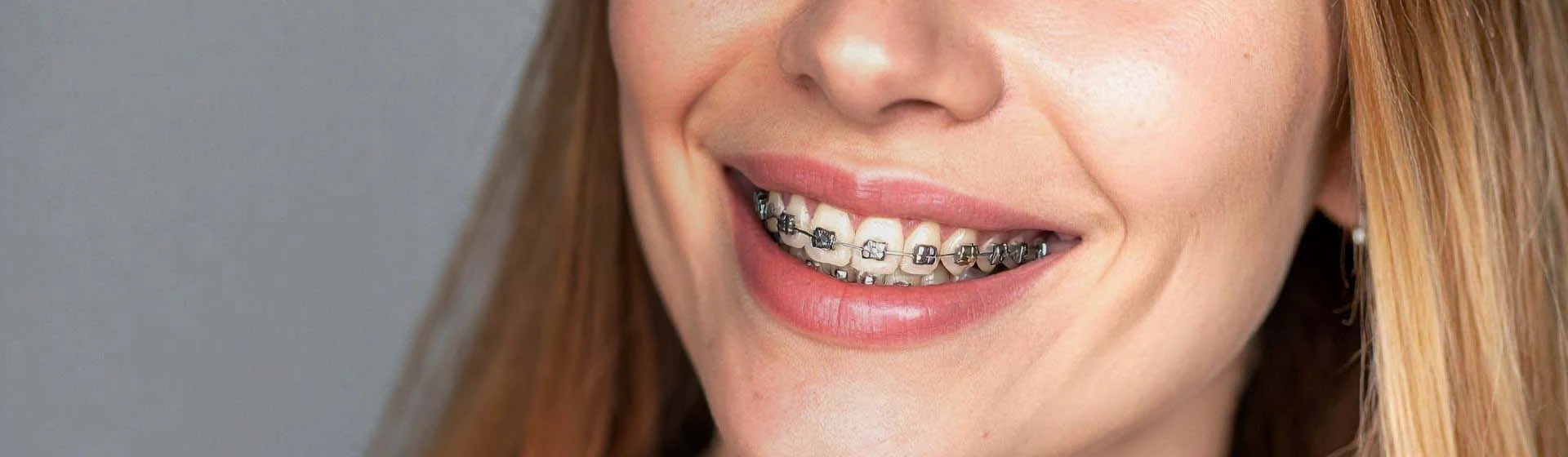
Damon braces are a modern American-made self-ligating system for orthodontic treatment that provides efficiency and increased comfort during bite correction.
Their distinctive feature is passive self-ligation: instead of elastic ligatures, the archwire is fixed with special clips built into each bracket. Because the archwire is not rigidly fixed, it does not need to be tightened frequently, and adjustment visits can be less frequent.
The Damon range includes both metal and ceramic models of braces, so an optimal option can be selected for each patient, taking into account anatomical features and aesthetic preferences.
Make an appointment with an orthodontist at Oxford Medical to learn more about Damon braces and receive individual recommendations.
The main difference between self-ligating and traditional braces lies in the way the archwire is fixed.
In traditional systems, the archwire is held in place with ligatures — small elastics or metal elements that press the archwire tightly against the bracket. It is the ligatures that need to be replaced more frequently, so adjustment visits are scheduled regularly, usually every 3–4 weeks.
In Damon self-ligating braces, ligatures are not used. The archwire is fixed with special clips integrated into each bracket. This retention mechanism does not require constant tightening, so the intervals between check-up appointments can be longer.
Due to the absence of elastics, Damon braces have a neater appearance and are easier to clean. The slight mobility of the archwire in the clip helps reduce the feeling of tension during the adaptation period after adjustments. This does not mean a complete absence of discomfort, but patients usually tolerate arch changes more easily than with traditional ligature systems.
Thus, the main difference is not in the speed of treatment but in the mechanism of archwire fixation and the level of comfort during wear and care.
Damon braces have a number of features that make treatment more comfortable. They combine a modern design, neat appearance and convenience in everyday care.
Passive self-ligation allows the archwire to work without constant tightening. As a result, the intervals between orthodontic appointments can be longer.
The clips hold the archwire without rigid fixation, so changes in the system occur more gently. This helps patients tolerate adjustments more easily and shortens the adaptation period.
Damon braces are smaller in size compared with many traditional models. Thanks to this, they look tidier and cause less discomfort while speaking or chewing.
Since the system does not use elastic ligatures, less plaque accumulates on the surface of the braces. This makes daily care easier and reduces the risk of gum inflammation or caries during treatment.
The Damon line includes metal, combined and ceramic models. This makes it possible to choose a system that meets both clinical indications and aesthetic requirements.
Damon braces are suitable for most patients who require orthodontic treatment. The system makes it possible
to effectively align the teeth and correct the bite in a wide range of clinical cases. The doctor assesses the condition of the teeth and bite during the consultation and determines whether
this system will be optimal for you.
Indications for the placement of the Damon brace system:


malocclusions of varying severity;
crowding or tight positioning of the teeth;
the presence of gaps between the teeth;
uneven position of the teeth within the arch.

Temporary contraindications to the placement of Damon braces include untreated caries, inflammatory gum conditions, acute lesions of the oral mucosa, insufficient oral hygiene and cases requiring preliminary surgical correction. After these conditions are resolved, the doctor can start orthodontic treatment.
The Damon line includes several brace models that differ in material, design and level of aesthetics.
Metal Damon Q braces are one of the best-known and most frequently used models in the line.
Their distinctive features:
Damon Clear is a ceramic model made from a transparent polycrystalline material that harmoniously blends with the colour of the enamel.
Advantages of this model:
In practice, two systems are often combined: Damon Clear on the upper jaw and metal Damon braces on the lower jaw — this is convenient and cost-effective. In this way, the price of Damon self-ligating braces is lower than when placing ceramic systems on both jaws.
Damon 3 have a combined structure: part of the bracket is ceramic, and the clip is made of metal.
This design:
Damon 3MX is a metal model made from a hypoallergenic material, which makes it a good option for patients with increased sensitivity.
Features:
Initial consultation with an orthodontist
The doctor performs an examination, assesses the condition of the teeth and bite, and listens to the patient’s wishes. Then they determine which examinations are needed for an accurate assessment of the bite and to define the correction strategy.
Digital diagnostics and planning
A comprehensive examination is carried out: panoramic X-ray or computed tomography, photo protocol and so on. Based on the diagnostics, the orthodontist draws up a detailed treatment plan. At this stage, the advantages and possible limitations of Damon braces for the patient are determined, and it is decided whether this system is suitable in this particular case.
Preparation of the oral cavity
Before braces are placed, professional hygiene is sometimes performed. If necessary, caries is treated and gum inflammation is eliminated.
Placement of the Damon brace system
The orthodontist bonds the braces to each tooth and then inserts the archwire. The procedure is painless and lasts approximately 60 minutes. After placement, the doctor explains the care instructions and the specifics of adapting to the system.
Follow-up visits
Adjustments are performed less frequently than when using ligature braces, because the Damon system does not require frequent tightening of the archwires. At each visit, the doctor assesses the dynamics, replaces archwires if necessary and adjusts the treatment plan.
Completion of treatment and retention period
After the desired result is achieved, the braces are removed and retainers — special trays or fixed wires — are placed to help keep the teeth in their new position. This is a mandatory stage for maintaining the outcome.
After braces are placed, it is important to pay more attention to oral hygiene, since food debris accumulates more easily around the clips and archwire. It is recommended to brush your teeth twice a day using an orthodontic toothbrush and additional interdental brushes to clean hard-to-reach areas. A mouthwash or irrigator can be useful to maintain cleanliness between the elements of the appliance.
Diet also requires minor adjustments. It is advisable to avoid very hard and sticky foods that can damage the braces and to cut hard vegetables and fruits into smaller pieces. Regular check-ups and professional hygiene help maintain the health of the teeth and gums throughout the treatment period and ensure a better final result.
Our clinic offers several variants of the system, so the prices of Damon braces may differ depending on which construction the patient chooses — metal or more aesthetic ceramic.
Current prices for Damon braces are available on our website. You can review them and choose the optimal option for yourself.
If you need more detailed information or an exact cost of Damon braces, make an appointment with an orthodontist. The doctor will explain what the price of Damon braces depends on and which stages are included in the treatment.
If you are looking for where to place Damon braces in Kyiv, the price at Oxford Medical clinic may pleasantly surprise you. We adhere to a policy of reasonable pricing and offer a bonus programme to our regular patients
Damon braces work on the principle of passive self-ligation: the archwire is fixed not with elastic ligatures but with special clips in each bracket. This allows the archwire to work more smoothly and makes adjustment visits less frequent.
The duration of treatment depends on the complexity of the bite, but on average it ranges from 12 to 24 months. The exact term is determined by the orthodontist after diagnostics and treatment planning.
The cost depends on the model of the system and the complexity of the treatment. As a rule, metal Damon braces are less expensive than higher-aesthetic options such as sapphire Damon braces. The overall price of Damon treatment is also influenced by whether braces are placed on one jaw or on both jaws. The exact cost of Damon braces will be provided by the doctor after the examination and the preparation of an individual treatment plan. If you want to get Damon braces, make an appointment at Oxford Medical.


Orthodontists with extensive experience working with the Damon system provide precise and predictable treatment results.
Comprehensive digital diagnostics makes it possible to plan the treatment accurately and ensure a predictable outcome.
All Damon models are available at the clinic, which allows an individual system to be selected for any clinical case.
A convenient schedule and modern clinic facilities make treatment comfortable even with a busy daily routine.


 5
5  7+
7+  7+ Years of experience
  Kyiv, Pavlivska St., 26/41
 4.82 9+ 9+ Years of experience Kyiv, Andriy Verkhoglyad St., 14B
  4.95 14+ 14+ Years of experience Kyiv, Pavlivska St., 26/41
  4.93 11+ 11+ Years of experience


 in the clinic
  online
  Hello!


