


complete loss of teeth and the desire to get a comfortable fixed prosthesis;
A temporary prosthesis is placed quickly after the implants are installed, once their stability allows. This allows for a quick return to normal activities.

 Adults Adults Adults Adults Adults Adults Adults Adults Adults
  Children Children Children Children


 Hotline:
 Adults Adults Adults Adults Adults Adults Adults Adults Adults Children Children Children Children
All-on-4 dental implantation is a modern technique that allows for the restoration of a full set of teeth using just four implants. It is an effective solution for patients with complete tooth loss on one or both jaws.
The placement of a fixed denture on four implants ensures the restoration of functionality, a natural appearance, and chewing comfort.
At Oxford Medical, All-on-4 implantation is performed using modern protocols. Computer tomography, 3D modeling, and surgical guides are used for precise planning. The combination of digital diagnostics and high-quality implant systems ensures reliable and long-lasting results.
If you want to restore your teeth and regain comfort and a beautiful smile, schedule a consultation with Oxford Medical dentists in Kyiv.
All-on-4 technology involves the placement of four implants that support a fixed prosthesis. Two implants are placed in the anterior jaw, and two in the posterior jaw. This configuration allows for reliable fixation and avoids additional surgical procedures.
Key features of All-on-4 technology:
Using only four implants to restore the dentition;
Even distribution of chewing load;
Possibility Use in cases of moderate bone atrophy;
fixation of a temporary structure after implantation, when implant stability allows.
The ability to quickly install a prosthesis makes All-on-4 one of the most convenient methods for complete dental restoration for patients seeking a functional and aesthetic result without complex and lengthy treatment.
The "All-on-four" technique is suitable for patients
who need to completely restore the dentition on one or both jaws.
It is most often chosen by those who have long-term tooth loss, inconvenience
with removable dentures or insufficient bone volume for classical
implantation.
The main indications are:


complete loss of teeth and the desire to get a comfortable fixed prosthesis;
inability to use removable dentures due to pain, rubbing, or poor fixation;
low bone height or density, which makes it difficult to place a large number of implants;
chronic inflammatory processes or tooth destruction that cannot be restored.

Absolute contraindications include uncontrolled systemic diseases, severe bleeding disorders, acute infections, allergies to anesthetics, and active cancer.
Relative contraindications include decompensated diabetes mellitus, severe bruxism, and exacerbation of chronic diseases.
The doctor will individually assess the patient's condition and determine whether the All-on-4 method is suitable for them.
A temporary prosthesis is placed quickly after the implants are installed, once their stability allows. This allows for a quick return to normal activities.
The design provides stable support, allowing the patient to chew and speak fully without discomfort.
In many cases, bone grafting or sinus lifts are not necessary, significantly simplifying treatment and reducing recovery time.
The prosthesis is tailored to the patient's anatomical features, facial shape, and preferences, resulting in a harmonious and natural appearance.
The prosthesis is permanent, does not cause chafing, is securely fixed, and does not create a foreign body sensation, unlike removable structures.
With proper care and regular checkups, implants provide a long lifespan and stable results.

The preparatory stage plays a crucial role in achieving the desired outcome. It begins with a consultation, during which the doctor evaluates the patient's anatomical features, mucosal condition, and bite. Next, diagnostics are performed, allowing for precise treatment planning.
The preparatory process includes:

computed tomography to assess the volume and density of bone tissue;
intraoral 3D scanning to obtain an accurate digital model of the oral cavity;
digital planning – creation of a 3D model of the jaw and the future prosthesis;
production of a custom surgical template that helps to accurately place implants;
oral cavity sanitation, if necessary: gum treatment, elimination of inflammation, professional hygiene;
selection of prosthetic materials and determination of the aesthetics of the future smile.
 All stages
In modern implantology, two main approaches to tooth restoration are used. Two-stage implantation involves first removing the teeth, after which the tissues are given time to fully heal. Only after a few months, when the bone is fully restored, is the installation of implants and subsequent prosthetics performed.
Another option is one-stage implantation, in which tooth removal and implant installation are performed during one surgical intervention. This approach is possible provided that there is sufficient volume and quality of bone tissue, which allows achieving primary stability of the implants.
In the All-on-4 technique, in most clinical cases, the one-stage approach is used. During the operation, the doctor removes the teeth that cannot be restored and immediately installs four implants at optimal angles. Due to this, the combined procedure reduces the number of surgical interventions, shortens the treatment period and makes it possible to fix a temporary prosthesis in a short time - provided that the implants are sufficiently stable.
The surgical stage of All-on-4 dental restoration involves several sequential steps and is as comfortable as possible for the patient. All major procedures are performed in a single visit, followed by follow-up examinations and installation of the restorations.
How the process works:
Preparation and anesthesia. The doctor administers anesthesia or sedation, depending on the patient's preference.
This stage is combined with implantation, which reduces treatment time and the number of interventions.
two in the frontal area and two in the lateral areas to create maximum stability.
Necessary for the fabrication of a temporary prosthesis.
The temporary structure is fixed shortly after the operation, when the initial stability of the implants allows it. The permanent prosthesis is installed after the implants have taken root - after 5-6 months.
The price of All-on-4 implants may vary depending on the type of implant, the chosen prosthesis, and other individual factors. You can preview the cost here.
You can learn more about the features of All-on-4 technology, the price, and other issues during your initial consultation with your doctor.
If you're considering the modern All-on-4 fixed prosthesis option and would like a personalized treatment plan, schedule a consultation with Oxford Medical. Your doctor will select the optimal All-on-4 implant solution for you, which is less expensive than restoring your teeth with individual implants.
Schedule an appointment online for a time that's convenient for you or call our contact center.


Accomplished doctors. They regularly deal with complex problems and know how to find the best medical solution for their individual needs.
Modern implant systems. Proven implants with high success rates of engraftment and stable long-term fixation are used.
Precise digital planning. Computed tomography and 3D modeling ensure predicted implant placement and a safe surgical phase.
Comfort during treatment. There is a possibility of implantation under sedation, which reduces anxiety and ensures the most peaceful course of the operation.

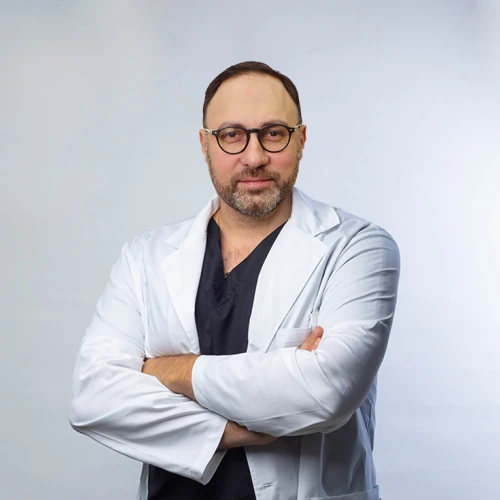
 4.96
4.96  16+
16+  16+ Years of experience
  Kyiv, Pavlivska St., 26/41
 5 6+ 6+ Years of experience
  4.86 12+
  5 7+ 7+ Years of experience Kyiv, Pavlivska St., 26/41



 in the clinic
  online
  Hello!


