


(6-10 times less than during the regular spiral computed tomography). The effective dose of the average image is commensurate with a three-hour flight on the airplane.
Sign up via call center 
 Adults Adults Adults Adults Adults Adults Adults Adults Adults
  Children Children Children Children
Department
Adults Outpatient department
Adults Outpatient department
Inpatient department
Adults Inpatient department
Aesthetic medicine
Adults Aesthetic medicine
Dentistry
Adults Dentistry
Plastic surgery
Adults Plastic surgery
Diagnostics
Adults Diagnostics
Analyzes
Adults Analyzes
Outbound services
Adults Outbound services
Children Outpatient department
Children Outpatient department
Dentistry
Children Dentistry
Diagnostics
Children Diagnostics

Kyiv


 Hotline:
 Request a call:


Department
Adults Outpatient department
Adults Outpatient department
Inpatient department
Adults Inpatient department
Aesthetic medicine
Adults Aesthetic medicine
Dentistry
Adults Dentistry
Plastic surgery
Adults Plastic surgery
Diagnostics
Adults Diagnostics
Analyzes
Adults Analyzes
Outbound services
Adults Outbound services
Children Outpatient department
Children Outpatient department
Dentistry
Children Dentistry
Diagnostics
Children Diagnostics
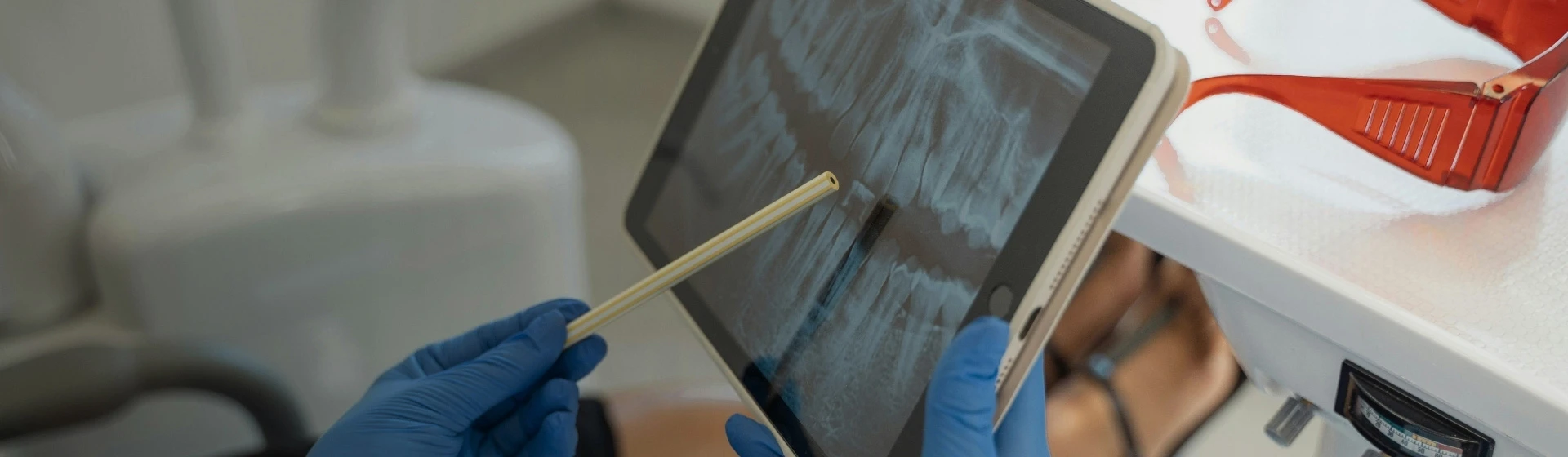
Computed tomography
The mandible/maxilla CT scan
The mandible/maxilla CT scan is the procedure, which became the integral part of any modern dentistry. It is performed to see the anatomic features of the dental structure, dental roots and root canals, to determine the condition of the bone tissue of the jaw. The CT scan is used during the gums treatment, planning of the operation, dental implantation. The results of dental CT scan are used in therapeutic, surgical, orthopedic, orthodontic treatment and in pediatric dentistry.
During the performance of CT scan, the principle that X-rays differently pass through the organism structures (muscles, bones, cavities) is used. The ray passes through the patient’s body and is detected by the special detector. Thus, the series of images, based on which the computer builds 3D model, is made – the computed tomography. The scanning procedure is absolutely painless and does not cause any unpleasant feelings.
The result of the digital examination is kept on file in the clinic’s database and patient’s disc. These data will be needed for further treatment and can be useful for other specialists. For example, the CT image of maxillary sinuses may be useful during the otolaryngologist’s examination.
The CT scan has a huge advantage in comparison to the classic X-ray examination. Because the doctor obtains a large three-dimensional image, but not a two-dimensional as during the X-ray imaging. The X-ray image is static, while CT three-dimensional model may be turned at any angle to see the minutest details. The computed tomogram does not have any distortion and errors. The much less radiation exposure, which allows performing CT scan even for children, is an additional benefit for a patient.
Ct scan allows:
- checking teeth for hidden tooth decay;
- detecting non-erupted teeth;
- finding neoplasms;
- specifying the injuries, caused by traumas;
- controlling the quality of filling, implant;
- visualizing the inflammatory processes;
- assessing the degree of resorption (destruction) of the jawbone;
- determining all the features of the bone to match the best implant;
- finding the anomalies of development of teeth and jaw;
- modelling the results of implantation, so that the patients see the result, which they will obtain.
The CT scan allows examining different areas: from one tooth to the full examination of the jaw, thanks to which the doctor obtains an exhaustive information about the problem, and the patient – exactly the treatment, which is needed.
Vatech CT scanner, used in the Dentistry Department of Oxford Medical Kyiv allows creating precise 3D models of the jaw without the slightest discrepancies and errors.
The advantages of dental CT scanner in Oxford Medical Kyiv:
The minimal radiation exposure
The quick timing of scanning
The procedure lasts up to 20 seconds.
The scanning is performed in the upright position
No special preparation to the examination is required.
The high quality
of the obtained image, which gives many diagnostic opportunities.
Dentistry
Dental cleaning | Dental hygiene
Show more 
Our services
Consultations

Dentist consultation
1.00 ₴
Add Added 
Services
CT scan of one jaw (without description)
850.00 ₴
Sign up by the call center
Description of CT scan of one jaw
500.00 ₴
Sign up by the call center
CT scan of both jaws (without description)
1000.00 ₴
Sign up by the call center
Description of CT scan of both jaws
650.00 ₴
Sign up by the call center
CT scan of one segment (without description)
550.00 ₴
Sign up by the call center
Questions and answers:
CT scan of a tooth: how is it done?
The patient is placed in the machine, the head is fixed. The machine rotates around the head, taking a series of images. The result is a 3D computed tomography of the teeth.
Can I have a CT scan with braces?
Yes, but the presence of metal structures can cause distortion in the image. In many cases, jaw images are still informative.
Can I have a CT scan with dental implants?
Yes, computed tomography of the upper and lower jaw allows you to assess the condition of implants and surrounding tissues, although implants can create small artifacts.
Our doctors
 4.86
4.86  12+
12+  5 22+
5 22+ Dentist-therapist, endodontist of the 1st category
 22+ Years of experience
 Consultation 1
 Kyiv, Pavlivska St., 26/41
 4.91 16+
 Dentist-therapist of the 2nd category
16+ Years of experience Consultation 1
Kyiv, Pavlivska St., 26/41  4.96 16+
 Dental surgeon-implantologist, maxillofacial surgeon of the I st category
16+ Years of experience Consultation 1100
Kyiv, Pavlivska St., 26/41 
Reviews
Ганна 22.01.2026
Дуже вдячні лікарю, адміністрації, всій команді. Приїхали у Київ на операцію з Запоріжжя. У день операції у клініці було відсутнє живлення через масовані обстріли на енергосистему. Колектив з порозумінням сприйняв нашу ситуацію, приїзд за важких умов, професійно організували оперування в іншій кліниці. Ви команда професіоналів! Дякуємо!

Катерина 15.01.2026
Віталіна Павлівна дуже уважно поставилася до моєї ситуації. Працює дуже акуратно, не було жодного відчуття страху. Після лікування нарешті зник дискомфорт, за що їй щиро вдячна.
Current information


23 December 2025
What causes jaw pain if your teeth are healthy? What your regular dentist won't tell...
07 July 2025
When Should You Get Root Canals Treated?
03 April 2025
Innovative zoom 4 teeth whitening system from philips
15 August 2023
Modern technologies in dentistry: overview and application
Sign up
 in the clinic
  online

 Hello!
Let's take care
about your health:
Sign up via call center 
