


malocclusion, where one jaw protrudes further than the other
The duration of wearing lingual braces is determined individually and depends on the degree of curvature of the dentition. On average, it ranges from 6 months to 2.5 years.

 Adults Adults Adults Adults Adults Adults Adults Adults Adults
  Children Children Children Children


 Hotline:
 Adults Adults Adults Adults Adults Adults Adults Adults Adults Children Children Children Children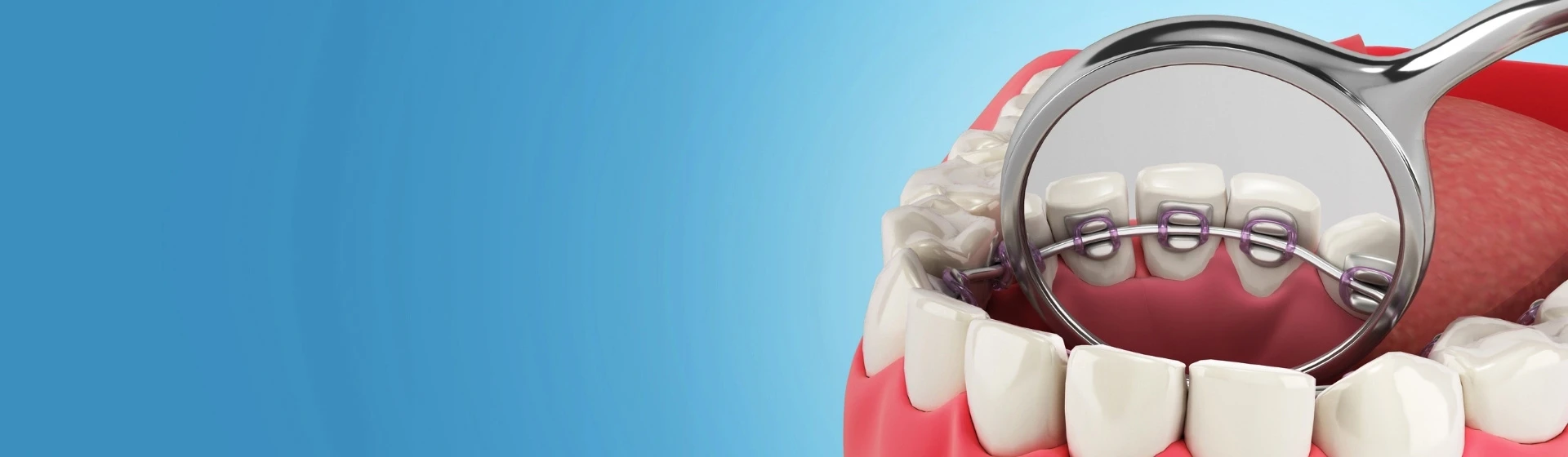
Lingual braces – are a unique technology that allows you to align your teeth and correct your bite without anyone noticing. Unlike conventional braces, they are installed on the inside of your teeth, not the outside. As a result, you can smile confidently, speak in front of a large audience, or eat with friends – no one will even know you are wearing braces.
The main difference between lingual braces and regular braces is that they are attached to different sides of the teeth. Regular braces are placed in front, while lingual braces are placed inside. The second difference is the size. Lingual braces are slightly wider and higher, which is due to the design. They also put a little more pressure on the jaw and are only placed on children after 12 years of age.
When deciding whether to install lingual braces or not, you also need to consider all their pros and cons.
The advantages of these systems are:
aesthetics – the structure is not visible to others;
high efficiency – a small distance between the brackets ensures a greater effect of the archwire;
no contact of the brackets with the gums, lips and cheeks – eliminates tissue damage and pain;
lower risk of gum inflammation and caries development than when using external braces;
possibility of correcting a wide range of orthodontic disorders;
easier daily care than ceramic and sapphire braces, which are also chosen for aesthetic purposes;
possibility of engaging in contact sports and playing wind musical instruments.
Despite the large number of advantages, lingual braces also have their disadvantages, which should also be taken into account.
The most obvious disadvantages are:
contact of the braces with the tongue, which requires getting used to;
possibility of a slight effect on diction (not in all patients);
need for careful oral hygiene;
longer wearing time - an average of 1.5-2.5 years;
higher price than standard ones.
Lingual braces are suitable for most patients. However, only a doctor can accurately
determine which orthodontic system will be most effective after an examination.
Patients themselves often choose lingual braces instead of conventional braces for aesthetic reasons.
Indications for the installation of lingual braces are:


malocclusion, where one jaw protrudes further than the other
Disturbance in the position of individual teeth
sports and the risk of facial injuries
thin tooth enamel

Lingual braces are not recommended for children under 12 years of age, patients with a narrow jaw, low tooth crowns, crowded teeth, severe bruxism, and temporomandibular joint diseases.
Before choosing a braces system, you should consult with an orthodontist. The doctor will conduct an examination and, if necessary, prescribe tests: X-ray, computed tomography or orthopantomography - a panoramic image. These examinations allow you to determine the exact number and location of teeth, including those that have not yet erupted, which is especially important when correcting a bite in children and adolescents.
After assessing all the individual characteristics of the patient, the doctor selects the appropriate therapy. If the choice is made for lingual braces, preparation for their installation begins.
It includes:
treatment of caries and fillings;
elimination of all inflammatory diseases in the oral cavity;
professional teeth cleaning and removal of tartar;
taking impressions of both jaws to prepare braces;
making an individual brace system.
Before installing braces, it is important to cure all diseases of the teeth and gums. This reduces the risk of further development of diseases, which increases due to the complexity of hygiene.
Installation of lingual braces - this is a more complex and time-consuming procedure than the attachment of external systems. It requires the orthodontist to have special skills and a painstaking approach to work. Therefore, internal braces are installed only in high-tech dental clinics, including "Oxford Medical".
Lingual braces are made according to an individual model. Each clasp is designed for a specific tooth and repeats its shape. When installing the system, the orthodontist sequentially strengthens all elements using a thin layer of dental glue. After that, he installs the archwire. Depending on the selected system - classic, ligature or self-ligating - It is attached using locks that are installed on each bracket, or special rubber bands (ligatures).
The entire installation process takes from 1.5 to 3 hours, depending on the complexity of the work.
If braces are placed on both jaws, the procedure is often divided into two stages: first, they are installed on one jaw, and after a few weeks or a month, on the other.
Correction of the dentition and bite with lingual braces is carried out in the same way as with external systems. They provide gradual movement of the teeth in the desired direction. This is achieved through regular correction of the system and tightening of the arch. You need to visit the dentist once every 1-2 months - the frequency of appointments is determined individually.
The duration of wearing braces depends on the degree of tooth curvature and bite disorders. With the incorrect location of several teeth or large gaps between them, 6-12 months is enough, while with significant disorders, correction takes up to 2.5 years.
After installing braces, you need to be very careful about your oral hygiene. Food particles can remain on them, which increases the risk of developing caries and inflammatory diseases.
You should brush your teeth at least twice a day, and rinse them well after each meal. A special toothbrush, toothpaste, brushes and other devices for braces are used for cleaning. It is very important to clean the space between the braces and under the arch. How to do this correctly, of course, is explained by a dentist.
It is also recommended to follow a certain diet, in particular to exclude or limit as much as possible the amount of:
hard foods that need to be bitten off or chewed (firm apples, nuts, etc.);
fibrous foods, particles of which can get stuck between the teeth (meat, boiled corn, some fruits, etc.);
viscous foods;
very hot and cold foods and drinks.
«Oxford Medical» – is a network of private dental clinics equipped with the latest expert-class equipment. Thanks to this and the involvement of a team of experienced specialists, patients are provided with a full range of dental services.
To learn more about lingual braces and receive individual recommendations, make an appointment for a preliminary consultation with an orthodontist - call our contact center or fill out the form on the website.


The duration of wearing lingual braces is determined individually and depends on the degree of curvature of the dentition. On average, it ranges from 6 months to 2.5 years.
You can see the cost of installing lingual braces at Oxford Medical on the website in the "Prices" tab.
Patients with lingual braces are recommended to follow the same diet as after the installation of conventional systems. In the first weeks, when discomfort is felt from the beginning of tooth movement, it is advised to eat soft or crushed food: soups, purees, etc. In the future, it is worth limiting too hard foods (nuts, hard apples, etc.), viscous products that stick to the teeth, saturated with bright dyes, as well as very hot or cold.


Comprehensive diagnostics – the clinic has an orthopantomograph, digital X-ray and premium-class computed tomography scanner
Predicted result – thanks to computer modeling, you can estimate in advance the effectiveness of wearing braces
Aesthetics of the orthodontic system
Convenient location of clinics in central areas of Kyiv

 5
5  7+
7+  7+ Years of experience
  Kyiv, Pavlivska St., 26/41
 4.82 9+ 9+ Years of experience Kyiv, Andriy Verkhoglyad St., 14B
  4.95 14+ 14+ Years of experience Kyiv, Pavlivska St., 26/41
  4.93 11+ 11+ Years of experience


 in the clinic
  online
  Hello!


