Sign up via call center
Department
Installation of braces in private dentistry Oxford Medical Kyiv

Installation of Braces

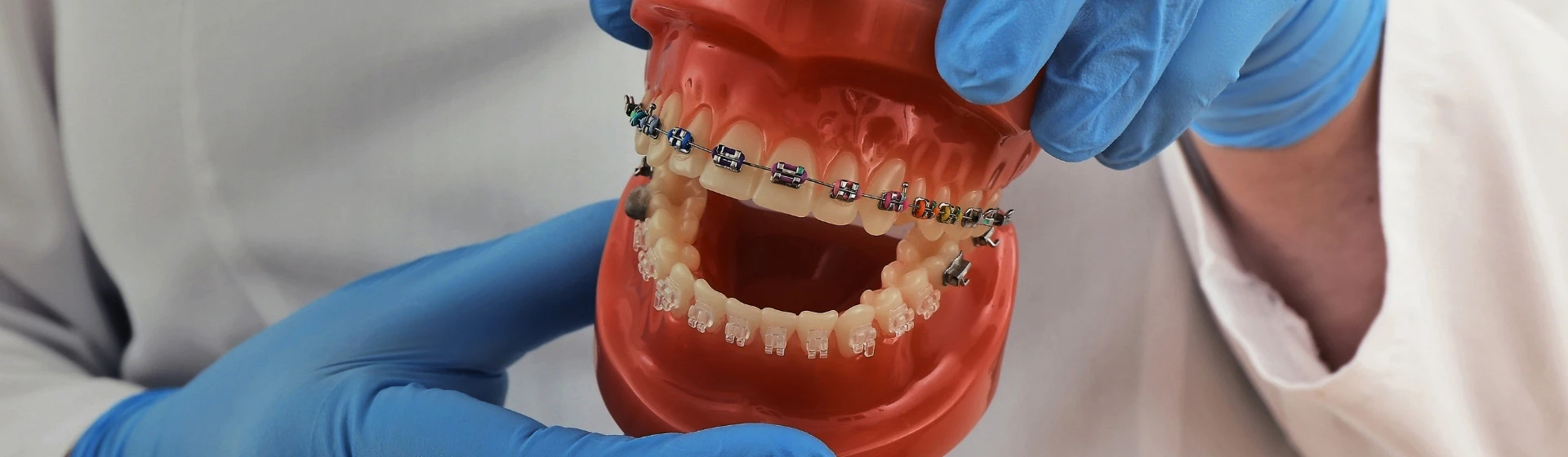
Braces are an orthodontic system that is placed on the teeth to gradually align the dental arch and correct the bite. During treatment, the teeth move in a predetermined direction and assume their proper position.

Irregular tooth alignment affects more than just appearance. When the bite is incorrect, chewing forces are distributed unevenly, which can lead to discomfort, enamel wear, and tension in the jaw area. These issues are the main indications for orthodontic treatment with braces.

How Braces Work

A dental brace system consists of brackets and an orthodontic archwire that connects them. During placement, the orthodontist bonds the brackets to the teeth according to the treatment plan, then threads the archwire through them and secures it.

The archwire applies continuous pressure, under which the teeth gradually move into their correct positions. As a result, the dental arch is aligned and a proper bite is formed.

Throughout orthodontic treatment with braces, regular visits to the orthodontist are required. The doctor adjusts the system, replaces or activates the archwire, and evaluates the progress of tooth movement. This ensures a controlled treatment process and a stable outcome.

Indications for the installation of bracket systems

Braces are used in cases where the position of the teeth
or the bite requires orthodontic correction.

Indications include:

various types of bite disorders;

improper position or inclination of individual teeth;

tooth crowding or excessive gaps between teeth;

changes in the shape of the dental arches or asymmetry of the dental arch.

List of diseases

Types of braces

Depending on the material from which the locks are made, as well as the method of installing the system and fixing the arch, the following types are distinguished:

Depending on the material, from which the they are made

  • metal braces — cheap and reliable systems, which simply and effectively correct dentition. However, they have one disadvantage – unattractive external view, which strikes the eye;
  • porcelain braces — special, barely noticeable, development. The color of braces is selected to match the color of teeth enamel that makes them virtually unnoticeable. It is worth noting that these systems are more cumbersome and their price is higher than of metal braces.
  • sapphire braces — elite braces systems, which are fabricated from specially grown sapphire crystals. They are very firm, virtually unnoticeable (transparent), and are not colored despite whatever you eat.

However, they require practicing proper hygiene. 

In terms of method of their placement

  • vestibular braces — easy to install and maintain, because it is attached to the front surface of teeth. However, it is also their disadvantage — they are visible to the surrounding people while talking or even smiling;
  • lingual braces are attached to the inner surface of teeth; that is why they are absolutely invisible to the surrounding people.  However, such method of fixation requires a certain level of qualification from the orthodontist and is more difficult in daily care.

In terms of arch fixation

  • the regular braces, where the arch is rigidly connected with locks by ligatures, for the movement of which we need to apply much force;
  • the self-ligating braces systems, in which the arch fixation goes without its blocking. As a result, the treatment process speeds up and becomes less uncomfortable for a patient. An example of such systems is Damon braces.

Preparation for Braces Placement

During the initial consultation, the doctor performs a clinical examination and assesses tooth position, bite characteristics, the condition of the gums and oral mucosa, as well as the function of the chewing muscles and temporomandibular joints.

For a detailed analysis of anatomical structures, various radiological and diagnostic imaging methods are used. Depending on the clinical situation, the following may be prescribed:

  • computed tomography (CT);

  • cephalometric radiography (TRG);

  • panoramic radiography (OPG) and other examinations.

Based on the examination results, the doctor develops an individualized treatment plan, determines the type of brace system, the sequence of correction stages, and the estimated duration of treatment. The plan is discussed in detail with the patient before treatment begins, allowing expectations and outcomes to be aligned.

Before braces placement, the following may also be performed if necessary:

  • treatment of caries and other dental diseases;

  • professional oral hygiene;

  • treatment of inflammatory gum conditions;

  • surgical procedures when indicated, including extraction of individual teeth, frenuloplasty of the lips or tongue, exposure of an impacted tooth, and other interventions.

A comprehensive approach to preparation creates optimal conditions for bite correction and ensures effective orthodontic treatment with braces.

Stages of installing braces at the Oxford Medical clinic

Orthodontic treatment at the «Oxford Medical» clinic is carried out in stages, allowing for safe correction of tooth position, achievement of predictable results, and long-term stability.

Treatment stage

After diagnostic evaluation and oral preparation, an individualized orthodontic appliance is fabricated. This is followed by the placement of braces. Depending on the clinical situation, braces may be bonded to the upper teeth, lower teeth, or both arches simultaneously.

After placement, the patient remains under regular supervision by the orthodontist. Scheduled follow-up visits are required to adjust the system and monitor tooth movement. The duration of treatment is individual and averages 12–15 months, with visits to the doctor 1–2 times per month.

Retention (Recovery) Stage

After completion of the active treatment, the braces are removed and the retention phase begins. To prevent the teeth from returning to their original position, the patient is prescribed retainers — either fixed or removable, depending on the clinical case.

The duration of the retention period is determined individually and depends on the patient’s age, type of bite, treatment complexity, and the achieved result. In most cases, retention therapy lasts at least as long as the active treatment phase.

Results of braces treatment

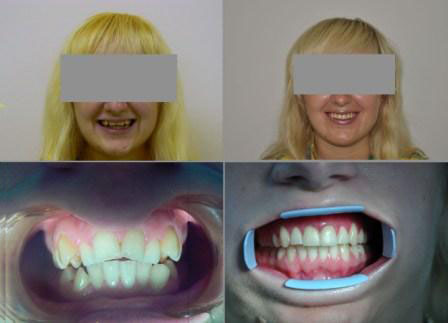
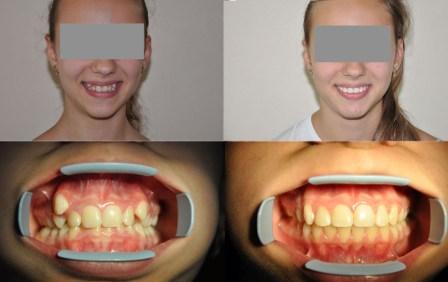
До та після

До та після

До та після

Frequently asked questions

What kind of doctor puts braces?

Braces are installed by an orthodontist, a dentist who specializes in diagnosing and correcting the bite and position of teeth. He or she develops an individual treatment plan, selects the design, and monitors the process of aligning the teeth.

How are braces put on?

First, the doctor conducts an examination and diagnosis, then cleans the teeth, fixes the brackets on them with a special glue and connects them with an archwire. The entire procedure is painless and lasts about 1–2 hours. After installation, the patient receives instructions on care.

Which braces are better to put on?

The choice depends on the clinical situation, aesthetic wishes and budget. Metal ones are the most effective for complex cases, ceramic and sapphire ones are less noticeable. Self-ligating systems are more comfortable, and lingual ones are completely invisible, because they are attached to the inside of the teeth.

How long does it take to get braces?

Installing braces on one jaw takes an average of 1 hour, and on both – up to 2 hours. The procedure is performed in one visit, is completely painless and does not require anesthesia. The duration may vary slightly depending on the system.

Can teeth be treated with braces?

Yes, dental treatment is possible and even recommended. If necessary, fillings, root canals, or professional hygiene can be performed. An orthodontist can temporarily remove part of the structure to access the problem area.

Can braces be placed on one jaw?

Yes, in some cases, the orthodontist may install braces on only one jaw. This is possible if the bite disorder does not require intervention on the opposite jaw. The final decision is made by the doctor after a complete examination.

How long do teeth hurt after braces are installed?

After braces are installed, discomfort or moderate pain usually occurs during the first 1–3 days. This is a normal reaction to the fact that the brace system begins to work on the teeth and creates controlled pressure. Most often, the unpleasant sensations decrease after 5–7 days, as the tissues adapt. The intensity of pain is individual and depends on the sensitivity of the teeth and the complexity of the treatment.

How long do you need to wear braces?

The duration of wearing braces depends on the initial condition of the teeth and bite. On average, treatment lasts from 1 to 2 years. During this time, the teeth gradually move into the correct position, and the jaw adapts to the new closing conditions. The exact terms are determined by the orthodontist after diagnosis and can be adjusted during the treatment process.

Do teeth move apart after braces?

If you do not follow your doctor’s recommendations after removing your braces, your teeth may partially shift. That is why after the active phase of treatment, it is imperative to use retainers. They fix the result and allow the teeth to stabilize in their new position until the bone tissue is completely rebuilt.

Can braces be placed on crowns?

In most cases, braces can be installed on teeth with crowns. For this, special fixation methods are used that do not damage the orthopedic structures. It is important that the crowns are securely fixed and match the shape of the tooth. The orthodontist makes the final decision after the examination.

What can't you eat with braces?

With braces, you should avoid very hard, sticky, and viscous foods. Nuts, crackers, caramel, or toffee can damage the brackets or archwire. Also, don’t bite off large pieces of hard food — it’s better to cut fruits and vegetables. This helps to avoid breakage and unnecessary adjustments.

Why do you need elastic bands for braces?

Orthodontic elastics are used to correct the bite and coordinate the work of the upper and lower jaws. They create an additional direction of force that helps to properly close the teeth. In many cases, it is the elastics that play a key role in the final stages of treatment.

How often do you need to change the elastic bands on your braces?

Retainers usually need to be changed daily or several times a day, depending on your orthodontist's recommendations. Over time, they lose elasticity and become less effective. Regular replacement directly affects the speed of treatment and the stability of the final result.

( Rating: 0 , Votes: 0 )
Dentistry
Our services
Consultations
Dentist consultation
1.00 ₴
Add Added
Orthodontics services
Metal bracket system for one jaw with installation, class II
20900.00 ₴
Sign up by the call center
Orthodontic treatment with ClearCorrect Flex or Cristaline aligners (1 mouthpiece)
4850.00 ₴
Sign up by the call center
Orthodontic treatment with Invisalign aligners, individual set for 2 jaws, II degree of complexity "Full/teen"
255500.00 ₴
Sign up by the call center
Orthodontic treatment with aligners "Invisalign" individual set for 2 jaws, I degree of complexity "Light up to 14 drops"
182500.00 ₴
Sign up by the call center
Orthodontic treatment with aligners "Angel Aligner" individual set for 2 jaws, III degree of complexity PRO
240000.00 ₴
Sign up by the call center

Our doctors

Okopna Yulia Alekseevna
5
rating (18)
6+
Years of experience
Dentist orthodontist
6+ Years of experience
Consultation 1
Kyiv, Pavlivska St., 26/41
Make an appointment
Komerista Yulia Volodymyrivna - pediatric dentist at the private medical clinic Oxford Medical Kyiv
4.82
rating (28)
9+
Years of experience
Dentist-orthodontist
9+ Years of experience
Consultation 1
Kyiv, Andriy Verkhoglyad St., 14B
Make an appointment
Alekseev Volodymyr Oleksandrovych - dentist of the private clinic Oxford Medical Kyiv
4.95
rating (19)
12+
Years of experience
Dentist-orthodontist, gnathologist
12+ Years of experience
Consultation 1880
Kyiv, Pavlivska St., 26/41
Kyiv, Andriy Verkhoglyad St., 14B
Make an appointment
Zrazhevska Alina Yuriyivna
4.93
rating (15)
11+
Years of experience
Orthodontist, First Category, PhD in Medical Sciences
11+ Years of experience
Consultation 1
Make an appointment
All doctors
Reviews
Ганна 22.01.2026
Дуже вдячні лікарю, адміністрації, всій команді. Приїхали у Київ на операцію з Запоріжжя. У день операції у клініці було відсутнє живлення через масовані обстріли на енергосистему. Колектив з порозумінням сприйняв нашу ситуацію, приїзд за важких умов, професійно організували оперування в іншій кліниці. Ви команда професіоналів! Дякуємо!
Star Star Star Star Star
Катерина 15.01.2026
Віталіна Павлівна дуже уважно поставилася до моєї ситуації. Працює дуже акуратно, не було жодного відчуття страху. Після лікування нарешті зник дискомфорт, за що їй щиро вдячна.
Star Star Star Star Star
Current information
All Articles
Sign up
in the clinic
online
This site is protected by reCAPTCHA technology, and the Google Privacy Policy and Terms of Service apply.
Hello!
Let's take care
about your health:
Sign up via call center

We use cookies and other technologies to remember your preferences and find out exactly how you use and interact with the site.

By using our site, you also agree to the terms of the "User Agreement" and "Regulation on the processing and protection of personal data". By clicking "I AGREE", you consent to the processing of your data.