

 Adults Adults Adults Adults Adults Adults Adults Adults Adults
  Children Children Children Children


 Hotline:
 Adults Adults Adults Adults Adults Adults Adults Adults Adults Children Children Children Children



Treatment of parodontitis
Treatment of parodontitis
Parodontium is the complex of tissues, surrounding a tooth and closely connected morphologically and functionally. This complex includes a gum, bone tissue of the alveolus, periodontium and tissue of a tooth. The gum is an important component part of the parodontium, while the interdental and alveolar gingiva are distinguished. Interdental and alveolar gingivas have a pale pink color under normal conditions and may change through pigment deposition. The brown areas appear against a pale pink color in such cases.
Pyorrhea is the inflammatory disease, which is caused by opportunistic bacteria, living in the oral cavity that leads to loss of tissues, supporting a tooth (periodontal ligament, alveolar bone).
Alveolar Pyorrhea
Contrary to the widespread opinion, the alveolar pyorrhea is encountered very seldom, among less than 10% patients and is not an inflammatory disease. During the alveolar pyorrhea, the teeth are well fixed, they do not have a large number of dental deposits etc.
During the alveolar pyorrhea, the dental neck is exposed without any symptoms of inflammation. Meanwhile, the thickening of alveolar process and its atrophy (reduction in volume) occur.
The sensitivity of dental neck increases to different external stimuli; in addition, the patients complain of feeling itching in the gums. The tooth starts feeling wobbly at the last stage of alveolar pyorrhea, while the dental root is exposed more than a half.
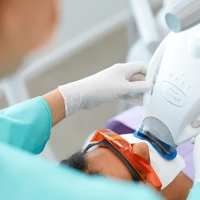
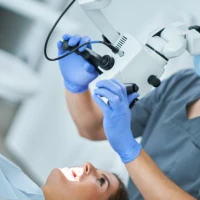
The main purpose of periodontal therapy is the removal of soft and hard supra-gingival and sub-gingivaldental deposits for halting the disease progression. The mechanical scaling and root planing with manual instruments is the most often applied method of cleansing the root surface. In terms of clinical and treatment approach, the mechanical scaling does not provide a desired, biologically compatible cleansing of the root surface. The mechanical instruments – piezo and ultrasonic scalers – were applied for optimization of the scaling and root planing process. A new ultrasonic system Vektor Durr Dental is presented in Oxford Medical clinic.
The horizontal oscillations of the device are converted into vertical with the help of a resonant ring, as the result of which the operating tip executes motions, parallel to the root surface. In addition, the energy of the instrument is transmitted to the root surface through the suspension of hydroxyapatite and water. The suspension is not sprayed as aerosol, but is retained hydrodynamically on the instrument surface. The application of Vectortechnology significantly reduces pain feelings and gives a desired result.
Treatment
Treatment of patients with pyorrhea is performed comprehensively, in 4 phases:
- 1st stage – performance of professional hygiene, treatment of tooth decay and its complications.
- 2nd stage – Vector therapy.
- 3rd stage – surgical treatment (flap surgeries, gingivoplasty and implantation through 3-6 months).
- 4th stage – rational orthopedic treatment.
In Oxford Medical clinic, you will get a necessary consultation and replies to all your troubling questions regarding treatment and prevention of periodontal tissue diseases, using the modern technology and equipment.


Our doctors

 4.92
4.92  5+
5+  5+ Years of experience
  Kyiv, Pavlivska St., 26/41
 5 3+ 3+ Years of experience Kyiv, Andriy Verkhoglyad St., 14B
  4.91 16+ 16+ Years of experience Kyiv, Pavlivska St., 26/41
  4.89 6+ 6+ Years of experience Kyiv, Pavlivska St., 26/41 Kyiv, Andriy Verkhoglyad St., 14B




 in the clinic
  online

 Hello!
Let's take care
about your health:

