

 Adults Adults Adults Adults Adults Adults Adults Adults Adults
  Children Children Children Children


 Hotline:
 Adults Adults Adults Adults Adults Adults Adults Adults Adults Children Children Children Children


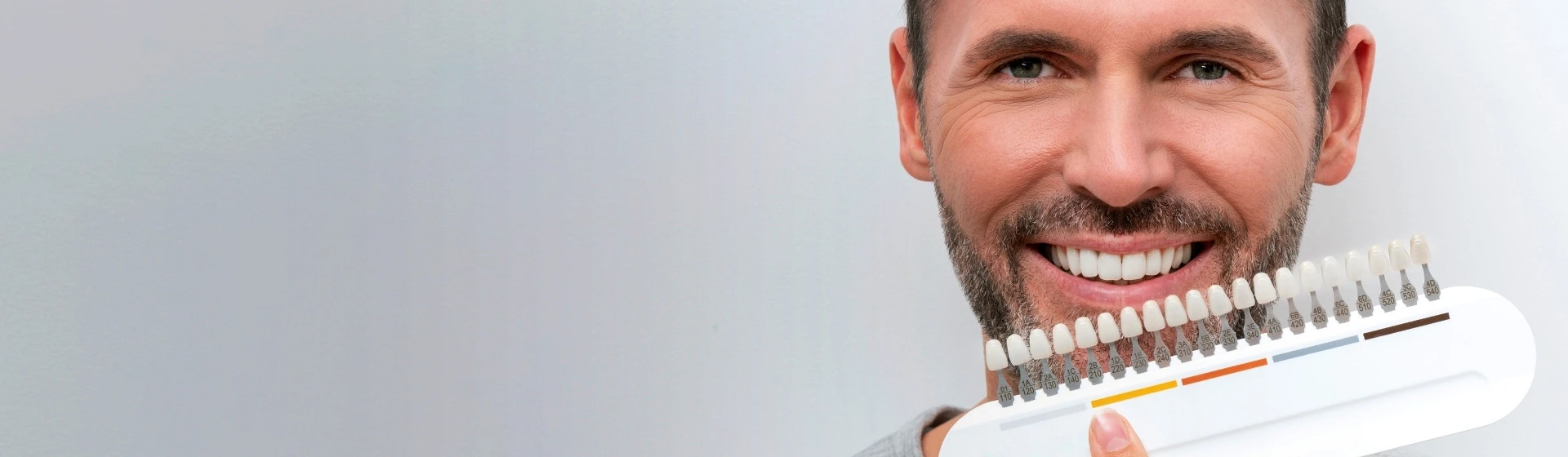
Dental prosthetics with ceramic-metal
Metal-ceramic dental prosthetics in Kiev
Losing a tooth is certainly an unpleasant but solvable problem. Modern methods of prosthetics allow you to restore both one and several removed teeth at once, obtaining a fully functional and aesthetic replacement.
Today, one of the best options is prosthetics using metal-ceramic structures. They are durable and look almost indistinguishable from natural teeth.
What is metal-ceramic prosthetics?
Prosthetics is the restoration of one, several or all teeth at once by installing:
-
crowns on a partially destroyed tooth;
-
crowns on an installed implant;
-
bridge – a structure consisting of 3-4 crowns, the outermost of which are attached to healthy teeth, and the middle ones replace the removed ones;
-
«butterfly» – a removable structure that is fixed to adjacent molars with the help of clamps and replaces the lost tooth;
-
removable denture – designs that allow you to replace all or most of the teeth on one or two jaws.
When one or more teeth are lost, crowns or bridges are usually recommended. They are attached to the remaining teeth or installed implants. These are the options that are meant when we talk about metal-ceramic prosthetics.
Crowns are made from various materials (plastic, metal, zirconium), but today the most popular are metal-ceramic. They are distinguished by high strength, aesthetics and affordable price.
Metal-ceramic crowns got their name due to their structure. They consist of a thin metal frame (0.3-0.5 mm), covered with several layers of ceramics. The first provides full functionality of the tooth, and the second - aesthetic appearance.
What do metal-ceramic crowns look like?
Many patients choose metal-ceramic crowns because of their appearance. When installed on a tooth or implant, they fit perfectly into the dentition and remain invisible to others.
Crowns are made individually for each patient. This allows you to choose not only the necessary shape, but also the shade of the coating. A wide range of colors guarantees maximum similarity with native teeth.
Advantages and disadvantages of metal-ceramic prosthetics
The main advantages of metal-ceramic structures are:
-
the possibility of prosthetics of both anterior and chewing teeth;
-
restoration of natural tooth functionality;
-
high strength;
-
aesthetics;
-
resistance of the coating to food dyes;
-
good biocompatibility;
-
service life of more than 10 years;
-
affordable cost.
The relative disadvantages include the need for pulp removal of the tooth before installing a crown (from any material), as well as the possibility of darkening of the gums at the site of the structure and exposure of the metal base when the tissues are lowered. Given this, for prosthetics of the front teeth, patients sometimes choose zirconium dioxide crowns. They have a white frame and most accurately reproduce the natural color of tooth enamel, but due to the complexity of production, they are distinguished by a higher cost.
Indications for metal-ceramic prosthetics
Crowns or bridges made of metal ceramics are placed in the following cases:
-
severe tooth destruction due to caries or trauma;
-
some anomalies of tooth development that disrupt their functionality or aesthetics;
-
removal of 1 or 2 teeth.
Preparation for prosthetics
Prosthetics – is a multi-stage process that requires preliminary preparation. First of all, diagnostics are carried out. During the consultation, the dentist performs an examination of the oral cavity and, if necessary, prescribes a digital X-ray of the tooth, computed tomography or orthopantomogram (panoramic image of the jaw). These examinations allow you to visualize bone tissue and accurately assess its condition, which is necessary to choose the optimal method of prosthetics.
Next comes the preparation directly for the procedure. It may differ depending on whether the crown will be placed on your own tooth or an implant, or a bridge-like prosthesis.
In the first case, treatment and depulpation of the tooth (removal of the nerve) are performed, as well as, if necessary, the installation of a pin – it is made to order according to an individual mold.
When installing a crown on an artificial root, implantation is first performed. It can be one-step – The implant is placed immediately after tooth extraction, or in a two-stage procedure - the implant is placed after tissue healing (after 3-6 months), and the crown is placed after it has fused with the bone.
Installing a bridge prosthesis requires grinding and pulping of the two outer teeth on which the structure will be fixed.
Stages of metal-ceramic prosthetics
Installing a crown or bridge also requires several visits to the doctor. Typically, the process consists of the following stages:
-
Diagnosis and development of a treatment plan.
-
Treatment, filling and pulp removal of a tooth, or several when installing a “bridge”.
-
Turning the tooth under a crown.
-
Taking impressions to make a post (necessary in case of severe destruction of the crown part of the tooth).
-
Installing the post, taking impressions for the crown, choosing the color of the ceramic.
-
Trying on and fixing the crown or bridge prosthesis.
Features of care for metal-ceramic structures
One of the advantages of metal-ceramics is that it does not require specific care. Dentists recommend following the classic rules of hygiene and dental health care:
-
brush your teeth twice a day;
-
use mouthwash and floss after each meal;
-
eat a balanced diet;
-
consume less sugary and acidic foods and drinks that destroy enamel;
-
quit smoking;
-
have a dental check-up every 6 months;
-
treat caries and other diseases in a timely manner.


Advantages of metal-ceramic prosthetics at Oxford Medical

high professionalism of doctors;
accurate diagnostics on new equipment;
treatment and depulpation of the tooth under a microscope;
production of dentures in our own laboratory;
comfort when visiting the clinic;
loyalty program for regular patients.

Our doctors

 4.93
4.93  18+
18+  4.64 42+
  42+ Years of experience
 5 19+ 19+ Years of experience
  4.73 16+





 in the clinic
  online

 Hello!
Let's take care
about your health:

