Allergy or individual intolerance to drug components
First, the dentist carefully cleans the enamel of plaque residues, polishes it, and dries it to ensure the most effective penetration of minerals into the tissue structure.

 Adults Adults Adults Adults Adults Adults Adults Adults Adults
  Children Children Children Children


 Hotline:
 Adults Adults Adults Adults Adults Adults Adults Adults Adults Children Children Children Children
Teeth sensitivity, the appearance of white spots, reaction to cold or hot, frequent tooth decay - all this may indicate a weakening of tooth enamel. Enamel - is a strong but vulnerable protective layer that is exposed to acids, bacteria and mechanical stress every day. The gradual loss of minerals, or demineralization of enamel, disrupts its protective function, increases the risk of caries and increased tooth sensitivity.
Modern dentistry offers a simple solution - tooth remineralization. This is a method that allows you to saturate the enamel with minerals, restore its structure and stop destruction. It is important to understand that tooth remineralization - is not just a cosmetic procedure, but an effective way to prevent and combat early manifestations of caries.
In dentistry «Oxford Medical» In Kyiv, we perform remineralization according to the latest protocols: painlessly, effectively, with the selection of drugs according to your clinical case.
Make an appointment with a dentist at «Oxford Medical» — we will help keep your teeth healthy, strong and protected.
Teeth remineralization— is a procedure to restore the mineral composition of enamel by applying preparations containing calcium, fluorine, phosphates and other trace elements. Normally, these minerals enter the enamel naturally — with saliva. However, when exposed to an aggressive environment or impaired hygiene, this balance changes, and tooth demineralization occurs — This is the loss of minerals from the enamel, which gradually weakens its protective properties.
As a result of the loss of minerals, the enamel becomes thinner, sensitivity appears, white spots form on the teeth,cracks in the enamel, and resistance to bacteria decreases.
The goal of remineralization is to restore tooth enamel, reduce its permeability and sensitivity, and strengthen protection against caries.
The procedure is recommended in the following cases:
initial signs of caries (white spots without defects);
hypersensitivity of teeth to temperature or acidic stimuli;
prevention of caries in children and adults;
period after removing braces;
recovery after whitening or polishing procedures;
dental enamel hypoplasia or erosion of tooth enamel;
increased abrasion, small cracks on the teeth;
frequent use of sweets, carbonated or acidic foods;
lack of minerals in the diet or a general decrease in the quality of saliva.
After professional hygiene, remineralization also helps strengthen tooth enamel, especially if soft and hard deposits have been removed.
Before remineralization, it is necessary to prepare the surface of the teeth:
carry out professional hygiene — remove plaque and tartar;
polish the enamel;
if necessary, treat caries or inflammatory processes in the oral cavity.
After that, the doctor can immediately proceed to applying the product or recommend a short course of home preparation using pastes or gels.
This increases the effectiveness of tooth enamel coating and improves the penetration of minerals into the tissue structure.
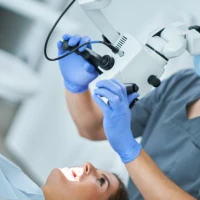
The remineralization procedure is non-invasive, comfortable and completely painless. It is performed in a dental office and usually lasts from 20 to 40 minutes — depending on the number of teeth being treated and the condition of the enamel.
To achieve a noticeable and lasting result, it is recommended to undergo a course of remineralization, which usually includes 3-5 sessions with an interval of several days.
In more complex clinical cases — for example, in the presence of congenital defects, significant thinning of the enamel or its local damage — artificial tooth enamel can be used. This is an innovative nanocomposite coating that tightly bonds with enamel and restores its protective properties.
After completing the enamel restoration course, patients note a noticeable decrease in tooth sensitivity, improved appearance, and increased resistance to acids and temperature extremes.
The process consists of several sequential stages:
First, the dentist carefully cleans the enamel of plaque residues, polishes it, and dries it to ensure the most effective penetration of minerals into the tissue structure.
A special composition containing active minerals — calcium, fluoride, phosphates — is applied to the surface of the teeth. It can be a gel, liquid, or varnish, selected according to the individual needs of the patient.
In some cases, the drug is applied using a mouth guard, which ensures longer contact of the product with the enamel and uniform distribution over the entire surface.
To enhance and consolidate the effect, teeth can be coated with fluoride varnish, which creates a protective film and continues the action of minerals even after the procedure is completed.
To maintain the effect for a long time:
use a paste with calcium and fluoride recommended by your doctor;
do not consume products with high acidity immediately after the procedure;
avoid abrasive pastes;
undergo professional hygiene every 6 months;
observe daily oral hygiene;
repeat the enamel remineralization course 1-2 times a year.
This approach allows you to stabilize the result, restore tooth enamel and maintain its protective properties for a long time.
Despite its effectiveness and safety, remineralization is not a universal method and cannot always replace full-fledged dental treatment. There are situations in which the procedure is either ineffective or requires prior elimination of other problems.
In some cases, when damage to tooth enamel is severe or accompanied by its loss, the doctor may recommend alternative methods - for example, restoration, composite coating or calcification of teeth, rather than remineralization.
At the dentistry "Oxford Medical" each patient undergoes a preliminary consultation and diagnosis. Our specialists assess in detail the condition of the enamel, the degree of tooth damage and only after that offer the most appropriate solution - without unnecessary procedures and with a real result.
Remineralization may be contraindicated or insufficiently effective
in the following cases:


Allergy or individual intolerance to drug components
Unrealistic patient expectations (e.g., instant whitening)
The presence of inflammatory processes in the oral cavity
Deep caries or dentin damage
Significant wear, chips, or cracks in the enamel

At Oxford Medical Dentistry, we don't just perform the remineralization procedure - we create conditions for comprehensive strengthening of teeth and preservation of their health for years to come. Our approach is based on evidence-based medicine, modern technologies and attentive attitude to each patient.
The price of tooth enamel restoration depends on:
the condition of the enamel;
the scope of the procedure;
the type of agent;
the number of teeth treated and sessions.
Our main goal -
You can preliminarily familiarize yourself with the prices here. Your doctor will provide you with more detailed information about the possibilities, program and cost of remineralization during your initial consultation.
Make an appointment at a time convenient for you by phone or via online chat on the website.


Remineralization procedures help restore enamel - applying special products with calcium, fluoride, and phosphates that penetrate the structure of the enamel and restore its mineral composition.
Enamel is strengthened through professional remineralization, the use of toothpastes with minerals, and regular hygiene. It is also important to limit acidic foods and have regular check-ups with your dentist.
It is impossible to completely restore destroyed enamel, but in the early stages of its weakening, remineralization procedures can stop the destruction, strengthen the tissues, and restore its protective properties.
To restore your tooth enamel, see your dentist for a remineralization course. This will help restore minerals to the enamel, reduce sensitivity, and prevent cavities.


Individual approach. We select the means and remineralization protocol taking into account the patient's age, enamel condition, sensitivity level and lifestyle
High-quality and safe materials. We use certified preparations with a high content of active minerals, which are tested for effectiveness and safety.
Experienced team of dentists. Our doctors regularly undergo training and improve their skills in accordance with modern treatment protocols
Modern equipment. Thanks to technological equipment, we accurately diagnose the degree of enamel demineralization and perform all stages of treatment with high quality.


 5
5  22+
22+  22+ Years of experience
  Kyiv, Pavlivska St., 26/41
 4.91 16+ 16+ Years of experience Kyiv, Pavlivska St., 26/41
  4.89 6+ 6+ Years of experience Kyiv, Pavlivska St., 26/41 Kyiv, Andriy Verkhoglyad St., 14B




 in the clinic
  online
  Hello!