


-
Aesthetics. The material is easy to match to the color of natural enamel, so the filling is almost invisible.
-
Reliability. Modern photopolymers in dentistry have high wear resistance and withstand chewing load.
-
Minimal preparation. To install such a filling, the dentist preserves healthy tooth tissue as much as possible.
-
Possibility of modeling. The material is plastic until polymerization, so the doctor can accurately recreate the anatomical shape of the tooth.
-
Fast hardening. Thanks to the action of light, the hardening process takes a few seconds.
Sign up via call center 
 Adults Adults Adults Adults Adults Adults Adults Adults Adults
  Children Children Children Children
Department
Adults Outpatient department
Adults Outpatient department
Inpatient department
Adults Inpatient department
Aesthetic medicine
Adults Aesthetic medicine
Dentistry
Adults Dentistry
Plastic surgery
Adults Plastic surgery
Diagnostics
Adults Diagnostics
Analyzes
Adults Analyzes
Outbound services
Adults Outbound services
Children Outpatient department
Children Outpatient department
Dentistry
Children Dentistry
Diagnostics
Children Diagnostics

Kyiv


 Hotline:
 Request a call:


Department
Adults Outpatient department
Adults Outpatient department
Inpatient department
Adults Inpatient department
Aesthetic medicine
Adults Aesthetic medicine
Dentistry
Adults Dentistry
Plastic surgery
Adults Plastic surgery
Diagnostics
Adults Diagnostics
Analyzes
Adults Analyzes
Outbound services
Adults Outbound services
Children Outpatient department
Children Outpatient department
Dentistry
Children Dentistry
Diagnostics
Children Diagnostics
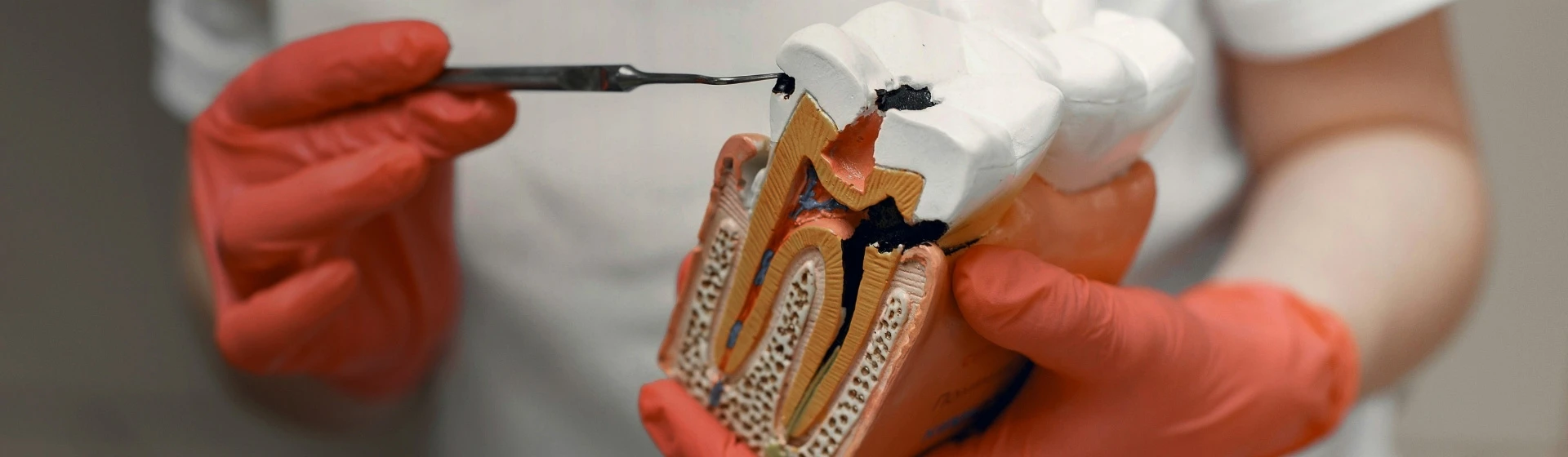
Installation of a photopolymer seal
Installation of a photopolymer filling in Kiev
Photopolymer fillings — a modern solution for reliable, aesthetic and long-lasting restoration of teeth with caries or other damage. This type of restoration allows you to accurately recreate the natural shape and color of enamel, ensuring comfort and high quality of treatment.
The dentistry «Oxford Medical» in Kyiv uses proven photopolymer materials, modern equipment and an individual approach to each patient. Experienced dentists will make sure that caries treatment is as comfortable, painless and effective as possible.
Make an appointment to restore your teeth to health and aesthetic appearance at a time convenient for you.
What is a photopolymer filling?
Photopolymer filling — is a filling material that hardens under the influence of a special light source (usually blue spectrum). The basis is photopolymer materials: resins with fillers that provide mechanical strength and density of the connection with the tooth tissue. Due to its physical properties, the photopolymer perfectly imitates the natural color of enamel, which makes it indispensable in aesthetic dentistry.
This type of filling is suitable for the restoration of both chewing and anterior teeth, as well as for eliminating defects in shape or shade.
Photopolymer filling: pros and cons
This is an important question that concerns many patients before treatment.
Advantages
Disadvantages
-
Risk of shrinkage of the material during polymerization, which requires precision from the doctor.
-
The material is sensitive to moisture, so it is important to carefully isolate the tooth during treatment.
-
The cost is higher compared to amalgam or cement fillings, but this is offset by durability and aesthetics.
How do photopolymer fillings differ from other types of fillings?
Different types of filling materials are used in dentistry: composites, cements, amalgams, glass ionomers. The main difference between photopolymers is the method of hardening and versatility.
Unlike traditional cements, dental photopolymer hardens only under the influence of light, which allows the doctor to work with the material as much as necessary. Compared to amalgam, photopolymer wins in aesthetic qualities and does not contain metals. Glass ionomer cements have worse wear resistance and are used mainly in pediatric dentistry or as a temporary solution.
Photopolymers also differ in composition: modern photopolymer materials contain special fillers that increase strength and resistance to abrasion.
How is the process of installing a photopolymer filling done?
This approach provides not only functionality, but also aesthetics — the result is a full-fledged photopolymer restoration.
The procedure for installing a photopolymer filling consists of several stages:
Inspection and diagnostics
The dentist assesses the condition of the tooth and takes a targeted scan if necessary.
Anesthesia
For the patient's comfort, local anesthesia is administered.
Preparation of the carious cavity
The affected tooth tissues are removed, and a cavity is formed for the filling.
Insulation
A rubber dam or other methods of protection against saliva and moisture are used.
Applying adhesive
This is a special component that improves adhesion between the filling and the tooth.
Applying photopolymer in layers
Each layer is formed and polymerized using a lamp.
Modeling
The doctor recreates the anatomical shape of the tooth, taking into account the bite.
Polishing
The final stage is grinding and polishing the filling to a shine.
Lifespan and care of a photopolymer filling
The average lifespan of a photopolymer filling is 5-10 years. It depends on the installation technique, individual bite characteristics, and thorough hygiene. To extend the life of the filling, it is important to undergo regular preventive examinations and follow the dentist's recommendations.
Proper care for a photopolymer filling includes daily hygiene, careful chewing of solid foods, and timely professional teeth cleaning.
If you need a photopolymer filling for your front teeth, the specialists of the Oxford Medical dentistry in Kyiv will provide an accurate, aesthetic, and durable restoration. Make an appointment today — take care of the health and beauty of your smile.

Price of photopolymer filling in dentistry "Oxford Medical"
The price of a photopolymer filling depends on the location of the lesion, the volume of the restoration, the type of material and the complexity of the procedure. You can check the prices in advance here. The final cost is determined by the doctor after an examination and consultation, taking into account individual characteristics and your wishes.
The initial consultation with a dentist will help you choose the best solution that combines quality, comfort and budget.
Dentistry
Dental cleaning | Dental hygiene
Teeth treatment
Installation of a photopolymer filling
Show more 
Our services
Consultations

Dentist consultation
1.00 ₴
Add Added 
Therapy services
Professional oral hygiene (Air-flow, optragate) (1 jaw)
780.00 ₴
Sign up by the call center
Installation of a temporary photopolymer filling with anesthesia (superficial caries)
1210.00 ₴
Sign up by the call center
Installation of a temporary photopolymer filling with anesthesia (medium caries)
1420.00 ₴
Sign up by the call center
Hygienic cleaning of an implant-supported prosthetic structure
770.00 ₴
Sign up by the call center
Decorative inlay of one tooth (excluding product cost)
550.00 ₴
Sign up by the call center
Endodontic services
Primary endodontic treatment of a multi-rooted tooth with anesthesia (under a microscope)
9750.00 ₴
Sign up by the call center
Endodontic root canal treatment attempt
990.00 ₴
Sign up by the call center
Retrograde root apex closure (under a microscope)
5200.00 ₴
Sign up by the call center
Continuation of root canal endodontic treatment
2300.00 ₴
Sign up by the call center
Repeated endodontic treatment of a three-rooted tooth (with anesthesia)
13600.00 ₴
Sign up by the call center
Frequently asked questions
Photopolymer filling: what is it?
This is a filling made of a modern material that hardens under the influence of light. The photopolymer allows the dentist to restore the shape, color and function of the tooth with high precision. This type of filling is aesthetic, durable and almost invisible on the teeth, especially on the front ones, therefore it is widely used in therapeutic dentistry.
How much does a photopolymer filling cost?
The cost depends on the depth of the tooth damage, the size of the filling and the complexity of the restoration. The price is also shaped by the quality of the material and the level of the clinic. At Oxford Medical, you can get a preliminary estimate during the consultation, and the dentist will announce the final cost after the examination.
Is a photopolymer filling harmful?
Modern photopolymers undergo strict certification and are safe for the body. They do not contain mercury, like amalgams, and adapt well in the oral cavity. With proper installation and adherence to the technique, a photopolymer filling is not harmful to health and does not cause allergies.
What can't you eat after a photopolymer filling?
In the first few hours, it is worth refraining from eating too hard, sticky or hot foods, especially if the filling is installed on the chewing surface. This will help avoid discomfort and reduce the risk of microcracks. It is recommended to temporarily limit chewing on the restored tooth.
When can you eat after a photopolymer filling?
Thanks to light curing, the photopolymer becomes hard immediately after installation. However, doctors advise waiting at least 1 hour before eating to avoid injuring the mucous membrane or overloading the tooth. It is optimal to start with soft or liquid food.

Advantages of installing photopolymer fillings in Oxford Medical dentistry

Modern diagnostics for accurate caries detection, including the ability to perform targeted imaging and assess the depth of the lesion
Using certified photopolymer materials from leading manufacturers for reliable, durable and aesthetic fillings
The ability to accurately match the shade of the filling to the natural color of the enamel - the result looks natural, especially on the front teeth
Individual approach to each patient: the dentist will take into account the condition of the tooth, localization, wishes regarding the durability and appearance of the filling
Painless procedure thanks to modern anesthesia and a comfortable atmosphere in the office
Attentive staff, flexible appointment schedule and convenient location of dentistry in Kyiv
Show more 
Our doctors

 0
0  6+
6+ Dentist-therapist, endodontist
 6+ Years of experience
 Consultation 1
 Kyiv, Pavlivska St., 26/41
 4.38 18+
  5 2+
5 2+  4.31 16+
 Doctor dentist-therapist
16+ Years of experience Consultation 1
Kyiv, Mykhayla Hryshka St., 1 
Reviews
Ганна 22.01.2026
Дуже вдячні лікарю, адміністрації, всій команді. Приїхали у Київ на операцію з Запоріжжя. У день операції у клініці було відсутнє живлення через масовані обстріли на енергосистему. Колектив з порозумінням сприйняв нашу ситуацію, приїзд за важких умов, професійно організували оперування в іншій кліниці. Ви команда професіоналів! Дякуємо!

Катерина 15.01.2026
Віталіна Павлівна дуже уважно поставилася до моєї ситуації. Працює дуже акуратно, не було жодного відчуття страху. Після лікування нарешті зник дискомфорт, за що їй щиро вдячна.
Current information


23 December 2025
What causes jaw pain if your teeth are healthy? What your regular dentist won't tell...
07 July 2025
When Should You Get Root Canals Treated?
03 April 2025
Innovative zoom 4 teeth whitening system from philips
15 August 2023
Modern technologies in dentistry: overview and application
Sign up
 in the clinic
  online

 Hello!
Let's take care
about your health:
Sign up via call center 
